 Ferndale Siding
 Exterior Contracting for Custer Homes
Custer sits in the northern reach of Whatcom County, close enough to the Salish Sea and the Canadian border that its weather carries a distinct character: damp, salt-tinged air off the water, long stretches of low-intensity rain, and a growing season for moss and algae that most of the country never has to think about. Homes out here are built for function first, and the exterior envelope has to work quietly, year after year, without much homeowner intervention. That's the job we come to do — siding, roofing, windows, and decks, installed by a crew that works this specific stretch of Whatcom County and understands what it does to a house.
Ferndale Siding Company is based nearby and works Custer regularly, which matters more than it sounds. A crew that drives through every week notices things a one-time visiting contractor won't: which elevations take the worst of the wind-driven rain, how fast north-facing siding grows moss compared to a south wall, which older homes in the area were sided with products that haven't aged well. That local pattern recognition shapes how we recommend and install every project.
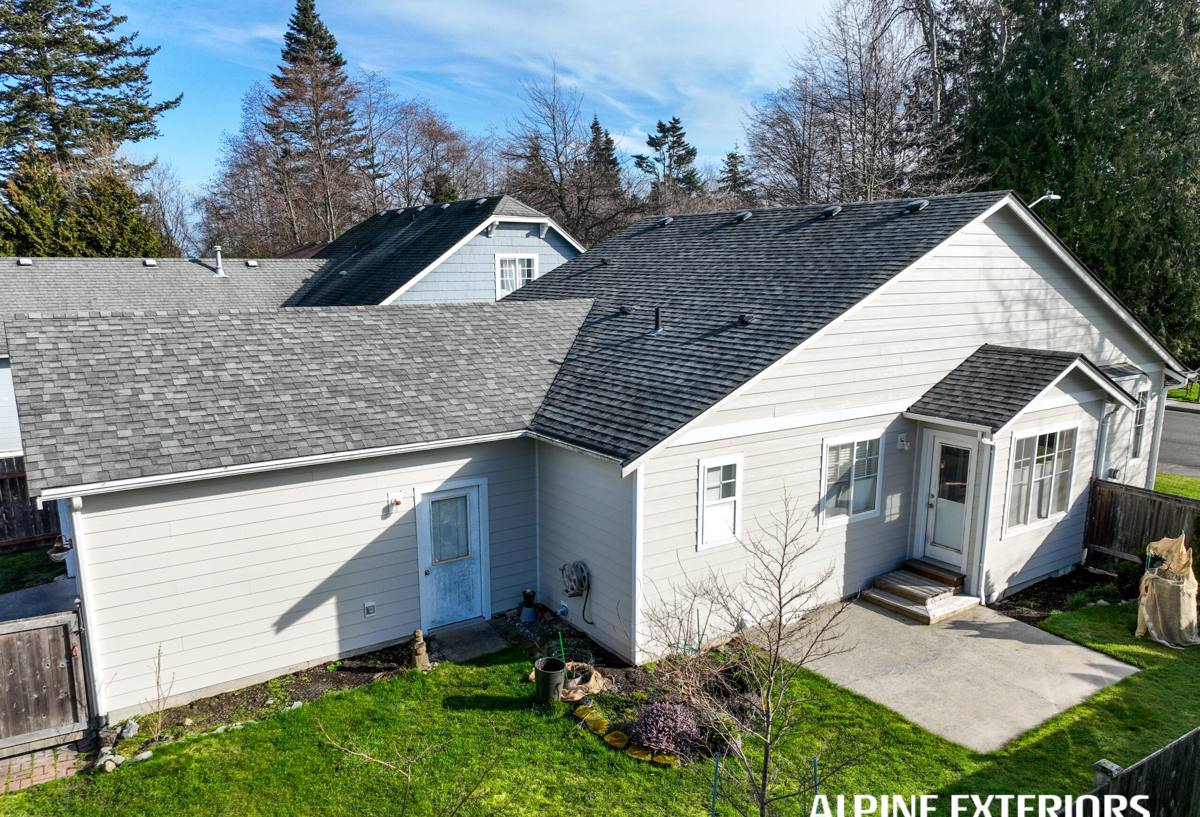
What Custer's Climate Does to a Home's Exterior
Whatcom County's marine climate is mild in temperature but relentless in moisture. Custer doesn't get the extreme storms some regions do, but it gets something arguably harder on a building: near-constant low-grade dampness for months at a stretch, punctuated by wind events that drive rain sideways into wall assemblies. A few specific effects show up consistently on homes in this area.
Salt Air and Coastal Proximity
Custer's location near the coast means airborne salt is a real factor, even at a few miles inland. Salt-laden air accelerates corrosion on exposed metal — fasteners, flashing, trim, and hardware — and it can degrade certain paint and coating systems faster than they'd wear in a drier inland climate. Materials and finishes that hold up fine in eastern Washington don't always perform the same way here.
Driving Rain and Wind-Driven Moisture
Storms coming off the water often arrive with enough wind to push rain horizontally against exterior walls, not just straight down onto roofs. That means siding, trim, and window flashing details do more work here than they would in a calmer climate — water intrusion at a poorly lapped seam or an under-flashed window can sit and work its way into the wall assembly over a single wet season.
Moss, Algae, and the Long Wet Season
Whatcom County's moss season isn't a few weeks — it's most of the year. Shaded, north-facing walls and anything under tree cover stay damp long enough for moss and algae to take hold on porous or textured surfaces. On roofs this is well understood; on siding it's less talked about but just as real, especially on wood-based products that give organic growth something to root into.
Siding: Why We Standardized on One Product
We install James Hardie fiber cement siding exclusively. We don't install vinyl, LP SmartSide, Cemplank, Allura, primed spruce, or cedar. That's a deliberate standard, not a limitation of what we're capable of installing — we've simply seen enough siding fail in this climate to know which materials hold up and which ones create recurring maintenance headaches for homeowners.
What Rules Out the Alternatives, Honestly
Vinyl is affordable and low-maintenance in dry climates, but it expands and contracts with temperature swings, can warp or crack in wind events, and its seams and J-channels give wind-driven rain more opportunities to work behind the cladding. Wood-based products — cedar, primed spruce, and OSB-based composites like LP SmartSide — need consistent paint and caulk maintenance to keep moisture out, and in a climate with Custer's moss season, organic siding materials are exactly the surface moss and algae prefer. Other fiber cement brands like Cemplank and Allura are reasonable products in general terms, but we've standardized on one manufacturer so our crews install one system to spec every time, with one warranty structure and one set of installation details to master, rather than splitting expertise across several product lines.
Why James Hardie
James Hardie fiber cement is non-combustible, dimensionally stable across temperature and moisture swings, and finished with the ColorPlus factory-baked coating system, which holds color and resists the fading and chalking that field-applied paint eventually shows. Hardie's HZ5 product line is engineered specifically for climates with freeze-thaw cycling and sustained moisture exposure — which describes Whatcom County well. It doesn't feed moss the way wood-based siding does, it holds up to salt air better than untreated or lightly coated materials, and it carries a strong transferable warranty when installed to Hardie's specifications, which matters if the home changes hands.
| Siding Material | How It Handles Custer's Climate |
|---|---|
| James Hardie fiber cement | Non-combustible, dimensionally stable, factory-finished color, engineered HZ5 line for wet/freeze-thaw climates |
| Vinyl | Low upfront cost, but seams and panel movement create entry points for wind-driven rain |
| Cedar / primed spruce | Attractive but organic — feeds moss/algae growth, needs ongoing paint and caulk maintenance |
| LP SmartSide (OSB-based) | Engineered wood — vulnerable to moisture intrusion at cut edges and fastener penetrations if maintenance lapses |
| Cemplank / Allura fiber cement | Comparable material category to Hardie, but we standardize on one manufacturer for consistent install quality and warranty |
Roofing That Works With the Siding System
Siding and roofing aren't separate problems — the transitions between them (roof-to-wall flashing, kickout flashing at roof lines that meet siding, valley details near exterior walls) are where a lot of real-world water intrusion actually happens. We handle roofing so those transitions get built as one integrated system rather than two contractors' work meeting at a seam nobody owns. In a climate that sends rain sideways as often as it sends it straight down, that flashing detail work is not optional.
Roof surfaces in Custer deal with the same moss and algae pressure as siding, particularly on north-facing and tree-shaded slopes. We look at ventilation, underlayment, and flashing condition as part of any roofing conversation, not just shingle condition on the surface.
Windows: The Other Half of the Water-Tightness Equation
A well-installed siding job can still leak if window flashing wasn't detailed correctly underneath it — and in a wind-driven-rain climate, window openings are one of the highest-risk points in the whole wall assembly. When we replace windows, we integrate the flashing with the surrounding Hardie siding as one continuous water management plane, not as two separate trades working around each other. That includes proper head flashing, sill pans, and correctly lapped house wrap at every rough opening.
Energy performance matters here too. Whatcom County winters are mild by national standards but persistently damp and windy, and older single-pane or early dual-pane windows let a lot of that chill and moisture influence indoor comfort. Replacing them alongside a siding project is often the more efficient path, since the flashing work overlaps.
Decks: Built for Wet-Climate Exposure
A deck in Custer spends most of the year wet, shaded part of the day, and exposed to the same salt air that affects siding hardware. That combination is hard on fasteners, ledger connections, and any wood-to-ground or wood-to-concrete contact point where moisture can sit. We build and repair decks with attention to ledger flashing, joist protection, and corrosion-resistant hardware — the details that determine whether a deck lasts through Whatcom County's wet seasons or starts showing soft spots and rust streaks within a few years.
How a Project Typically Runs
Every home and project scope is different, but the general sequence for an exterior project looks like this:
- On-site assessment of current siding, roofing, window, or deck condition, including moisture and rot checks where relevant
- A written scope and estimate explaining what's being done and why, with no pressure to decide on the spot
- Material selection — for siding, that means Hardie plank profile, exposure, and ColorPlus color
- Removal of old material and inspection of the sheathing and house wrap underneath before anything new goes on
- Installation to manufacturer specification, including correct fastening, flashing, and clearances
- Final walkthrough so you understand what was done and how to maintain it
What to Ask Before Hiring Any Exterior Contractor
Custer homeowners should feel comfortable asking pointed questions before signing anything. A checklist worth working through with any contractor you're considering:
- Are they licensed and insured in Washington, and can they provide proof without hesitation?
- Do they specify manufacturer-correct fastening and flashing details in writing, not just "siding replacement" as a line item?
- Will they inspect the sheathing and house wrap underneath old siding before installing new material?
- Do they have local references or a local track record in Whatcom County specifically, not just a regional service area on paper?
- Is the warranty — both material and labor — explained clearly, including what voids it?
A Local Crew, Not a Traveling Sales Operation
A fair amount of exterior contracting activity in Whatcom County comes from crews that cover a wide multi-county or multi-state territory, show up for a bid, and move on. That model isn't inherently dishonest, but it means less accountability if something needs a callback and less accumulated knowledge of how a specific area's weather behaves. We work Custer and the surrounding Ferndale area consistently, which means we're the ones who'd get the call if something needed attention down the road — and that keeps us honest about doing the flashing and fastening details right the first time.
If you're weighing a siding, roofing, window, or deck project on a Custer home, we're glad to take a look and give you a straightforward, no-pressure estimate. Use the form below to get started.