 Ferndale Siding
 Birch Bay's Exterior Challenge: Water, Salt, and Time
Birch Bay sits right where Whatcom County's marine climate shows its full range. Homes here face onshore wind carrying salt spray, long stretches of driving rain off the water, and the low winter sun angle that keeps north- and west-facing walls damp for days after a storm passes. It's a beautiful place to live, but it is not a gentle place to be a house. Exteriors here work harder than exteriors ten or fifteen miles inland, and the materials on a home need to be chosen with that in mind, not just for how they look on installation day.
We're based nearby in Ferndale and work throughout this stretch of the county, so Birch Bay isn't an unfamiliar drive for us — it's a community we already know the weather patterns for. That matters more than it sounds like it should. A crew that's used to installing in coastal wind and knows how moss builds on shaded roof slopes here handles the details differently than a crew coming up from out of the area for a one-off job.
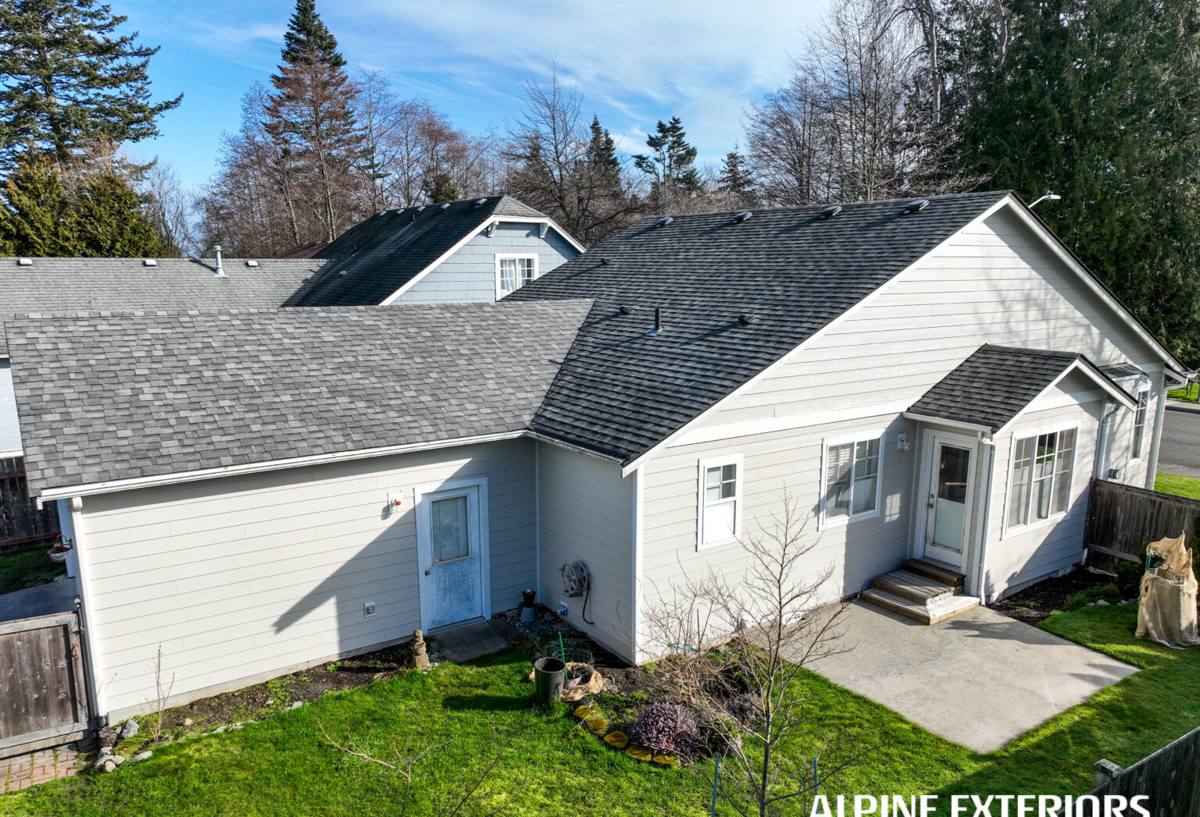
What Salt Air and Driving Rain Actually Do to a House
It helps to be specific about the mechanisms, not just wave at "harsh weather."
Salt-laden wind
Airborne salt accelerates corrosion on anything metal — flashing, fasteners, gutter hardware, window hardware — and it settles into porous or absorbent siding surfaces, holding moisture against the wall longer than it would otherwise sit. Over years, that shortens the service life of materials that aren't built to handle it, and it's part of why fastener and flashing selection matters as much as the siding material itself in a location like this.
Driving, wind-driven rain
Rain that comes in at an angle behaves differently than straight-down rain. It gets forced up under laps, into gaps around trim, and behind poorly sealed penetrations. A weather-resistive barrier and flashing details that would be adequate in a calmer inland setting can fall short here. This is a house-wrap-and-flashing problem as much as it is a siding-brand problem — the assembly has to be right, not just the product.
Moss and prolonged dampness
Whatcom County's mild, wet winters give moss a long season to establish itself, especially on north-facing walls, roof slopes with less sun exposure, and anywhere debris collects against a surface. Moss holds moisture against whatever it's growing on. On a roof, that means accelerated wear on shingles. On siding, it means paint and caulk breaking down faster and, on some materials, the substrate underneath softening over time.
Why We Install Only James Hardie Fiber Cement Siding
We made a decision a long time ago to install one siding system, not a menu of options: James Hardie fiber cement. That's not a marketing position — it's a practical one, built around what actually holds up in a climate like this.
Fiber cement is non-combustible and dimensionally stable, meaning it doesn't swell, cup, or rot the way wood-based products can when they take on repeated moisture cycling. James Hardie's ColorPlus finish is a factory-applied, baked-on finish rather than a field-applied paint job, which matters directly in a place where UV, salt, and rain are all working against a painted surface year-round. And Hardie's HZ5 product line is engineered specifically for climates with more moisture exposure — which describes Birch Bay well.
We get asked why we don't also offer LP SmartSide, vinyl, Cemplank, Allura, or primed wood siding. The honest answer is trade-offs, not disparagement of those products:
- LP SmartSide is an engineered wood product — well-regarded, but wood-based, meaning edge and cut-end sealing has to be done correctly at every joint or moisture finds a way in over time.
- Vinyl siding is affordable and low-maintenance in mild climates, but it can distort in prolonged heat, becomes brittle with age, and its lap-and-clip installation is less forgiving of wind-driven rain than a properly flashed fiber cement assembly.
- Cemplank and Allura are also fiber cement, and reasonable products in their own right — but we've standardized on one manufacturer's system, warranty, and color program so every installer on our crew is deeply familiar with one set of specs rather than juggling several.
- Primed spruce or cedar looks excellent and has real appeal, but it's a maintenance commitment: repainting cycles, caulk inspection, and vigilance about moisture intrusion at end grain — a heavier ask in a wet coastal climate than most homeowners want to sign up for.
We'd rather install one system extremely well than several systems adequately. For Birch Bay's climate specifically, fiber cement's resistance to moisture-driven failure and its factory finish are the deciding factors.
How We Approach a Siding Job Here
Every install starts with what's underneath the siding, not the siding itself. On a coastal property, we pay close attention to:
- House-wrap or weather-resistive barrier condition and lapping direction, so water sheds outward and down, not into seams
- Flashing at windows, doors, and any roof-to-wall transitions — the places wind-driven rain actually finds a way in
- Corrosion-resistant fastener selection appropriate for a salt-air environment
- Proper clearance between siding and grade, decks, and roof lines, so splash-back and standing water aren't held against the bottom courses
Only after that foundation is right do we install the Hardie panels or lap siding to spec — correct fastener spacing, proper caulking at joints, and factory-finished cut ends treated per manufacturer requirements.
Roofing, Windows, and Decks: The Rest of the Envelope
Siding doesn't work in isolation. A roof shedding water improperly, windows that leak at the frame, or a deck holding moisture against the house all undercut even a well-installed exterior wall. We handle all four trades — siding, roofing, windows, and decks — because in a climate like Birch Bay's, they need to be thought of as one connected system.
Roofing
Roof slopes with heavy shade and limited sun exposure need attention to moss growth and drainage. We look at flashing at valleys and penetrations with the same scrutiny we give siding flashing — those are the two most common places roofs actually fail.
Windows
Window flashing integration with the siding assembly is one of the most common failure points on coastal homes. We install windows with flashing details that tie properly into the surrounding wall assembly rather than treating the window as a separate, later step.
Decks
Decks attached to the house need ledger flashing that keeps water from tracking back into the wall structure — a detail that's easy to get wrong and expensive to fix once siding is already up.
Cost Factors for a Birch Bay Exterior Project
Every home is different, and a real number only comes from an on-site look. But these are the factors that generally move a project's scope and cost:
| Factor | Why It Matters Here |
|---|---|
| Home size and wall complexity | More corners, gables, and trim details mean more labor and material for correct flashing |
| Existing siding removal | Tear-off of old wood, vinyl, or damaged material adds time versus a bare or already-stripped wall |
| Underlying moisture damage | Coastal homes more often reveal sheathing or framing repair needs once old siding comes off |
| Trim and accessory scope | Corner boards, window trim, and fascia detailing affect both material and labor |
| Product line and color | Hardie's HZ5 line and ColorPlus color selection carry different material pricing than base panel options |
| Access and site conditions | Waterfront lots, steep grades, or limited equipment access can affect labor time |
Why a Local Crew Matters for This Kind of Work
A lot of exterior failures we get called out to inspect aren't failures of the siding material itself — they're failures of installation detail, usually from a crew unfamiliar with what this specific climate demands. Flashing shortcuts that would be fine in a dry inland climate aren't fine here. A crew that works this coastline regularly builds an instinct for where wind-driven rain actually goes, where moss will establish first, and which details can't be rushed.
Being based in Ferndale means Birch Bay is part of our regular service area, not a special trip. That translates into familiarity with the area's homes, straightforward scheduling, and a crew that's answerable locally if a question comes up after the job is done.
What to Ask Before Hiring Any Exterior Contractor
Whether you call us or someone else, these are reasonable questions for any homeowner in a coastal climate to ask before signing a contract:
- Are you licensed and insured to work in Washington, and can you provide proof?
- Who is the manufacturer of the siding product, and are you a certified or trained installer for that specific system?
- What fastener and flashing materials do you use, and are they rated for coastal/salt-air exposure?
- What does the warranty actually cover — material only, or labor as well — and is it transferable if you sell the home?
- Can you walk me through how you'll handle flashing at windows, doors, and roof-to-wall transitions specifically?
A contractor who answers those questions specifically and confidently, without vague reassurances, is usually one who's done the work correctly before.
Ready to Talk About Your Home?
If your Birch Bay home is due for new siding, a roof, windows, or a deck — or you just want an honest read on what shape your current exterior is in — we're happy to take a look. Reach out for a free, no-pressure estimate; there's a form below to get started.