 Ferndale Siding
 Why This Decision Is Harder Than It Looks
Every siding contractor in Whatcom County gets some version of the same call: a homeowner sees a cracked board, a soft spot near a downspout, or a patch of paint that won't stop peeling, and wants to know whether that's a two-hour fix or the start of a bigger project. The honest answer is "it depends" — but it depends on specific, checkable things, not guesswork. This guide walks through how to tell the difference, what makes Ferndale's climate especially hard on siding, and where the material underneath the damage changes the math entirely.
We're not going to tell you every repair should become a replacement — that's not true, and a good contractor will tell you when a patch is the right call. But we will be direct about when repair is a temporary patch on a bigger problem, because that's the distinction that actually saves homeowners money.
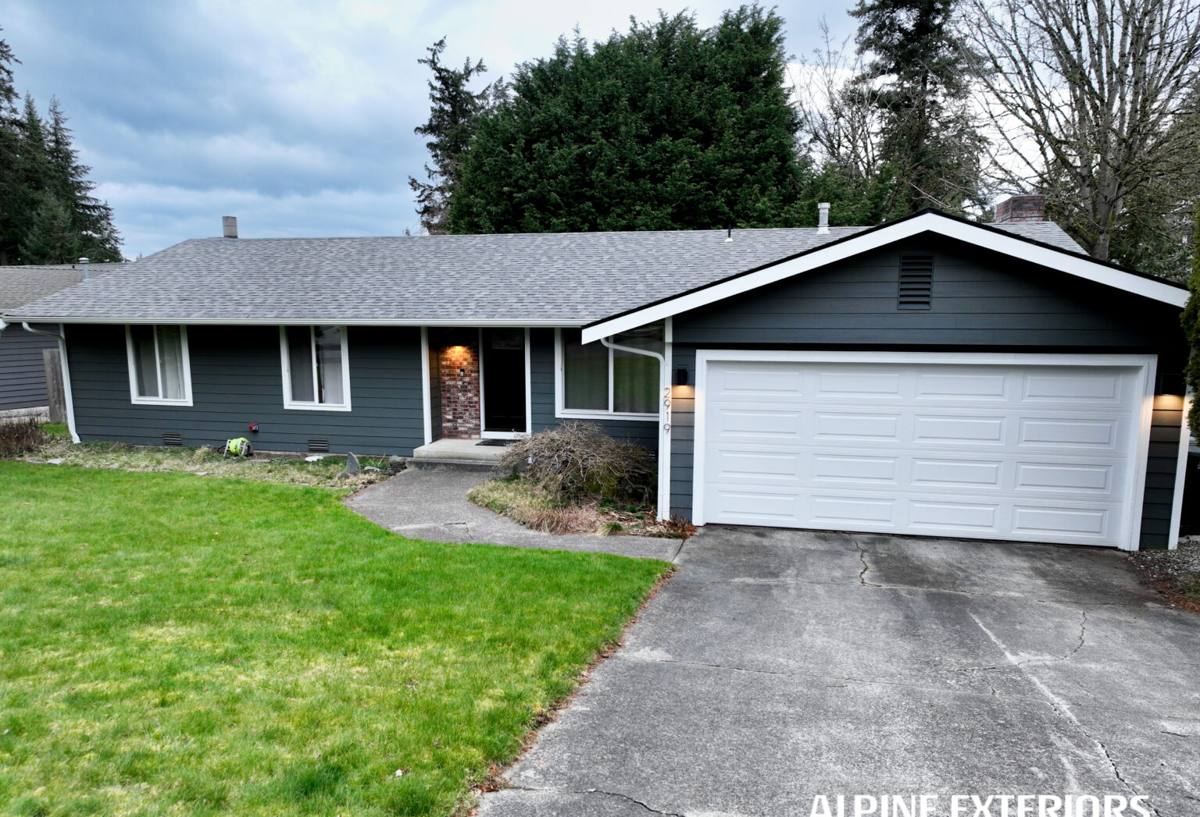
What Makes Ferndale's Climate Tough on Siding
Ferndale sits close enough to Bellingham Bay and the Strait of Georgia that salt-laden air is a real factor on homes near the water and even several miles inland on windy days. Combine that with Whatcom County's long wet season — moss doesn't just grow on roofs here, it colonizes north-facing siding, fence lines, and anywhere sun doesn't reach for months at a stretch — and you get a set of conditions that punishes any siding material with a weak point in its moisture defense.
Driving rain off the water pushes moisture sideways into seams, nail holes, and butt joints in a way that vertical rain doesn't. Add repeated freeze-thaw cycles in the winter months and you have a climate that finds every gap in a siding system's design within a few years, rather than a few decades.
The three climate stressors that matter most
- Wind-driven rain: forces water into horizontal laps and fastener penetrations, especially on west- and south-facing walls.
- Extended moss and mildew season: shaded, north-facing walls stay damp for weeks at a time, feeding organic growth that holds moisture against the siding surface.
- Salt air exposure: accelerates corrosion of fasteners, trim flashing, and any exposed metal components, which in turn compromises the siding around them.
Signs a Repair Is Still the Right Call
Not every problem means the whole wall needs to come off. Repair is usually the right, cost-effective answer when the damage is localized and the material around it is still sound.
- A single board cracked by impact (a ladder, a thrown object, storm debris) with no rot in the surrounding area.
- Isolated caulk failure at trim joints where the siding itself is intact.
- Minor moss or mildew staining that wipes clean and doesn't return with more than surface residue.
- Fastener pops or nail backing-out on an otherwise sound wall — a common, easy fix on older installations.
- Damage confined to one elevation, with the rest of the home's siding clearly performing well.
In these cases, a qualified contractor should be able to source a matching replacement piece (or an acceptable near-match), tie it into the existing wall cleanly, and give you several more years of service from the same siding system.
Signs That Point Toward Full Replacement
The harder conversation is when what looks like a small problem is actually a symptom of something systemic. These are the patterns that tell us repair would just be delaying a bigger bill.
Moisture that's gotten behind the siding
If you push on a board and it feels soft, spongy, or gives slightly, that's not a surface problem — that's moisture that has already worked its way into the substrate or the sheathing behind it. One soft board rarely means one bad board; it usually means the water intrusion point (a bad seam, failed flashing, or compromised house wrap) has been feeding moisture into that section of wall for a while.
Widespread or recurring moss and mildew
Moss that keeps coming back within a season of cleaning, especially across multiple walls, is often a sign the siding surface itself is porous or textured enough to hold moisture rather than shed it. This is common with untreated wood products and some engineered wood sidings once their factory coating has worn thin.
Warping, buckling, or delamination
Boards that have visibly bowed, delaminated at the layers, or pulled away from the wall are past the point where a patch fixes the underlying issue. This is especially common with engineered wood siding that has taken on moisture at cut edges or fastener points over several winters.
Damage spread across most of the home
When problems show up on three or four elevations rather than one, it's usually not bad luck — it's the material or the original installation reaching the end of its service life at roughly the same time across the whole house.
The siding is old enough that matching material doesn't exist
Manufacturers discontinue colors and profiles. If we can't source a reasonable match for a 15- or 20-year-old product, a visible patch job may look worse than the damage itself.
Why the Material Underneath Changes the Answer
The same crack or soft spot means something different depending on what siding is actually on your walls. This is the piece homeowners are rarely told clearly: some materials are forgiving to repair, and some materials tend to fail in ways that make repair a short-term patch at best.
| Siding Material | Repairability | Moisture Behavior | Typical Local Lifespan |
|---|---|---|---|
| Vinyl | Easy to replace individual pieces if matching stock exists, but brittle with age and can crack in cold snaps | Sheds surface water well but traps moisture behind it if house wrap fails | 15–25 years before fading, warping, or brittleness sets in |
| Cedar / primed wood | Repairable, but repeated repair is common due to ongoing maintenance needs | Absorbs moisture readily; needs consistent painting and moss management | 10–20 years without disciplined upkeep in this climate |
| Engineered wood (LP SmartSide-type products) | Moderate — patching is possible but edge and fastener damage often signals wider moisture entry | Vulnerable at cut edges and butt joints if not sealed and maintained per spec | Variable; heavily dependent on installation quality and upkeep |
| James Hardie fiber cement | Individual planks can be replaced cleanly; non-combustible core resists the failure modes above | Engineered for Pacific Northwest moisture cycles; factory ColorPlus finish resists moss adhesion better than bare wood | 30+ years when installed to manufacturer spec |
This is a large part of why we standardized our own installs on James Hardie fiber cement years ago. It's not that other products can't be installed correctly — it's that fiber cement, installed to spec, holds up to this specific combination of salt air, driving rain, and moss season with fewer of the failure points that turn a small repair into a wall-wide replacement.
Cost Factors to Weigh Before You Decide
Repair is almost always cheaper up front. But "cheaper up front" and "cheaper overall" aren't the same question, and the honest way to compare them is to look at what actually drives the total cost of each path.
| Factor | Repair | Replacement |
|---|---|---|
| Upfront cost | Lower — limited to material and labor for affected sections | Higher — full material, labor, and often trim and flashing work |
| Color/material matching | Risk of visible mismatch, especially on older or discontinued products | No matching issue — uniform new material and finish |
| Underlying moisture issues | May be masked rather than resolved if damage is more than cosmetic | Exposes and allows correction of house wrap, flashing, and sheathing problems |
| Frequency of future repairs | Can recur if the root cause (moss, moisture, material fatigue) isn't addressed | Resets the clock on the whole envelope, reducing near-term repair calls |
| Home resale consideration | Patchwork siding can raise questions during a buyer's inspection | New, consistent siding is a straightforward selling point |
What a Proper Repair Assessment Should Include
A repair estimate that's just eyeballing the visible damage from the driveway isn't a real assessment. Before committing to either path, a contractor should be willing to check the things that actually determine whether repair will hold.
- Probe the affected boards and the surrounding area for soft spots, not just the single damaged piece.
- Check behind accessible trim or corner boards for signs of water staining or rot extending past the visible damage.
- Look at the pattern of damage across all elevations, not just the one you called about.
- Ask how old the existing siding is and whether matching material is realistically available.
- Identify the likely moisture entry point, not just the symptom — a cracked board is a symptom; a failed seam or flashing detail is the cause.
Why We Rebuild with James Hardie When Replacement Is the Right Call
When an assessment points to full replacement, we install James Hardie fiber cement exclusively — not vinyl, not engineered wood, not cedar. That's a deliberate standard, not a default. Hardie's fiber cement core is non-combustible and dimensionally stable in a way that resists the warping and edge-swelling that drives a lot of the repeat repair calls we see on other materials in this climate. The factory-applied ColorPlus finish holds color and resists the kind of surface breakdown that lets moss get a foothold, and Hardie's HZ5 product line is engineered specifically for climates with heavy moisture exposure — which describes Whatcom County for a good part of the year. Correctly installed, with proper flashing, clearances, and fastening, it's a system built to reduce exactly the failure patterns that bring homeowners to the repair-or-replace decision in the first place.
A Practical Checklist Before You Call Anyone
- Note which elevations show damage — one wall, or several?
- Press gently on boards near the damage to check for soft or spongy spots.
- Check how old the siding is, if you know, or when the home was last re-sided.
- Look for moss or mildew patterns on shaded or north-facing walls.
- Take photos before any cleaning or DIY patching, so a contractor can see the original condition.
- Get a second opinion if a quote jumps straight to full replacement without explaining why repair won't hold.
If you're weighing repair against replacement on your Ferndale home, we're glad to take a look and give you a straight answer either way — including telling you when a repair is genuinely the right call. Reach out for a free, no-pressure estimate and we'll walk the exterior with you in person.