 Ferndale Siding
 Siding, Roofing, Windows, and Decks for Blaine Homeowners
Blaine sits close enough to the water and to the Canadian border that its homes deal with a specific mix of weather stress: salt-laden air moving in off Semiahmoo Bay and the Strait of Georgia, driving rain that comes in sideways during winter storms, and long stretches of gray, damp months that keep exterior surfaces wet for days at a time. We're based out of Ferndale and have built our business around Whatcom County's coastal climate, and Blaine is one of the communities we work in regularly. This page covers what that climate does to exterior materials, how our siding, roofing, window, and deck work fits the area, and why we standardized on one siding product instead of offering the usual lineup.
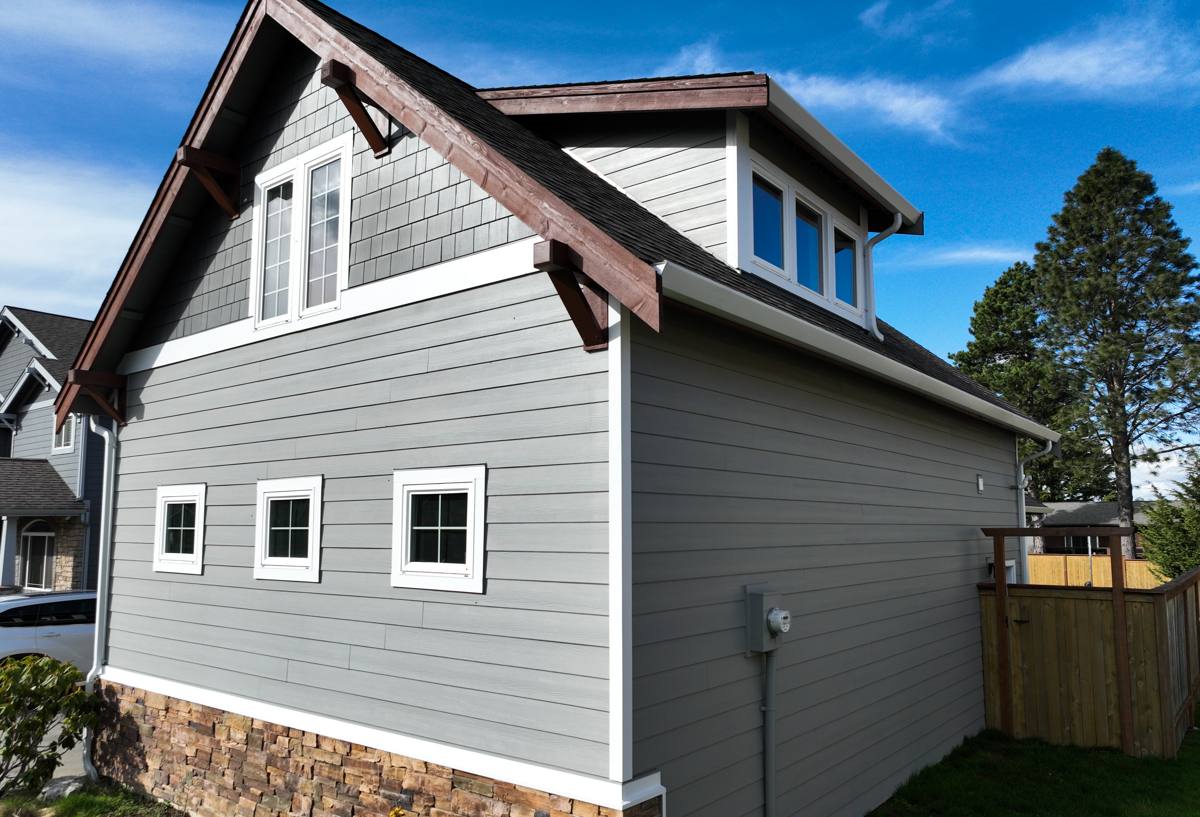
What the Blaine Climate Does to a House
Homes near the water take a different kind of beating than homes further inland, even a few miles away in Ferndale proper. Three factors matter most:
Salt Air
Airborne salt is corrosive to fasteners, metal flashing, and trim, and it accelerates the breakdown of coatings that aren't built to handle it. Over years, cheaper paint systems chalk and fade faster near the coast than they would inland, and any exposed metal — nail heads, hardware, flashing edges — is at higher risk of rust if it isn't properly coated or capped.
Wind-Driven Rain
Blaine's exposure to weather systems coming off the Strait means rain doesn't just fall straight down — it gets pushed sideways into wall assemblies, especially around window and door openings, corners, and anywhere siding meets a roofline or deck ledger. Wind-driven rain finds gaps that vertical rain never would. This is a flashing and installation-detail problem as much as it is a material problem; the best siding in the world will still leak if the water-resistive barrier, flashing tape, and overlaps underneath it aren't done correctly.
Long Moss Season
Northwest Washington's damp, mild winters give moss and algae months of ideal growing conditions on north-facing walls, roof valleys, shaded siding, and anywhere airflow is limited. Moss holds moisture against a surface, which is bad news for any material that isn't dimensionally stable or that can absorb water and swell, delaminate, or rot underneath a growth of moss and grime.
Why We Install James Hardie and Nothing Else
We used to get asked to bid jobs in vinyl, LP SmartSide, primed wood, and other fiber cement brands like Cemplank or Allura. We stopped offering all of them. Here's the honest reasoning, not a sales pitch:
Vinyl
Vinyl is inexpensive and low-maintenance in a general sense, but it's a thin plastic product that expands and contracts significantly with temperature swings, can crack in impacts, and fades in UV exposure over time. In a salt-air, high-wind coastal environment, vinyl's seams and J-channels are also more prone to water intrusion issues than a properly installed fiber cement system with correctly lapped and caulked joints.
LP SmartSide and Other Engineered Wood
Engineered wood siding has improved over the decades, but it's still a wood-based product with a resin-treated strand core. Its long-term performance depends heavily on keeping every cut edge sealed and every joint properly flashed — miss one detail during install or touch-up over the years, and moisture can get into the substrate. In a place with Blaine's rain exposure and long wet season, that margin for error is thinner than we're comfortable with.
Primed Spruce and Cedar
Solid wood siding is a real, traditional option with genuine appeal, but it demands an ongoing maintenance commitment — repainting or restaining on a cycle, checking caulk joints, watching for rot at end grain — that most homeowners underestimate until the bills start showing up. In a moss-heavy, damp climate, that maintenance burden only grows.
Other Fiber Cement Brands
Cemplank and Allura are legitimate fiber cement products and share the same basic chemistry as James Hardie. Our decision to standardize on Hardie comes down to their HZ5 product engineering for cold, wet climates, the factory-applied ColorPlus finish (which resists fading and chipping better than field-applied paint), and a transferable limited warranty backed by a manufacturer with a long track record in the Pacific Northwest. Standardizing on one system also means our crews install it the same correct way on every job, every time — no relearning install details between different brands.
What Hardie Gets Right for This Area
- Non-combustible fiber cement composition — a real advantage during dry summer wildfire-smoke seasons
- Engineered moisture and freeze-thaw resistance built for Pacific Northwest conditions (HZ5 line)
- Factory ColorPlus finish holds color and resists the chalking that plagues field-painted siding near salt air
- Dimensionally stable — doesn't swell, cup, or warp the way wood-based products can under sustained moisture
- Strong track record and a transferable limited warranty that adds resale value
How We Approach a Siding Job in Blaine
Every home we side gets the same sequence of steps, regardless of brand loyalty on the client's part coming in. We don't cut corners on the parts that don't show:
- Full tear-off of failing siding and inspection of the sheathing underneath for hidden rot or moisture damage
- Repair or replacement of any compromised sheathing before anything new goes up
- Installation of a proper water-resistive barrier, correctly lapped top-over-bottom
- Flashing at every window, door, and roofline intersection — this is where wind-driven rain gets in if it's skipped
- James Hardie panel or lap installation to manufacturer spec, including correct fastener type and spacing for coastal exposure
- Caulking and touch-up at cut edges and seams using compatible sealants
Skipping steps 2 through 4 is how a house ends up with hidden rot behind brand-new siding five years later. It's invisible work, which is exactly why it matters — nobody sees a properly lapped house wrap, but everybody eventually notices the consequences if it wasn't done right.
Roofing, Windows, and Decks: The Rest of the Envelope
Siding doesn't work in isolation. A house is a system, and the roof, windows, and any exterior decking all interact with the same moisture and wind exposure that siding has to deal with.
Roofing
Roof-to-wall transitions are one of the most common leak points in coastal homes, and they're a shared responsibility between the roofing and siding trades. We handle both, which means step flashing, kickout flashing at roof-to-wall intersections, and valley work all get coordinated with the siding install instead of two separate crews assuming the other one handled it.
Windows
Window replacement in a wind-driven rain environment is as much about flashing and sealant details as it is about the window unit itself. We integrate window flashing with the surrounding siding's water-resistive barrier so water is directed out and down, not trapped behind the frame.
Decks
Exterior decks in Blaine deal with the same rain and moss exposure as siding, plus standing water on horizontal surfaces. Ledger board flashing where a deck attaches to the house is a frequent failure point if it isn't detailed correctly — it's one of the more common sources of hidden rot in Pacific Northwest homes.
Comparing Siding Options for a Coastal Whatcom County Home
| Factor | Vinyl | LP SmartSide / Engineered Wood | Cedar / Primed Spruce | James Hardie Fiber Cement |
|---|---|---|---|---|
| Salt air resistance | Moderate; seams vulnerable | Moderate; edge sealing critical | Low without diligent maintenance | High |
| Moisture / rot risk | Low (not wood-based) but seam leaks possible | Moderate; depends on install quality | High without upkeep | Low |
| Maintenance cycle | Low, but limited repair options | Periodic caulk/paint touch-up | Repaint/restain every few years | Minimal; factory finish |
| Fire resistance | Melts/deforms under heat | Combustible | Combustible | Non-combustible |
| Typical lifespan with proper install | 20-40 years | 20-30 years | Variable, upkeep-dependent | 30-50+ years |
Why a Local Crew Matters
A crew that works Whatcom County knows what Blaine's exposure to the Strait actually does to a wall assembly versus what an inland Ferndale or Lynden home deals with. That's not a marketing point — it changes real decisions on the job, like where to pay extra attention to flashing, which sides of the house take the worst weather, and how much clearance to leave between siding and grade or hardscaping given how wet the ground stays for months at a time. We're not driving in from out of the area to bid a job and leave; this is the region we work in every week.
What to Check Before Hiring Any Siding Contractor
- Washington state contractor license and current bond/insurance, verifiable through the state's licensing lookup
- Manufacturer certification for the specific siding product being installed
- A written scope that specifies sheathing inspection, water-resistive barrier, and flashing details — not just "install siding"
- Willingness to explain their flashing approach at windows, doors, and roof-to-wall intersections
- References or a portfolio of completed local work
- A clear, written warranty covering both labor and material, with the material warranty's transfer terms spelled out
If you're weighing siding, roofing, window, or deck work on a Blaine home, we're happy to come take a look and walk through what your house specifically needs — no pressure, no obligation. Reach out using the form below to schedule a free estimate.