 Ferndale Siding
 Siding, Roofing, Windows, and Decks for Everson Homes
Everson sits inland from the coast along the Nooksack River, but it doesn't escape what makes exterior work in Whatcom County genuinely demanding. Moisture moving in off the Salish Sea settles into the valley, driving rain runs sideways during fall and winter storms, and the shaded, tree-lined lots common around Everson stay damp long after a storm passes. That combination is exactly what wears out the wrong siding material years before it should. We're a local exterior contractor working throughout the Ferndale and greater Whatcom County area, and Everson is part of our regular service territory for siding, roofing, windows, and decks.
This page focuses on siding, since it's the exterior component most directly exposed to the region's weather cycle, day in and day out, for decades. But the same climate logic applies to everything on the outside of a house here — roofing, window seals, and deck framing all face the same driving rain and prolonged dampness.
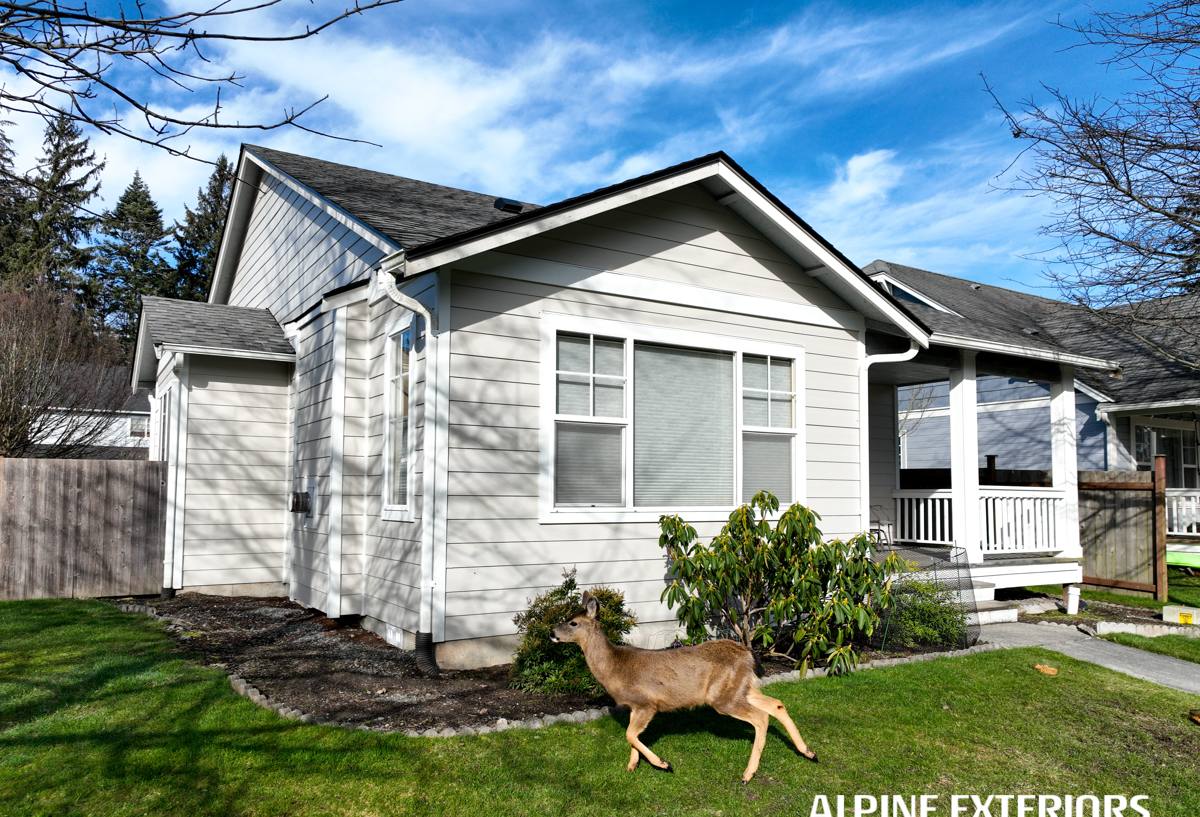
What Everson's Climate Actually Does to a House
Long Wet Seasons, Short Drying Windows
Whatcom County gets a genuine wet season that stretches from fall through spring, and Everson's inland location doesn't shorten it much. Homes here go weeks at a time without more than a day or two of real drying weather. Any siding material that absorbs water, traps moisture behind it, or takes a long time to dry out is working against the calendar for most of the year.
Moss and Organic Growth
A long moss season is one of the more visible effects of this climate. Moss and algae don't just grow on roofs — they take hold on siding surfaces, especially on north-facing walls, under eaves, and anywhere tree cover blocks sun and airflow. Left alone, organic growth holds moisture against the siding surface, which accelerates whatever damage the material was already prone to.
Freeze-Thaw and Temperature Swings
Everson sees more temperature swing than the immediate coastline, with occasional hard frosts in winter. Materials that absorb water and then freeze are at risk of cracking, swelling, or delaminating over repeated cycles. This is a slow, cumulative process — it rarely shows up in year one, but it shows up eventually.
Why We Install Only James Hardie Fiber Cement
We made a deliberate decision to install one siding system: James Hardie fiber cement. We don't install vinyl, LP SmartSide, Cemplank, Allura, or wood siding like primed spruce or cedar. That's not a marketing position — it's based on what actually holds up under the conditions described above, and what we're willing to warranty and stand behind.
- Non-combustible core. Fiber cement doesn't burn, melt, or contribute fuel to a structure fire the way vinyl or wood products can.
- Engineered for this climate. Hardie's HZ10 product line is specifically formulated for the cold, wet Pacific Northwest climate zone Whatcom County sits in.
- Factory-applied ColorPlus finish. The color and protective coating are baked on in a controlled factory environment, not sprayed or brushed on site, which gives a more consistent, longer-lasting finish than field-applied paint.
- Doesn't feed moss and mildew the way untreated wood can. Fiber cement is not an organic food source, which matters directly in a region with a long moss season.
- Strong, transferable warranty. Hardie backs its products with a substantial limited warranty that can transfer to a new owner, which matters for resale in a market where buyers ask about siding condition and age.
We're upfront that other products have real strengths — vinyl is inexpensive and low-maintenance in the short term, wood has an appearance some homeowners specifically want, and engineered wood products have improved over the years. But when we weigh long-term performance in this specific climate against installation sensitivity, moisture behavior, and what we're willing to guarantee, fiber cement is what we put on Everson homes.
How a Siding Project Works, Start to Finish
Assessment and Estimate
We start with an on-site look at the existing siding, sheathing, and any trouble spots — trim, window flashing, areas with visible moss or staining. This is also when we talk through Hardie product lines, plank profiles, and color options against the house and its exposure.
Moisture Management Before Anything Goes Up
Correct fiber cement installation is not just nailing planks to a wall. It depends on proper water-resistive barrier, flashing at every window and door, and correct clearances at grade, decks, and rooflines. This is where a lot of siding problems — regardless of material — actually originate, and it's the step that gets skipped most often by crews focused on speed over sequence.
Installation to Manufacturer Spec
James Hardie publishes specific installation requirements — fastener spacing, joint treatment, gap and caulking details — that affect both performance and warranty coverage. We follow those specs because they're based on real testing, not because it's the minimum to pass a walkthrough.
Final Walkthrough
Before we call a project finished, we walk the exterior with the homeowner to review the work against what was scoped.
Roofing, Windows, and Decks: The Rest of the Envelope
Siding doesn't work in isolation. A roof that's shedding water onto a wall, a window that's leaking at the flashing, or a deck ledger board that's trapping moisture against the house can undermine even a well-installed siding job. Because we handle roofing, windows, and decks in addition to siding, we can look at an Everson property as one connected system rather than four separate trades that don't talk to each other. That matters most at transition points — where a roofline meets a wall, where a deck attaches to the house, where a window sits in a wall opening — since those are the spots where moisture problems actually start.
Comparing Siding Materials for a Whatcom County Home
| Factor | Fiber Cement (James Hardie) | Vinyl | Untreated Wood / Engineered Wood |
|---|---|---|---|
| Moisture resistance | Strong when installed to spec; doesn't rot | Doesn't absorb water, but can trap moisture behind it | Absorbs water; vulnerable without diligent maintenance |
| Moss and organic growth | Not an organic food source | Can support surface growth in damp, shaded areas | Prone to moss and rot in prolonged dampness |
| Fire performance | Non-combustible | Can melt or contribute fuel | Combustible |
| Finish durability | Factory-baked ColorPlus finish | Color molded through material, can fade | Field-applied paint/stain needs regular recoating |
| Long-term maintenance | Periodic caulk/paint touch-up at trim | Low, but repairs can be visible and hard to color-match | Regular painting, staining, or sealing required |
Cost Factors Homeowners Should Understand
Every siding project's price depends on the specific house, so we won't quote numbers here that don't reflect your project. What we can lay out are the factors that actually move the price:
- Square footage and wall complexity. Dormers, bump-outs, and multiple stories add labor time beyond raw square footage.
- Condition of the sheathing underneath. If there's hidden rot or moisture damage once the old siding comes off, that repair work gets scoped separately.
- Product line and profile. Hardie offers multiple plank styles, panel systems, and trim options at different price points.
- Trim and detail work. Corner boards, window trim, and fascia detailing add labor and material.
- Tear-off and disposal. Removing and hauling away old siding is part of the job, not an afterthought.
- Access and site conditions. Tree cover, slope, and how close the house sits to property lines can affect staging and labor.
Signs an Everson Home May Need Siding Attention
- Visible moss, algae, or dark staining that keeps returning after cleaning
- Soft spots, bubbling, or warping in siding panels
- Paint that's peeling or failing faster than expected
- Gaps opening up at seams, corners, or trim
- Interior signs like musty smells or discoloration on walls that back up to exterior siding
- Siding that's simply reaching the end of its expected service life
Why a Local Crew Matters
A crew that works throughout Whatcom County regularly sees how houses in this specific climate actually age — which details fail first, which shaded lots need extra attention to moss, which orientations take the worst of the driving rain. That's different from general installation experience picked up somewhere with a milder or drier climate. For a homeowner in Everson, that local pattern recognition shows up in the small decisions made on site: where to add extra flashing, how to detail a north wall, what clearance to leave at grade.
Get a Free, No-Pressure Estimate
If you're weighing a siding project in Everson — or want a second opinion on roofing, windows, or a deck — we're happy to take a look and walk you through what we see, with no obligation. Use the form below to request a free estimate.