 Ferndale Siding
 Exterior Work in Nooksack, Washington
Nooksack sits inland from Ferndale in Whatcom County, but "inland" doesn't mean sheltered. Marine air off the Salish Sea pushes up the river valleys all year, and homes here still deal with the same core problem every exterior in this part of the county faces: too much moisture, for too many months, without enough dry, sunny days in between to let anything fully recover. Add in the salt-laden air that rides those westerly winds and a moss season that can run eight or nine months out of twelve, and you have a climate that is genuinely hard on siding, roofing, windows, and decks — not because any one storm is severe, but because the exposure never really stops.
Ferndale Siding Company works throughout Whatcom County, and Nooksack is part of our regular service area. We do siding, roofing, windows, and decks, and we approach all four the same way: material choice matters more here than it does in a drier climate, and cutting corners on that choice shows up as a maintenance headache within a few years, not a few decades.
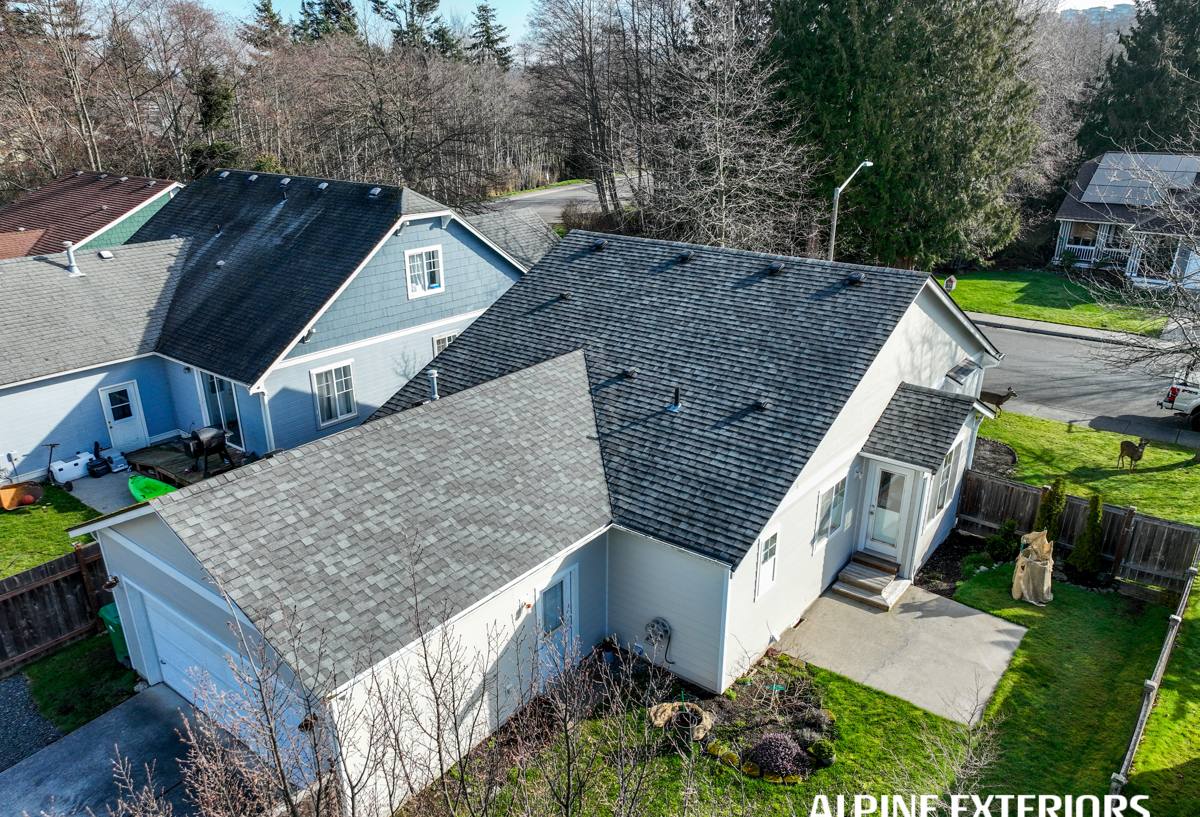
What This Climate Does to a House
Three things drive most of the exterior problems we see on Nooksack-area homes:
- Driving rain. Wind-driven rain doesn't just wet a surface — it forces water sideways into seams, laps, fastener holes, and trim joints. Any siding or roofing system that isn't detailed correctly at those points will eventually take on moisture behind the cladding, not just on it.
- Salt air. Airborne salt accelerates corrosion of fasteners, flashing, and hardware, and it degrades cheaper paint and coating systems faster than inland climates would predict. Finishes that hold up fine sixty miles east can chalk, fade, or fail early this close to the water.
- Moss and algae. Cool, damp, shaded conditions for most of the year are exactly what moss wants. On roofing it traps moisture against shingles and shortens their life. On siding it holds water against the surface long after a rain has passed, which is a problem for any material that isn't dimensionally stable when wet.
None of this means a house in Nooksack is doomed to constant repairs. It means material selection and installation detail carry more weight here than they do in a milder, drier climate — and that's the standard we build every project around.
Why We Only Install James Hardie Fiber Cement Siding
Ferndale Siding Company installs James Hardie fiber cement siding exclusively. We don't install vinyl, LP SmartSide, or other engineered wood products, and we don't install primed spruce or cedar. That's a deliberate standard, not a limitation we apologize for, and in a climate like Nooksack's it's easy to explain why.
Vinyl siding is inexpensive and low-maintenance in the sense that it doesn't need repainting, but it's a thin plastic product that expands and contracts with temperature swings, can warp or crack under impact in cold weather, and relies on lap joints and J-channel that aren't designed to be fully sealed against wind-driven rain — they're designed to shed water, which works less well when rain is coming sideways for days at a time. Wood-based products, including engineered wood siding and cedar, perform well when kept dry and properly maintained, but they're organic materials in a climate that doesn't give organic materials much of a chance to dry out. Any breach in the finish — a scratch, a poorly sealed cut end, a fastener that backs out — becomes an entry point for moisture, and moisture in wood-based siding leads to swelling, rot, and eventually structural repair, not just cosmetic touch-up.
James Hardie fiber cement is a cement-and-cellulose composite that doesn't share those failure modes. It doesn't rot, it isn't attractive to insects, and it holds up to repeated wetting and drying without the dimensional movement that causes gaps and cracked caulk lines. It's also non-combustible, which matters in a state that has seen more wildfire smoke and risk in recent years even on the wet side of the Cascades. Hardie's ColorPlus factory-applied finish is baked on under controlled conditions rather than field-painted, which gives it better UV and fade resistance than most site-applied coatings — a real advantage against salt air and the intense low-angle sun this region gets in late summer. Hardie also builds region-specific HZ product lines engineered for different climate zones, and it backs the product with a strong transferable warranty. Put simply: it's a manufactured product engineered for exactly the conditions Nooksack sees, and that's why we build our business around it instead of splitting our installation standards across several products.
How Fiber Cement Compares
| Factor | Vinyl Siding | Wood / Engineered Wood | James Hardie Fiber Cement |
|---|---|---|---|
| Moisture behavior | Sheds water; joints can leak under wind-driven rain | Absorbs moisture if finish is breached; prone to swelling and rot | Resists moisture damage; dimensionally stable when wet |
| Finish durability | Can fade or chalk, especially in salt air | Requires repainting/resealing on a regular cycle | Factory-baked ColorPlus finish resists fading and chipping |
| Fire resistance | Combustible | Combustible | Non-combustible |
| Typical maintenance | Occasional washing; replace cracked panels | Repainting, caulk renewal, spot repairs | Periodic washing; caulk checks at trim joints |
| Warranty structure | Varies widely by manufacturer | Varies; often shorter on finish | Strong transferable manufacturer warranty |
Roofing in a Wet, Mossy Climate
Roofing in the Nooksack area lives or dies on two things: how well moss and debris are kept off it, and how well the flashing and underlayment handle sustained wet weather rather than one-off downpours. We install roofing systems with attention to proper ventilation, ice-and-water protection at vulnerable points, and flashing details that account for wind-driven rain rather than just straight-down rainfall. A roof that looks fine from the ground can still be shortening its own life if moss is holding moisture against the shingles or if valley flashing wasn't lapped correctly.
Windows: Managing Condensation and Drafts
Cool, damp air outside and warm, humid air inside is a recipe for condensation problems, drafts, and eventually water intrusion around window openings that weren't flashed correctly to begin with. When we replace windows, the flashing and integration with the surrounding wall assembly matter as much as the window unit itself — a good window installed with poor flashing detail will still leak. We size and select window products with this region's temperature swings and moisture load in mind, not a one-size-fits-all approach.
Decks: Built for Rain and Shade
Decks in this climate take a beating from standing water, shaded damp conditions that slow drying, and the same moss growth that affects roofs. Proper drainage beneath the deck surface, fastener selection that resists corrosion in salt-influenced air, and material choices suited to constant wet-dry cycling all matter more here than they would in a drier climate. We build decks to shed water efficiently and hold up to repeated soaking rather than just looking good on installation day.
What a Project With Us Looks Like
- A free, no-obligation walk-through of your home's exterior, looking specifically at moisture exposure, existing damage, and drainage.
- A written scope and estimate that explains what's being replaced or repaired and why, in plain terms.
- Installation to manufacturer specification — for siding, that means correct fastening, clearances, flashing integration, and caulking at every joint, not just panels nailed to the wall.
- A final walkthrough so you know what to expect from the finished product and how to maintain it.
What Drives Project Cost
| Factor | Why It Matters |
|---|---|
| Home size and complexity | More corners, trim, and roof lines mean more labor and detail work |
| Existing damage | Rot or moisture damage found during tear-off adds repair scope before new material goes on |
| Siding profile and trim package | Lap width, trim style, and accent details affect material and labor cost |
| Access and site conditions | Slopes, landscaping, and staging area affect how efficiently a crew can work |
| Scope combined with roofing/windows | Bundling exterior work can reduce redundant setup and staging costs |
Why a Local Crew Matters
A crew that works Whatcom County regularly knows what driving rain and a long moss season actually do to a house over time, not just in theory. That shows up in small decisions — how flashing gets lapped, where extra caulking is worth the time, which details get extra attention because we've seen what happens when they're skipped. It also means someone is genuinely local if a warranty question or a maintenance question comes up years down the road, rather than a crew that installed once and moved on to the next region.
Homeowner Maintenance Checklist for This Climate
- Rinse siding and roofing surfaces periodically to discourage moss and algae buildup, especially on shaded, north-facing sections.
- Inspect caulk lines at trim and window joints once a year; recaulk before gaps let water behind the siding.
- Keep gutters and downspouts clear so water isn't backing up against fascia or siding during heavy rain.
- Trim back vegetation that keeps siding or roofing shaded and damp longer than necessary.
- Check deck drainage and clear debris from between boards before the wet season sets in.
- Have flashing and roof valleys inspected periodically rather than waiting for a visible leak.
If you're dealing with aging siding, moss buildup, a roof that's due, or windows that draft and fog, we're happy to take a look. Fill out the form below for a free, no-pressure estimate for your Nooksack home.