 Ferndale Siding
 Serving Sumas Homeowners Out of Whatcom County
Sumas sits at the far edge of Whatcom County, tucked against the Canadian border in the Nooksack River valley. It's a different kind of exposure than the homes we see closer to the coast — less direct salt air, more of a river-valley climate: heavy fog that settles in low spots, long stretches of steady rain, and shade from mature trees that keeps siding and roofing damp longer than homeowners expect. Whether a home sits close to Bellingham Bay or further inland toward the border, the underlying problem is the same across Whatcom County: this region does not give exterior building materials much time to dry out between weather events, and the products and installation details that work in a drier climate often don't hold up here.
We're a Ferndale-based crew, and we treat Sumas as part of our regular service area, not a stretch job we tack onto the schedule when it's convenient. That matters more than it sounds like it should. A crew that only shows up in far-flung parts of the county once or twice a year doesn't build the muscle memory for how local moisture behaves, doesn't have an established relationship with local suppliers for material lead times, and isn't around quickly if something needs a look after installation.
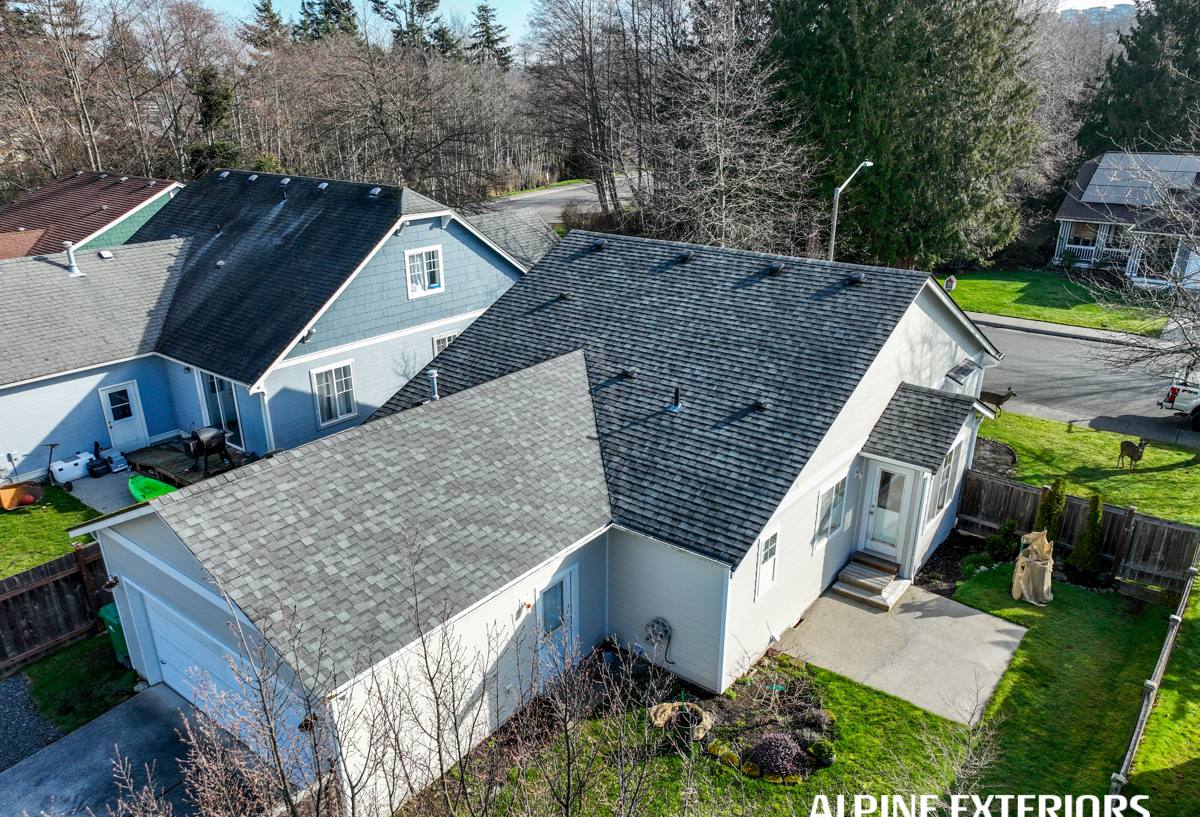
What the Local Climate Does to Siding, Roofing, and Trim
Moisture That Doesn't Leave
Inland valley locations like Sumas often get long stretches of overcast, damp weather without the wind that helps coastal areas dry out faster. Add tree cover — common on Sumas properties with larger lots — and you get siding and trim that stays wet longer after every rain. That extended dampness is exactly what wood-based and wood-fiber siding products struggle with over time: swelling at edges, paint failure, and soft spots where moisture gets trapped against the substrate.
Moss and Organic Growth
A long moss season is a fact of life in this part of Washington. Moss and algae don't just sit on the surface — on porous or absorbent siding materials, they hold moisture against the wall longer than plain rain would on its own, which accelerates whatever degradation is already happening underneath. Roofs, north-facing siding, and shaded trim are the areas we watch closest.
Temperature Swings and Freeze Cycles
Inland Whatcom County sees colder overnight temperatures and more frost than the immediate coastline. Materials that have absorbed moisture and then go through a freeze cycle are more prone to cracking and joint failure. This is one more reason material choice and installation detailing — flashing, caulking, and proper clearances — matter as much as the siding itself.
Why We Only Install James Hardie Fiber Cement
We get asked regularly why we don't offer vinyl, LP SmartSide, primed spruce, cedar, or other fiber cement brands like Cemplank or Allura. It's not because those products have no merit — some of them are reasonable options depending on budget and goals. It's because after years of installing and repairing exteriors in this exact climate, we standardized on one product system that we're confident holds up here, and we'd rather turn down a job than install something we don't believe in.
| Product | What it gets right | Why it's not what we install |
|---|---|---|
| Vinyl siding | Low upfront cost, minimal maintenance in mild climates | Can warp or crack in freeze cycles; seams and edges are entry points for the moisture common here |
| LP SmartSide | Engineered wood strand product, easier to install than solid wood | Still wood-based — sensitive to prolonged moisture exposure at cut edges and joints if maintenance lapses |
| Primed spruce / cedar | Natural look, long tradition in the Pacific Northwest | Requires ongoing repainting and sealing; the most labor-intensive to maintain against constant damp weather |
| Other fiber cement brands | Similar base material to Hardie, generally durable | We standardized on one system so our crew's install detailing, warranty support, and product knowledge stay consistent |
| James Hardie fiber cement | Non-combustible, engineered moisture and climate performance, factory-applied finish | What we install on every job |
James Hardie makes climate-specific HZ product lines engineered for exactly the wet, temperate conditions found throughout western Washington. The ColorPlus factory finish is baked on under controlled conditions rather than field-painted, which means better adhesion and a finish that isn't dependent on weather conditions on the day of installation — a real advantage when a job might get rained on partway through, which happens often enough here that it shapes how we schedule work. Hardie also backs the product with a transferable warranty that matters to a homeowner planning to sell in the next decade or two.
How We Approach a Sumas Siding Project
Assessment First
Before we talk product or price, we look at what's actually happening on the house: where moisture is collecting, whether there's rot or soft trim, how the roof and gutters are draining relative to the walls, and what the sun and shade pattern does to different sides of the home. A rural or larger-lot property in Sumas often has different sun exposure and tree cover on each elevation, which changes how we detail the installation.
Installation Detail Is Where Siding Fails or Holds Up
Fiber cement siding is only as good as the flashing, caulking, fastener pattern, and clearances behind it. We follow James Hardie's installation specifications closely, including proper gaps at the bottom of the siding, correct fastener placement, and flashing at every window, door, and horizontal joint. This is the part of the job that's invisible once it's done and is also the single biggest factor in whether siding lasts 10 years or 40.
Coordinating the Full Exterior
Because we also handle roofing, windows, and decks, we can look at a Sumas home as one connected system rather than siding in isolation. A roof that's shedding water onto a wall, or windows that aren't flashed correctly, will undermine even a well-installed siding job. Homeowners doing a full exterior refresh benefit from having one crew coordinate the sequence instead of three separate contractors each assuming the other handled the transitions.
What a Siding Project Typically Involves
- On-site assessment of existing siding, trim, moisture damage, and roofline drainage
- Removal of old siding and inspection of the sheathing underneath for rot or hidden damage
- Repair or replacement of damaged sheathing and framing before new siding goes up
- Installation of weather-resistive barrier and proper flashing at all penetrations
- James Hardie fiber cement installation to manufacturer spec, including fastener and clearance requirements
- Trim, corner, and joint detailing to shed water away from the wall assembly
- Final walkthrough covering warranty registration and basic care
Cost Factors Homeowners Should Understand
We don't quote prices without seeing the house, but the variables that move a Sumas siding estimate are consistent across most projects:
| Factor | Why it matters |
|---|---|
| Existing damage | Rotten sheathing or framing found during tear-off adds repair scope beyond the siding itself |
| House size and complexity | Multiple stories, dormers, and cut-up rooflines increase both material and labor |
| Siding profile and accessories | Lap width, trim style, and corner details affect material cost |
| Access and site conditions | Tree cover, driveway length, and lot layout affect staging and labor time on larger rural properties |
| Scope beyond siding | Combining siding with roofing, window, or trim work can be more efficient than separate projects |
Maintenance in a Long Moss Season
Even with a durable product, no exterior is maintenance-free. For Sumas homeowners, we recommend keeping gutters clear so water isn't overflowing onto walls, trimming back vegetation that keeps siding in constant shade, and doing a visual check each fall before the wet season sets in. James Hardie siding holds up well against moss and algae compared to more porous materials, but periodic gentle cleaning still keeps a home looking its best through the damp months.
Why a Local Crew Matters
A crew based in Ferndale and working regularly throughout Whatcom County — including out to Sumas — knows what this climate does to a house over years, not just what a spec sheet says it should do. We're not learning the region on a customer's roof. We're also reachable if a question comes up after the job is done, without a homeowner having to track down a contractor who was only ever passing through.
If you're weighing a siding, roofing, window, or deck project on a Sumas home, we're glad to take a look and walk through what we're seeing and why. Reach out for a free, no-pressure estimate using the form below.