 Ferndale Siding
 Siding for Sudden Valley Homes
Sudden Valley homeowners deal with a specific combination of weather that doesn't show up the same way everywhere in western Washington. You get moisture-laden air moving in off the water, long stretches of low sun and high humidity, and enough rainfall each year that "dry season" is a relative term. Add in tree cover that keeps shaded siding wet longer after a storm, and you have an exterior environment that rewards the right material and installation choices — and quietly punishes the wrong ones.
We work throughout the Ferndale area and greater Whatcom County, and Sudden Valley is part of that regular service territory. This page walks through what the climate actually does to siding over time, how we approach exterior work here, and why we've standardized on one product rather than offering a menu of options.
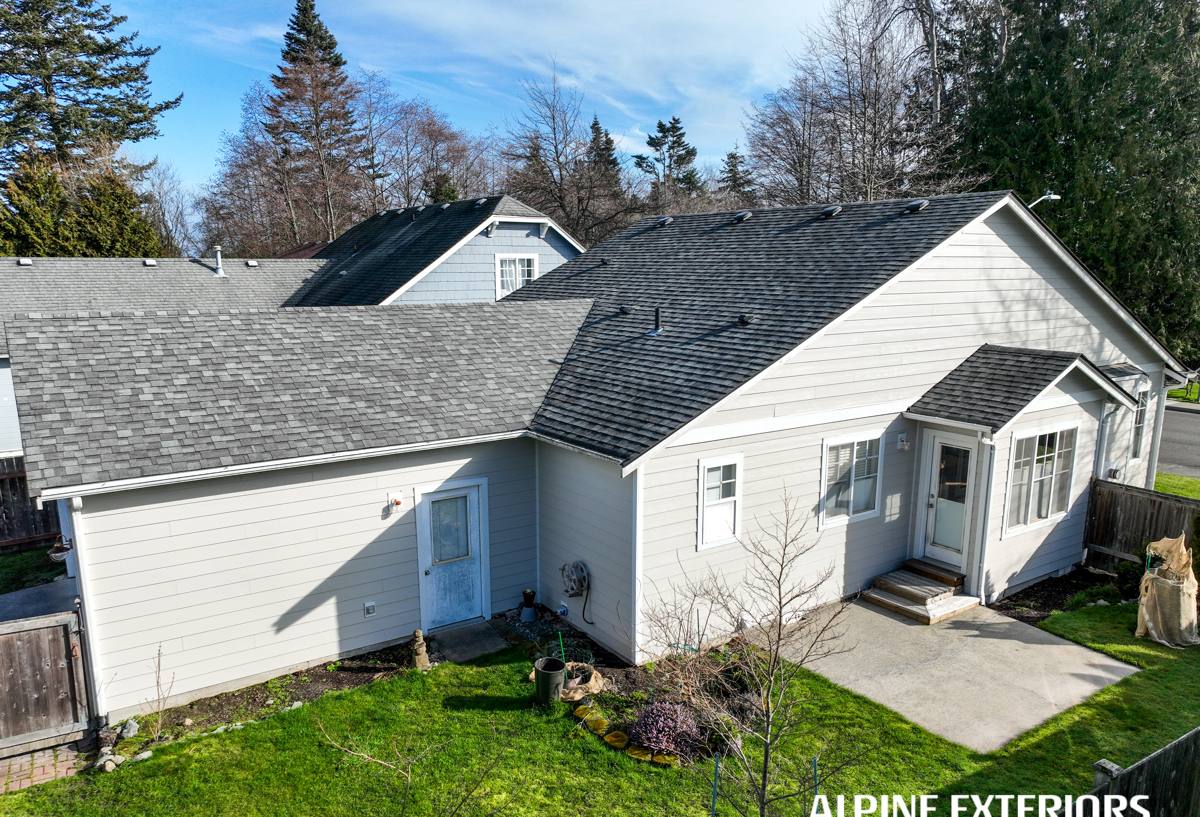
What the Local Climate Does to Siding
Salt Air
Proximity to Puget Sound and the Strait of Georgia means airborne salt is a real factor for siding, trim, fasteners, and any exposed metal on a home's exterior. Salt-laden moisture accelerates corrosion on lower-quality fasteners and flashing, and it can degrade coatings that weren't formulated to handle it. Over years, homes closer to open water see faster fading and finish breakdown on materials with thin or field-applied paint.
Driving Rain
This isn't gentle, straight-down rain. Storms here frequently come with wind, which pushes water sideways into seams, laps, and butt joints rather than letting it run straight off the wall. Siding systems that rely on tight caulk lines and perfect field painting to stay watertight are more exposed to failure in this kind of weather than systems engineered with wider tolerances for water contact.
Moss Season
Western Washington's extended moss season — roughly fall through spring, longer in shaded and north-facing areas — means siding and roofing stay damp for extended periods without the drying time that a sunnier climate would provide. Moss and algae growth on siding isn't just cosmetic. Where it takes hold on a moisture-sensitive substrate, it can trap water against the surface and shorten the material's working life.
How This Shows Up on Different Homes
Not every house in Sudden Valley faces the same exposure. A home with a lot of tree canopy and north- or west-facing walls will hold moisture longer than a more open, south-facing lot. Homes closer to the water see more salt exposure; homes tucked into the trees see more moss and less UV to keep surfaces dry. When we walk a property, we're looking at sun exposure, wind direction, roof overhangs, grade and drainage, and existing moisture staining — all of it informs how we detail the installation, not just what material goes up.
Why We Only Install James Hardie Fiber Cement
We used to get asked why we don't offer vinyl, LP SmartSide, or other fiber cement brands. The honest answer is that we made a call as a company: in a climate like this one, the trade-offs on those products aren't worth it, and we didn't want to keep installing something we'd have reservations about standing behind.
- Non-combustible: Fiber cement doesn't burn, which matters given wildfire smoke and ember exposure that's become a more regular part of Pacific Northwest summers.
- Factory-applied ColorPlus finish: The color and protective coating are baked on at the factory under controlled conditions, not brushed or sprayed on site where weather and technique can vary. That finish is engineered specifically to resist fading and moisture intrusion better than field-applied paint.
- Climate-engineered product lines: Hardie makes region-specific HZ formulations. The version we install here is built for the wetter, milder climate zone the Pacific Northwest falls into, rather than a one-size-fits-all formula.
- Dimensional stability: Fiber cement doesn't expand and contract with moisture and temperature the way wood-based or vinyl products can, which means fewer seams opening up and less caulk maintenance over time.
- Transferable warranty: A strong, transferable warranty backing the product matters to future buyers, not just the person paying for the install.
We're not going to pretend other products are worthless — vinyl and engineered wood siding have legitimate uses and price points, and plenty of homes around the country wear them fine. Our position is narrower and more specific: for this climate, with this much sustained moisture and salt exposure, fiber cement is the material we're willing to install and warranty our workmanship on.
A Straightforward Look at the Alternatives
| Material | How It Handles This Climate | Why We Don't Install It |
|---|---|---|
| Vinyl siding | Sheds water on the surface but relies on gaps and laps rather than a sealed system; can warp in temperature swings | Seams and panel movement create long-term water-management questions in a driving-rain climate |
| LP SmartSide | Wood-strand product with a factory finish, but the substrate is still wood-based | Wood-based cores are more sensitive to sustained moisture exposure than fiber cement, especially at cut edges and seams |
| Primed cedar / spruce | Natural material, attractive, but needs ongoing paint maintenance | Field-applied coatings break down faster here than a factory finish, and repainting cycles get short in a wet climate |
| Other fiber cement brands | Similar core material to Hardie | We standardized on one manufacturer's engineering, finish system, and warranty structure rather than mixing brands |
| James Hardie fiber cement | Non-combustible, dimensionally stable, factory-finished, climate-specific HZ formulation | This is what we install |
Installation Details That Actually Matter Here
The material is only part of the equation. In a climate this wet, installation detailing is where siding jobs succeed or fail. A handful of things we pay close attention to on every job:
- Proper drainage plane and weather-resistive barrier behind the siding, not just siding nailed straight to sheathing
- Correct fastener spacing and type to avoid blow-outs and premature corrosion
- Flashing at every window, door, and horizontal trim transition — the places water actually gets in
- Appropriate clearance between siding and grade, decks, roofs, and other hardscape so the bottom edge isn't sitting in standing moisture
- Caulking only where Hardie's specifications call for it, not as a substitute for proper flashing and lap detailing
These details don't show up in a sales pitch, but they're the difference between siding that looks good for a couple of years and siding that performs for decades.
Why a Local Crew Matters
Exterior work in Whatcom County isn't identical to exterior work in a drier or more sheltered climate, and a crew that primarily works elsewhere doesn't always carry the local judgment calls that come from doing this repeatedly in this specific weather. A local crew:
- Knows how sun exposure, tree cover, and wind direction vary lot to lot in this area, and adjusts detailing accordingly
- Can respond quickly if a warranty question or minor issue comes up after the job is done
- Has an ongoing reputation in the community to protect, which shapes how carefully the work gets done
- Understands local permitting and typical construction in the area, which speeds up the process
Beyond Siding: A Full Exterior Approach
Siding doesn't work in isolation. Roofing, windows, and decks all interact with how water moves around a home, and we handle all four so the exterior gets treated as one connected system rather than separate, uncoordinated projects.
| Service | How It Connects to Siding Performance |
|---|---|
| Roofing | Roof edges, valleys, and overhangs determine how much water and runoff siding has to deal with, especially during driving rain |
| Windows | Window flashing integrates directly with siding installation; poor coordination here is a leading cause of hidden moisture problems |
| Decks | Deck ledger boards and siding clearance at deck level are a common trouble spot if not detailed correctly during construction |
When we're on a property for a siding project, we're also looking at these adjacent systems and flagging anything that could undermine the new siding down the road.
What This Costs
Every home is different, so we don't publish blanket pricing, but a few factors consistently drive the cost on Sudden Valley projects:
| Factor | Why It Matters |
|---|---|
| Square footage and home shape | More corners, dormers, and trim details mean more labor and material cuts |
| Existing siding removal | Tear-off and disposal of old material adds time compared to new construction |
| Substrate condition | Rot or moisture damage found underneath the old siding needs repair before new siding goes up |
| Trim and accessory choices | Hardie Trim boards, soffit, and accessory pieces affect both material cost and labor |
| Access and site conditions | Steep lots, tree removal needs, or tight access around a home affect scheduling and cost |
Maintenance Checklist for Sudden Valley Homeowners
Even with the right material and installation, siding still benefits from basic upkeep in this climate:
- Rinse siding annually to remove airborne salt residue, dust, and early moss or algae buildup
- Keep gutters clear so overflow doesn't run down the wall behind the siding
- Trim back vegetation touching the siding to improve airflow and drying time
- Walk the exterior once a year and check caulking at trim transitions, window flashing, and butt joints
- Address any moss or dark staining promptly rather than letting it sit through another wet season
If you're weighing a siding project for your Sudden Valley home, we're glad to come take a look, walk the property with you, and give you a straightforward, no-pressure estimate — including an honest read on what your home's specific exposure calls for.