 Ferndale Siding
 Fairhaven Sits Right Where the Weather Gets to Work
Homes in and around Fairhaven live with a combination of stressors that inland Whatcom County houses simply don't deal with in the same way. Salt-laden air moves in off the water, driving rain comes in sideways during winter storms, and a long, damp shoulder season keeps north-facing walls and shaded eaves wet for weeks at a time. None of that is unusual for this part of Washington, but it adds up over the life of a house, and it shows up first and worst in the exterior siding.
We're a Ferndale-based crew, and we spend a lot of our time working on homes that face exactly this kind of exposure. That's shaped how we think about siding, and it's a big part of why we made the call to install only one product system rather than offer several.
Salt Air and What It Does Over Time
Airborne salt doesn't just affect metal fasteners and flashing — it accelerates the breakdown of paint films and finishes on wood-based and composite sidings, and it can work into seams and end cuts faster than people expect. Over a decade or two, a coastal-exposed wall can weather noticeably faster than the same product on a home a few miles inland. This isn't a defect in any particular product; it's just what salt air does to exterior materials generally, and it's a real factor when you're picking what goes on your walls.
Driving Rain and Wind-Driven Moisture
Rain that falls straight down is one thing. Rain that gets pushed sideways by wind off the water is another — it finds gaps, laps, and butt joints that would stay dry in a calmer climate. Siding systems that rely on tight factory tolerances and a good drainage plane behind them tend to hold up here; systems that depend on field-applied paint or caulk to stay watertight are more likely to show trouble at the seams over time.
Moss, Algae, and the Long Wet Season
Whatcom County's wet season runs long, and shaded or north-facing wall sections can stay damp for extended stretches. That's ideal territory for moss and algae growth on any exterior surface, and it's especially hard on materials that absorb and hold moisture, because trapped water behind a growth layer is what eventually leads to rot, delamination, or paint failure. A siding material that resists water absorption at its core gives you a real head start against this.
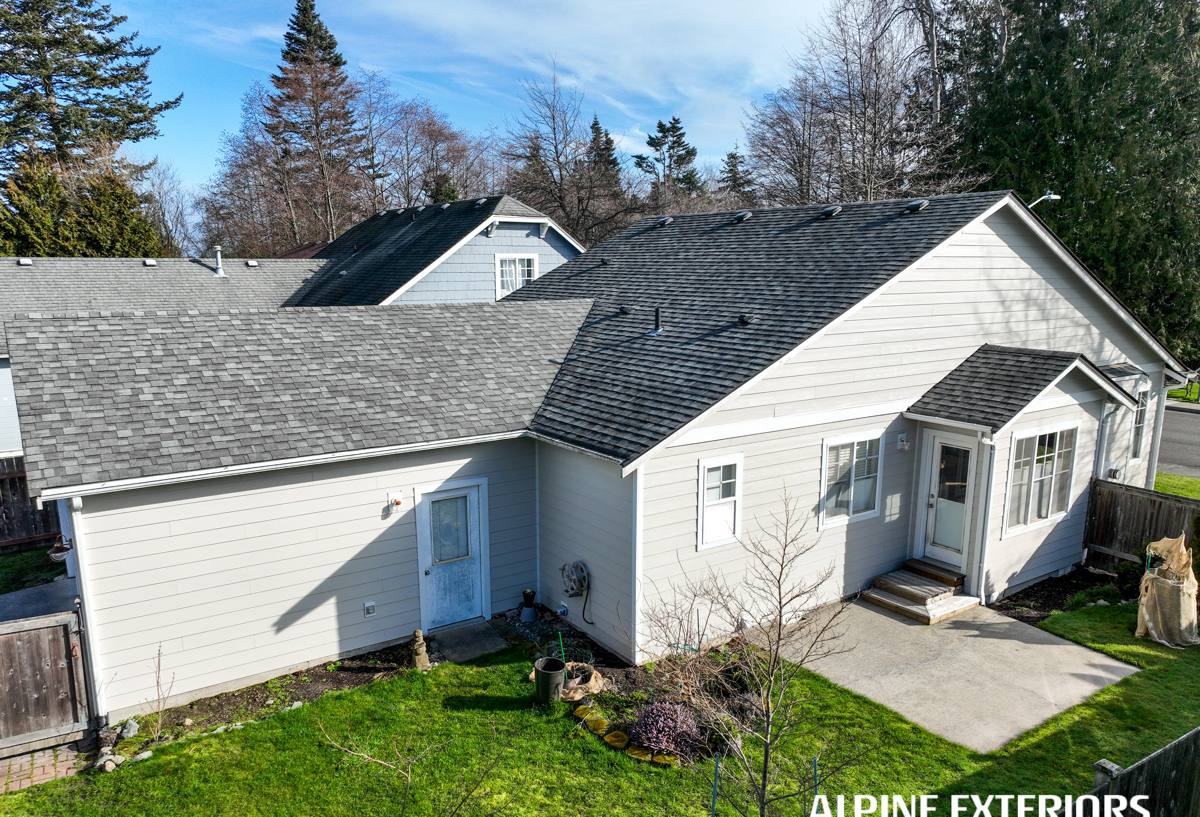
Why We Standardized on James Hardie Fiber Cement
We used to install a wider range of siding products. Over time, watching how different materials actually performed in this climate — not in a brochure, but on real roofs and walls in Whatcom County — we narrowed our offering to James Hardie fiber cement exclusively. It's not the cheapest option on the market, and we're upfront about that. But it's the one we're comfortable standing behind for the specific conditions homes here face.
Non-Combustible and Built for Moisture
Fiber cement is manufactured from cellulose fiber, sand, and cement, and it doesn't burn, warp, or absorb water the way wood-based products can. Hardie's HZ5 product line is engineered specifically for wetter, harsher climates like the Pacific Northwest, with a formulation and installation guidance built around freeze-thaw cycles and sustained moisture exposure rather than dry-climate conditions.
The ColorPlus Factory Finish
Rather than relying on field-applied paint that has to cure correctly on-site and gets re-exposed to the weather at every seam, ColorPlus finishes are baked on in a controlled factory environment before the product ever reaches a job site. That finish is backed by its own separate warranty against fading and peeling, which matters directly in a salt-air environment where lesser finishes tend to chalk and fade fastest.
What We Don't Install, and Why
We don't install vinyl, LP SmartSide, cedar, primed spruce, or composite panel products like Cemplank or Allura. Each of those has legitimate uses and loyal installers elsewhere. Our decision isn't a claim that they're bad products — it's that after years of callbacks and re-siding jobs on homes near the water, we decided we'd rather offer one system we trust completely than several we'd have to caveat. Vinyl can warp and fade faster under UV and salt exposure. Engineered wood products depend heavily on field sealing at every cut edge to keep water out over the long run. Cedar and primed wood need consistent repainting and staining to hold up in a wet climate. Fiber cement removes most of those maintenance dependencies from day one.
How a Fairhaven Siding Project Actually Works
Every job starts with a walk-around, not a sales pitch. We look at what's actually happening on the walls today — moisture staining, soft trim, failed caulk lines, moss buildup — before we talk about what goes back up.
Inspection and Moisture Assessment
Because coastal exposure hides moisture problems behind siding that still looks fine from the curb, we check sheathing condition wherever we open up a wall, not just where damage is visible. Catching a soft spot early is a lot cheaper than finding it after new siding is already installed over it.
Installation to Manufacturer Spec
James Hardie's warranty coverage depends on correct installation — proper fastener spacing, correct clearances at grade and roofline, and correctly lapped and caulked joints where the product actually calls for sealant. A lot of the difference between fiber cement siding that lasts thirty-plus years and fiber cement siding that has problems in year eight comes down to whether it was installed to spec. We install every job to that standard because it's the only way the material performs the way it's designed to.
Beyond Siding: Roofing, Windows, and Decks
Siding doesn't work in isolation. A roof with failing flashing will send water behind even perfectly installed siding, and windows with worn seals create the same problem from a different direction. We handle roofing, window replacement, and deck work alongside siding because these systems all have to work together to actually keep a coastal home dry. When we're on-site for a siding project, we'll flag roofing or window issues we notice — not to upsell, but because ignoring them undermines the siding work itself.
What Drives Cost on a Job Like This
Every home is different, but the same handful of factors tend to move the price up or down on siding projects in this area.
| Factor | Why It Matters |
|---|---|
| Existing siding removal | Tear-off and disposal of old material adds labor, especially with multiple layers or hidden rot |
| Sheathing repair | Moisture damage found during removal has to be repaired before new siding goes on |
| Home height and access | Multi-story walls, steep grades, or tight side yards increase scaffolding and staging time |
| Trim and detail work | Corner boards, window trim, and architectural detailing take more time than flat wall runs |
| Siding profile and color | Lap width, shingle-style panels, and specific ColorPlus colors carry different material costs |
We give straightforward written estimates that break these out, so you can see what you're actually paying for rather than a single lump number.
Choosing a Contractor for a Coastal Job
Not every siding crew is equally comfortable with the moisture and detailing demands of a coastal-influenced climate like Fairhaven's. A few things worth asking before you hire anyone:
- Are they licensed and insured in Washington, and can they show you current proof without hesitation?
- Do they check sheathing condition during tear-off, or just install over whatever is underneath?
- Will they put fastener spacing, flashing details, and clearances in writing, not just verbally?
- Do they warranty their labor separately from the manufacturer's product warranty?
- Can they explain why they chose the specific siding product they're recommending for your home?
Maintenance in a Marine Climate
Even with a low-maintenance material like fiber cement, a few habits go a long way here: keep gutters clear so water isn't sheeting down wall faces, rinse visible moss or algae growth before it spreads, and do a quick visual check of caulk lines at trim and windows each fall before the wet season sets in. None of this is heavy work, but skipping it lets small issues sit wet for months at a time.
Let's Take a Look at Your Home
If you're dealing with aging siding, moss buildup, or a wall that's starting to show its age, we're happy to come take a look and give you a straightforward, no-pressure estimate — no obligation, and no pressure to sign anything on the spot. Fill out the form below and we'll get in touch to schedule a time that works.