 Ferndale Siding
 Exterior Work Built for a Marine Climate
Semiahmoo sits about as close to the water as a home in Whatcom County can get. That location is the whole draw — the bay views, the marina, the golf course, the sense of being tucked into a quiet corner of the Pacific Northwest coastline. It's also exactly why homes out here take a different kind of beating than a house ten miles inland. Salt-laden air, wind-driven rain coming straight off the water, and a moss season that runs longer than most homeowners expect all work on a house's exterior at the same time, year after year. We're a Ferndale-based crew that works this part of Whatcom County regularly, and the exterior systems we recommend and install are chosen with that specific combination of stressors in mind.
This page covers what we see on Semiahmoo-area homes, how salt air and moisture actually damage siding, roofing, windows, and decks over time, and why our company standardized on James Hardie fiber cement siding rather than the vinyl, engineered wood, or unfinished wood products still common on older homes in the area.
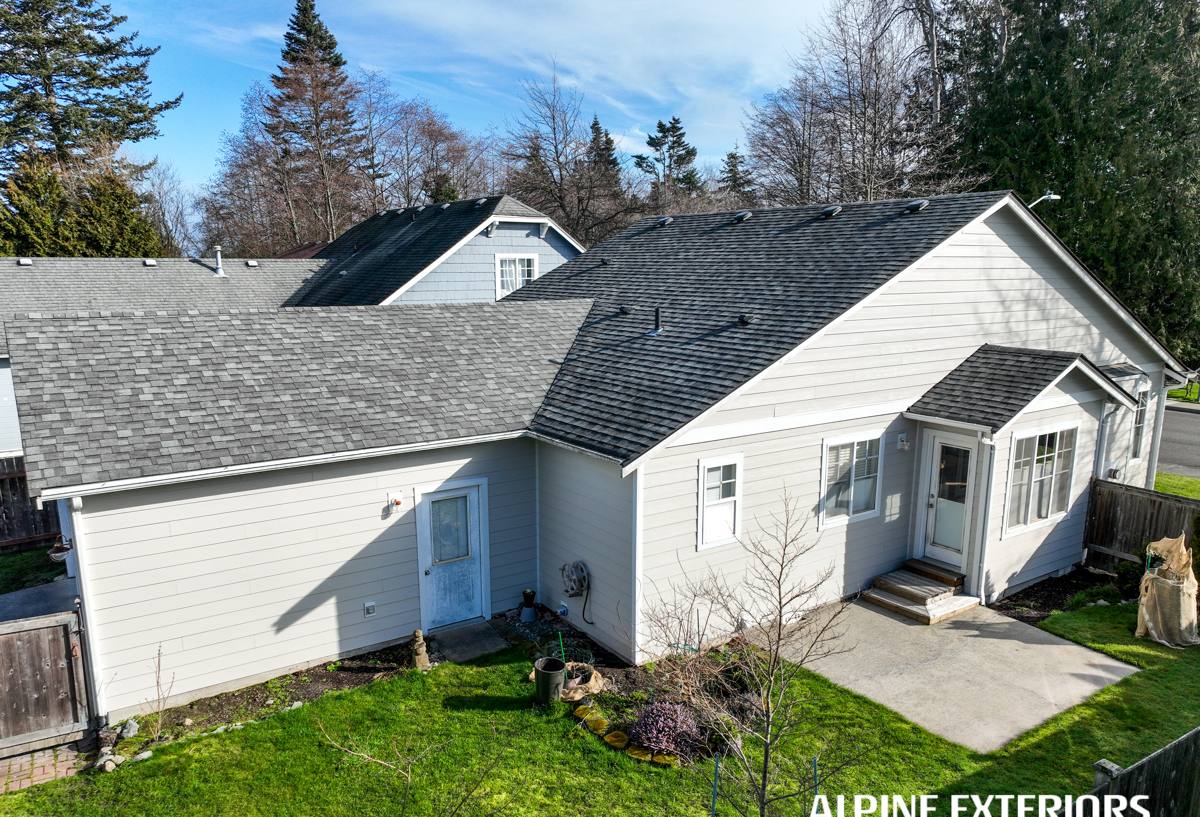
What Salt Air Actually Does to a House
Salt air isn't just a coastal cliché — it's a chemically active problem. Airborne salt is hygroscopic, meaning it pulls moisture out of the air and holds it against whatever surface it lands on. On a home near Semiahmoo Bay, that means fasteners, flashing, window hardware, and any exposed metal are under near-constant low-grade corrosion pressure, even on days that look dry.
- Fasteners and flashing: Standard galvanized fasteners corrode faster in salt-influenced air than the coatings were rated for. Corroded fasteners loosen siding and roofing over time, opening gaps for water.
- Paint and finishes: Site-applied paint on wood or composite trim breaks down faster near salt water. Chalking, fading, and cracking show up sooner than the same product would experience inland.
- Window and door hardware: Hinges, tracks, and locks see accelerated wear. This is a maintenance item homeowners can stay ahead of, but it's worth knowing the clock runs faster here.
Driving Rain and Wind-Loaded Water
The second half of the equation is wind-driven rain. Semiahmoo's exposure means storms don't just fall straight down — wind pushes rain sideways into wall assemblies, under trim, and into any gap in the building envelope. This is a very different load than a sheltered inland lot sees, and it changes what "good enough" installation looks like.
Wind-driven rain finds weaknesses that vertical rain never would: a caulk joint that's slightly short, a J-channel that wasn't lapped correctly, a window flange with a gap behind the trim. On an exposed lot, those small misses turn into real moisture intrusion faster than they would on a protected site. This is why installation detail — not just material choice — matters so much for homes in this location.
Moss, Algae, and the Long Wet Season
Whatcom County's wet season runs long, and a Semiahmoo lot with tree cover, shade, or a north-facing wall holds moisture even longer than that. Moss and algae growth on siding and roofing isn't just cosmetic — sustained organic growth holds water against the surface underneath it, and on porous or absorbent materials that constant dampness accelerates rot, delamination, and coating failure.
Roofs are usually the first place homeowners notice moss, but siding and deck surfaces in shaded areas are just as exposed. A material that can't shed moisture and dry out between rain events is going to show problems in this climate faster than the same product would somewhere drier.
Why We Install Only James Hardie Fiber Cement
We made a deliberate decision as a company to install James Hardie fiber cement siding exclusively — not vinyl, not LP SmartSide or other engineered wood products, not unfinished cedar or primed spruce. That decision comes directly out of what we see on coastal Whatcom County homes.
Fiber cement is non-combustible and dimensionally stable, meaning it doesn't expand and contract with moisture the way wood-based products do. That matters directly in a driving-rain, high-humidity environment: engineered wood siding is wood fiber at its core, and if the factory-applied seal is compromised at a cut edge, a fastener hole, or a damaged corner, moisture can wick into the substrate and cause swelling or delamination — a failure mode that's harder to catch early and more disruptive to fix. Vinyl siding, meanwhile, doesn't rot, but it's a thin material that can distort in temperature swings, and its water-resistance depends entirely on the drainage plane behind it rather than the panel itself standing up to sustained wetting.
James Hardie's ColorPlus factory finish is baked on in a controlled environment and backed by its own finish warranty, so it isn't relying on a site-applied paint job to hold up against salt air and UV exposure. The HZ5 product line is engineered specifically for cold, wet climates like ours. None of this means other products are without merit — it means that for the specific combination of salt exposure, wind-driven rain, and long wet seasons this area sees, fiber cement is the material we're willing to put our name behind.
Material Comparison for Coastal Exposure
| Material | Moisture Behavior | Finish Durability | Our Position |
|---|---|---|---|
| James Hardie fiber cement | Non-combustible, dimensionally stable, doesn't swell or rot | Factory ColorPlus finish, separately warrantied | What we install |
| Engineered wood (e.g. LP SmartSide) | Wood-fiber core; vulnerable at compromised edges/cuts | Site or factory finish, sensitive to moisture at seams | Not installed by our crew |
| Vinyl | Doesn't rot but can warp/distort; relies on drainage plane | Color molded in but can fade/chalk over time | Not installed by our crew |
| Unfinished cedar / primed spruce | Natural wood; needs ongoing sealing to resist moisture | Requires regular repainting/staining | Not installed by our crew |
Roofing, Windows, and Decks in This Climate
Siding is only part of a home's exterior envelope, and we work all four systems for Semiahmoo-area homeowners because they interact. A roof that's shedding granules or holding moss puts more water down the wall plane below it. Windows with failed flashing let wind-driven rain behind the siding no matter how good the siding itself is. A deck with undersized ledger flashing or the wrong fastener spec corrodes fast in salt air and becomes a safety issue, not just a cosmetic one.
What we look at on each system
- Roofing: Moss and algae staining, flashing condition around chimneys and valleys, granule loss on asphalt shingles, and ventilation — poor attic ventilation traps moisture that later shows up as roof deck rot.
- Windows: Seal failure (fogging between panes), corroded hardware, and flashing integration with the siding, which is where most water intrusion around windows actually originates.
- Decks: Ledger board flashing, fastener corrosion, and end-grain sealing on any wood components, since end grain absorbs water fastest.
What Correct Installation Looks Like Here
Material choice only solves half the problem — installation detail solves the other half, especially on an exposed lot. For siding specifically, that means starter strips set correctly, proper flashing at every window and door head, correct fastener spacing and type (matched to the substrate, not just whatever's on the truck), and rain-screen or drainage-gap details that let incidental moisture drain and the wall assembly dry out. Caulking is used at transitions, not as a substitute for flashing. These aren't optional refinements — on a site with this much wind-driven rain, skipping any one of them is where leaks actually start.
A Maintenance Checklist for Semiahmoo Homeowners
Even the right materials, correctly installed, benefit from a homeowner keeping an eye on a few things given the local climate:
- Rinse salt residue off siding and window glass periodically, especially after storms with onshore wind
- Keep gutters and downspouts clear — clogged gutters send water down the wall plane instead of away from it
- Trim back vegetation and tree cover that keeps walls or roof sections shaded and slow to dry
- Check caulking at window and door trim annually for cracking or gaps
- Have moss treated on roofing before it spreads to shaded siding areas
- Inspect deck ledger connections and fasteners for corrosion staining
Cost Factors for Exterior Work on Exposed Sites
| Factor | Why It Matters Here |
|---|---|
| Wind/rain exposure of the lot | Waterfront or open-exposure sites often need more flashing detail and labor time |
| Existing moisture damage | Salt-air and moss-related rot found during tear-off can add scope once walls are opened up |
| Home size and wall complexity | More corners, dormers, and transitions mean more flashing and trim work |
| Material line selected | Hardie panel, lap, and shingle-style products carry different material and labor costs |
| Access and staging | Waterfront or hillside lots can affect scaffolding and material staging logistics |
Why a Local Crew Matters
A crew that works Whatcom County regularly knows what "normal wear" looks like on a Semiahmoo-area home versus what's actually a sign of a bigger moisture problem. We're not guessing at how salt air, driving rain, and moss season interact with a wall assembly — we see it on a recurring basis, and it's the reason we install the way we do and the reason we settled on fiber cement as our standard material. Being based in Ferndale also means we're a short drive away for follow-up, warranty questions, or a second look at something that's bothering you, not a crew that disappears once the invoice is paid.
If you're planning siding, roofing, window, or deck work on a Semiahmoo-area home, we're happy to take a look and talk through what your specific exposure and existing materials call for. Reach out for a free, no-pressure estimate — there's a form right below this page to get started.