 Ferndale Siding
 Exterior Work Built for Sandy Point's Waterfront Exposure
Sandy Point sits right up against Bellingham Bay, and that waterfront location shapes everything about how a home's exterior holds up out there. Homes in this part of Whatcom County deal with a combination most inland Ferndale properties don't see nearly as often: near-constant salt-laden air, wind-driven rain coming off the water, and a wet season that stretches long enough to grow moss on just about anything that holds moisture. We've worked on homes throughout this area long enough to know that "good enough" exterior materials don't stay good enough for long out here.
This page covers how we approach siding, roofing, windows, and decks for Sandy Point specifically — not a generic checklist, but the actual conditions we plan around when we're bidding and building a job in this neighborhood.
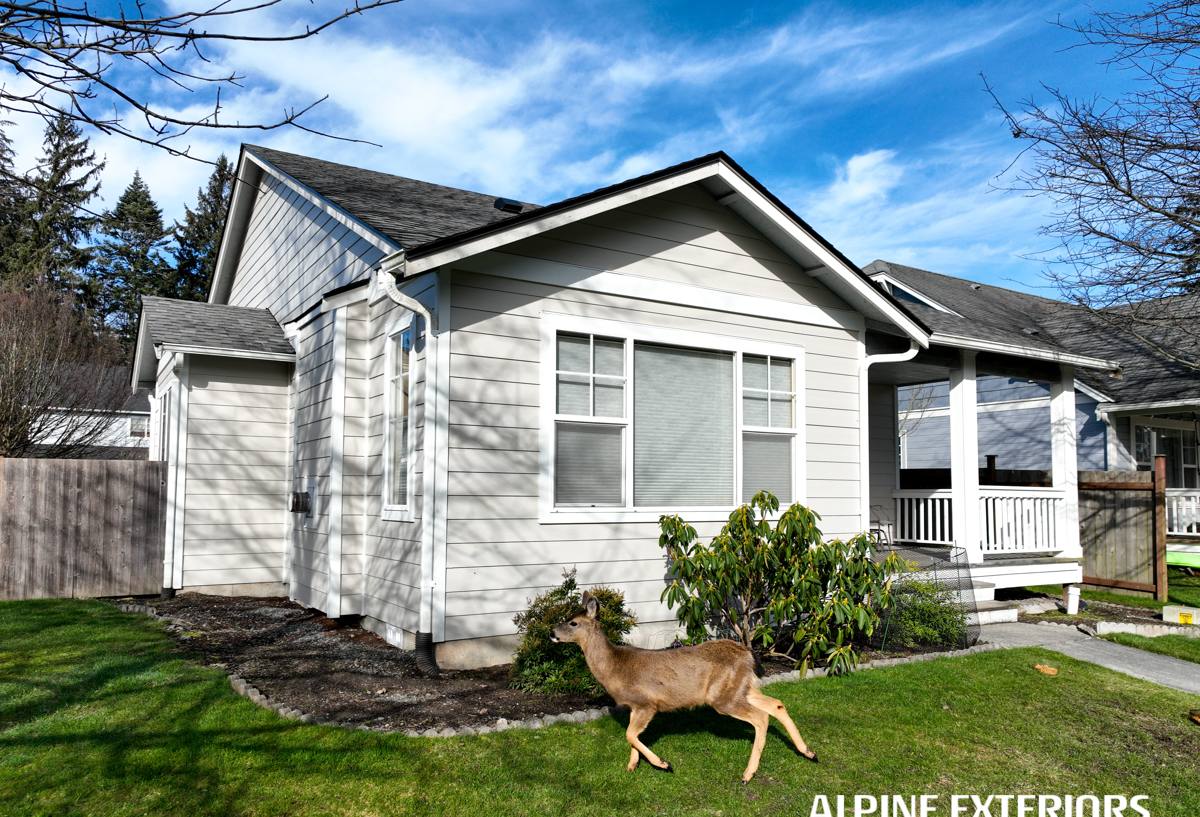
What Sandy Point's Climate Actually Does to a House
Salt Air and Corrosion
Airborne salt from the bay settles on every exterior surface — siding, trim, fasteners, flashing, even window hardware. Over years, that salt exposure accelerates corrosion on anything not rated for it. Cheap or mismatched fasteners rust and stain the siding around them. Untreated metal flashing pits and fails early. It's one of the reasons material selection and hardware selection matter more here than they would on a home ten miles inland.
Driving Rain and Wind-Driven Moisture
Storms coming off the water don't just drop rain straight down — wind pushes it sideways, into seams, laps, and any gap in the building envelope. That means water intrusion risk is higher at every joint: siding overlaps, window flashing, roof-to-wall transitions, deck ledger connections. A house near the water needs those details built tighter than code minimum, because the margin for a sloppy flashing job is smaller.
A Long, Wet Moss Season
Whatcom County's wet season runs long, and the combination of shade, moisture, and mild temperatures gives moss and algae plenty of time to establish themselves on roofs and north-facing siding. Once moss gets a foothold, it holds moisture against the surface underneath it — which is bad news for any material that isn't dimensionally stable or that absorbs water.
Why Siding Choice Matters More on the Water
We install James Hardie fiber cement siding exclusively, and Sandy Point is a good example of why. Fiber cement is non-combustible and dimensionally stable — it doesn't swell, warp, or rot when it stays damp for extended stretches, which matters when a house sits in a moss-friendly, high-moisture environment for months at a time. Hardie's ColorPlus factory finish is baked on and engineered to resist fading and moisture intrusion better than field-applied paint, which matters when salt air is working against the finish year-round.
We don't install vinyl, LP SmartSide, Cemplank, Allura, primed spruce, or cedar, and near the water the trade-offs of those products show up faster than they would elsewhere:
- Vinyl can warp or become brittle under UV and temperature swings, and its seams give wind-driven rain more opportunities to work behind the panel.
- Wood-based composite siding (like LP SmartSide) uses engineered wood with resin-treated edges — well-made, but any breach in that treated layer from a poor cut or fastener placement opens the door to moisture absorption, which is a bigger risk in a wet, salty environment.
- Cedar is a beautiful natural product, but it needs consistent refinishing to keep water out, and that maintenance burden only grows in a climate that's wet more months than it's dry.
- Primed spruce depends entirely on the paint film staying intact; once that film fails at a cut edge or nail hole, the wood underneath is exposed to exactly the kind of sustained moisture Sandy Point delivers.
None of these products are junk — they all have a place. But when a home is going to spend decades absorbing salt air and driving rain, we'd rather put a non-combustible, factory-finished, moisture-resistant product on it than one that depends on a maintenance schedule being followed perfectly.
Roofing for a Waterfront Exposure
Roofs in Sandy Point take a beating from two directions: wind-driven rain trying to find a way under shingles and flashing, and moss that establishes itself in shaded, north-facing sections and holds moisture against the roofing material. We pay close attention to a few things on every roofing job out here:
- Proper underlayment and ice-and-water shield at eaves, valleys, and any low-slope transition, since those are the spots wind-driven rain finds first.
- Flashing details around chimneys, vents, and roof-to-wall intersections — the majority of roof leaks we find start at flashing, not at the field of the roofing material itself.
- Ventilation, so the attic isn't holding extra moisture that then works against the roof deck from underneath.
Moss removal and prevention conversations come up a lot on Sandy Point roofs specifically, given how long the wet season runs and how much shade some of these lots have from surrounding trees.
Windows: Sealing Out Salt Air and Wind
Window performance near the water comes down to two things: how well the unit is sealed and flashed into the wall, and how well the frame and hardware resist salt-air corrosion over time. A window that's a great product on paper can still leak or fail early if it's not flashed correctly into fiber cement or any other siding system. We treat window replacement and new window installation as part of the whole building envelope, not a standalone swap-in job, because on a waterfront property the flashing integration matters as much as the window itself.
Decks: Built for Salt, Sun, and Standing Water
A deck on a Sandy Point property faces salt exposure on every fastener and connector, plus the structural demands of ledger and post connections that need to stay sound in a wet climate for decades. We pay particular attention to:
- Corrosion-resistant fasteners and hardware rated for coastal exposure.
- Proper ledger flashing where the deck attaches to the house, since that's a common spot for hidden water damage to start.
- Decking material choice that matches how much sun, shade, and moisture a given deck actually sees — a shaded, water-facing deck has different needs than a sun-exposed one.
Composite vs. Wood Decking Near the Water
| Factor | Wood Decking | Composite Decking |
|---|---|---|
| Maintenance | Regular staining/sealing needed, more often near salt air | Minimal — occasional cleaning |
| Moisture resistance | Depends on species and finish upkeep | Generally more stable in wet, salty conditions |
| Moss/algae growth | Can develop in shaded, damp areas without upkeep | Less prone to growth, but not immune in constant shade |
| Upfront cost | Typically lower | Typically higher |
| Long-term cost | Higher over time with upkeep factored in | Lower maintenance cost over the deck's life |
Why a Local Crew Matters Here
Sandy Point isn't a generic subdivision — it's a specific waterfront environment within Ferndale and Whatcom County, and the right approach to siding, roofing, windows, and decks changes based on how exposed a given lot is to wind and salt spray off the bay. A crew that works this area regularly knows to check flashing details more carefully on the water-facing sides of a house, knows which spots on a roof tend to hold moss, and doesn't treat every job like it's the same as one built inland. That local knowledge shows up in fewer callbacks and fewer surprises a few years down the road.
What to Expect When We Bid a Sandy Point Job
Every estimate starts with a walk-around looking at exposure — which sides of the house face the water and prevailing wind, where moss and moisture have already been an issue, and what condition the existing siding, roofing, windows, or decking are in. From there we talk through material options honestly, including why we'll recommend James Hardie siding over other products if siding is on the table, and what installation details matter most given the specific lot.
A Quick Pre-Estimate Checklist
- Note any visible moss or algae buildup on the roof or north-facing siding.
- Check for staining or rust streaks around fasteners, flashing, or hardware.
- Look for any soft or discolored siding near ground level or under windows.
- Check deck ledger boards and post bases for discoloration or soft spots.
- Note which sides of the house take the most direct wind and rain off the water.
If you're weighing a siding, roofing, window, or deck project on a Sandy Point property, we're happy to take a look and give you a straightforward, no-pressure estimate — just fill out the form below to get started.