 Ferndale Siding
 Decks Built for Bellingham's Marine Climate
A deck in Bellingham lives a different life than a deck built inland. Sitting near the water on Bellingham Bay means salt-laden air moving through fasteners and metal hardware. Add Whatcom County's long wet season — steady driving rain from fall through spring — and a shade pattern from mature evergreens that keeps many yards damp well into summer, and you have a structure that's under constant pressure to fail early if it isn't built right the first time. We've built and repaired decks throughout Bellingham and Ferndale long enough to know exactly where the shortcuts show up two or three winters later.
This page is about one thing: what it actually takes to build a custom deck in Bellingham that holds up, and what a homeowner should expect from a contractor who does this work correctly.
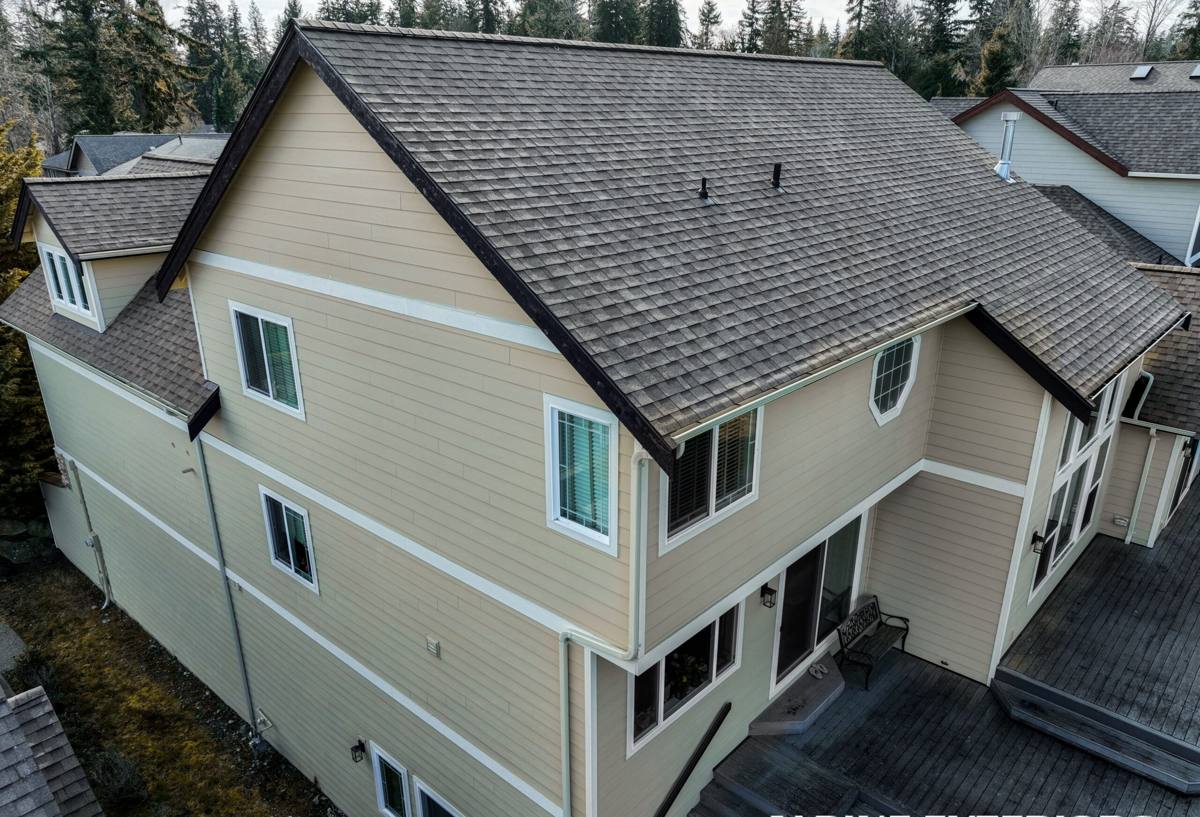
What This Climate Does to a Deck Built the Wrong Way
Salt Air and Corrosion
Homes closer to the bay deal with airborne salt that accelerates corrosion on anything less than the right-grade hardware. Standard electro-galvanized screws and joist hangers can start rusting and staining the decking within a few seasons in these locations. It's a slow failure — you don't see it until a fastener head snaps off or a hanger streaks the wood beneath it with rust.
Driving Rain and Trapped Moisture
Whatcom County doesn't get flash floods; it gets weeks of steady, sideways rain. That means moisture finds its way into every gap, ledger connection, and end-grain cut that isn't sealed or flashed. Decks fail from the inside out here — a ledger board rotting against the house, joists soaking up water where they meet a beam, or decking boards that never fully dry between rains and start to cup and split.
Moss Season
Between the rain and the shade many Bellingham lots get from surrounding trees, moss and algae have a long growing window — often most of the year on north-facing or heavily shaded decks. Moss holds moisture against the wood surface and turns a deck slick and dangerous underfoot if it isn't managed. It's not just a cosmetic problem; it's a maintenance and safety issue that starts the moment the deck is finished.
What a Correctly Built Deck Requires Here
None of the climate problems above are unusual to us — they're just things that have to be designed for from the footings up, not patched later.
- Footings set below frost depth and sized for the actual soil conditions on the lot, not a generic minimum.
- Ledger flashing done properly where the deck attaches to the house — this is the single most common failure point we find on older decks in this area.
- Stainless or high-grade coated fasteners and hardware, especially on any deck within a few miles of the bay.
- Joist tape or a comparable moisture barrier on top of framing lumber, so water sheds off instead of soaking into end grain.
- Proper board spacing and airflow underneath so decking can actually dry between rain events instead of staying damp for days.
- A decking material chosen for the specific spot — a shaded, north-facing deck has different needs than one that gets full afternoon sun.
Skip any one of these and the deck will probably still look fine when it's finished. The problems show up in year two or three, which is exactly why so many of the repair calls we get in Bellingham are for decks that are only five or six years old.
Choosing a Decking Material for Bellingham's Climate
There's no single "best" decking material — there's a best material for a given budget, sun exposure, and how much upkeep a homeowner actually wants to do. Here's how the common options compare for this specific climate:
| Material | Moisture Behavior Here | Maintenance | Typical Lifespan | Relative Cost |
|---|---|---|---|---|
| Pressure-treated wood | Prone to cupping and checking with our wet/dry cycles; needs a moisture-resistant finish | Annual cleaning and re-sealing to hold up in this rain pattern | 10–15 years | Lowest |
| Cedar | Naturally rot-resistant but still absorbs moisture; performs well if kept sealed | Periodic cleaning and re-oiling; moss removal in shaded spots | 15–20 years | Mid |
| Composite decking | Doesn't absorb water or rot; still needs cleaning where moss can grow on the surface film | Occasional washing; no sealing or staining | 25–30+ years | Mid-high |
| PVC decking | Fully moisture-resistant; best option for deeply shaded, damp areas | Lowest — soap and water cleaning | 30+ years | Highest |
For decks in shaded, moss-prone parts of Bellingham and Ferndale, we lean homeowners toward composite or PVC unless there's a strong reason to want real wood. It's not that wood is a bad material — it's that a shaded deck in a wet county puts wood through more stress cycles per year than it sees in drier parts of the state, and that shortens its life. We'll walk the site with you and give you an honest read on which material actually makes sense for your yard's sun and drainage, not just a sales pitch for the highest-margin option.
How We Build a Custom Deck
Design and Site Walk
We start at your property, looking at sun exposure, drainage, grade, and how the deck will tie into the house. This is where we flag anything that'll affect material choice or framing — a shaded north side, a low spot that holds water, an older ledger connection that needs attention.
Permitting
Most custom decks in Bellingham and unincorporated Whatcom County require a permit, especially anything attached to the house or above a certain height. We handle that process and build to the inspected specs — footings, ledger attachment, and railing all get checked, and we'd rather build it right the first time than fail an inspection and redo work.
Footings and Framing
Footings go in below frost depth, sized to the soil and the load. Framing lumber is protected with joist tape or an equivalent barrier before decking goes down, and every ledger connection is flashed to shed water away from the house.
Decking, Railing, and Finish Work
Boards go down with the spacing and fastening method appropriate to the material — hidden fasteners for composite and PVC, or properly coated screws for wood. Railing is built to current code for height and baluster spacing, which matters most on elevated decks and stairs.
Final Walkthrough
We walk the finished deck with you, cover basic care for whatever material you chose, and make sure you know what to expect from it through the first wet season.
Railings, Stairs, and Code
Guardrail height, baluster spacing, and stair rise-and-run requirements aren't optional details — they're inspected, and they're there because falls off decks and stairs are genuinely dangerous. We build every railing and stair system to current code, and on a deck that's more than a couple feet off the ground, we treat that as non-negotiable regardless of what a homeowner might have seen on an older deck elsewhere.
Keeping a Bellingham Deck Looking Good Through Moss Season
The right build gets you most of the way there, but every deck in this climate needs some seasonal attention. A simple yearly routine keeps a well-built deck looking good for its full lifespan:
- Sweep and rinse debris off the deck surface before fall rains set in — wet leaves left in place are what starts moss growth.
- Clean shaded or north-facing sections more often than sunny ones; they'll grow moss faster.
- Check gaps between boards each spring and clear out any trapped debris so water keeps draining through.
- On wood decking, re-seal on the manufacturer's recommended schedule, not just when it looks dry.
- Inspect ledger flashing and railing connections once a year for any sign of water staining or loosening.
- Keep nearby shrubs and tree limbs trimmed back to let more light and airflow reach the deck surface.
None of this is complicated, but skipping it is how a well-built deck starts looking neglected within a few years in this climate.
Why It Matters to Hire a Crew That Already Works in Bellingham
A contractor who mostly works drier parts of the state can build a deck that looks identical to ours on the day it's finished. The difference shows up in how it handles its first real Whatcom County winter. We already know which hardware grade to use near the bay, how local soil and frost depth affect footing requirements, and how much shade a given lot typically gets through the year. That's not something you pick up building decks somewhere with a different climate — it's something you learn by doing this work here, season after season, and by going back to fix the decks that were built without that knowledge.
If you're planning a custom deck in Bellingham or anywhere else around Ferndale and Whatcom County, we're happy to take a look at your property and give you a straightforward, no-pressure estimate — just fill out the form below.