 Ferndale Siding
 Siding in Kendall, Washington
Kendall sits up along the Mount Baker Highway corridor in Whatcom County, closer to the foothills than the water, and that position shapes what happens to a house's exterior over time. Homes here deal with long, wet winters, heavy tree cover in a lot of yards, and the kind of persistent dampness that comes from being tucked between the Nooksack River valley and rising foothill terrain. Some properties closer to Ferndale and the bay pick up salt-tinged air off Bellingham Bay and the Strait of Georgia; further out toward Kendall, the bigger issue is usually shade, standing moisture, and moss that never really gets a break from direct sun. Either way, siding in this part of the county earns its keep. We've been doing exterior work in Whatcom County long enough to know which products hold up out here and which ones create headaches five or ten years down the road.
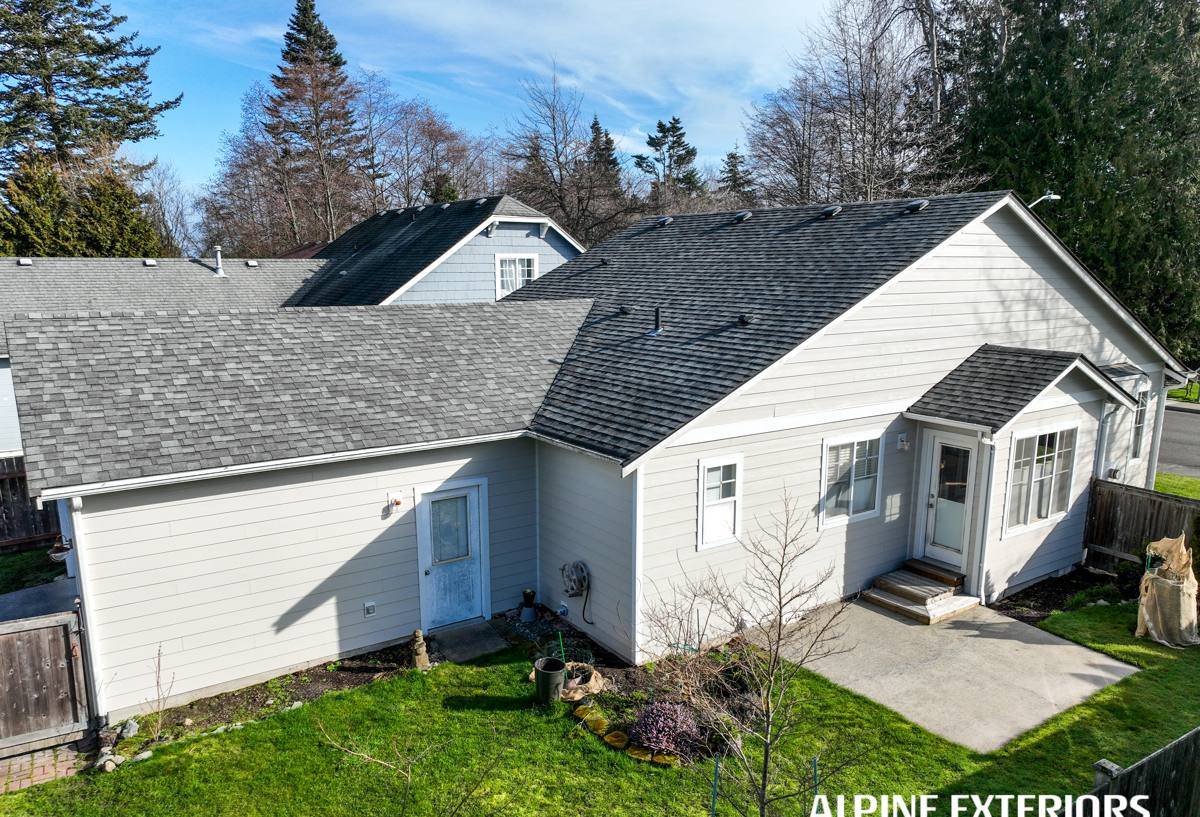
What Kendall's Climate Does to a House
This is Pacific Northwest marine climate territory, but Kendall's inland, tree-heavy setting adds its own wrinkles compared to a waterfront lot in Ferndale proper.
Driving Rain and Wind-Driven Moisture
Whatcom County doesn't just get rain — it gets rain pushed sideways by wind off the water and funneled through the river valleys. That driving rain finds every gap, every poorly sealed joint, and every place where flashing was an afterthought. Siding that isn't dimensionally stable, or that wasn't installed with proper water-shedding detail, starts absorbing moisture at those weak points long before a homeowner notices anything from the ground.
Moss, Shade, and Slow-Drying Surfaces
A lot of Kendall properties sit under mature evergreens and mixed timber, which is part of the area's appeal but also means siding stays shaded and damp longer after a storm than it would on an open lot. Moss and algae don't just look bad — on the wrong siding material, sustained moisture contact is exactly what accelerates rot, swelling, and paint failure.
Freeze-Thaw Swings Toward the Foothills
Kendall sits close enough to the Mount Baker foothills that winter temperature swings are a bit more pronounced than in Bellingham or on the immediate coast. Materials that absorb water and then go through repeated freeze-thaw cycles are more prone to cracking, delamination, and fastener failure over the years.
Salt Air, Where It Applies
Properties closer to Ferndale's western edge and the bay get some airborne salt exposure, which speeds corrosion on fasteners and trim and adds another reason to use corrosion-resistant materials and hardware. It's less of a factor the further you get into the Kendall side of the county, but it's still worth building a house that doesn't have a weak point either way.
Why We Install Only James Hardie Fiber Cement
Ferndale Siding Company made a deliberate call a while back to install James Hardie fiber cement siding exclusively — no vinyl, no LP SmartSide, no Cemplank, no Allura, no primed spruce or cedar. That's not a marketing gimmick. It's a standard we hold because of what we've seen happen to other materials in exactly this climate.
What We're Not Installing, and Why
- Vinyl siding: Lightweight and inexpensive, but it expands and contracts significantly with temperature swings, can warp or crack in wind and cold, and offers essentially no fire resistance. In a climate with real wind-driven rain and cold snaps, that trade-off doesn't hold up long-term.
- LP SmartSide: An engineered wood product with a factory treatment that resists moisture reasonably well when it's intact — but any cut edge, nail hole, or breach in that coating becomes a place where wood fiber can absorb water and swell. In a shaded, damp environment like much of Kendall, that's a maintenance risk we don't want to hand a homeowner.
- Cemplank and Allura: Both are fiber cement competitors to James Hardie, and fiber cement as a category is the right call for this climate. Our issue isn't the category — it's product consistency, factory finish quality, and warranty structure, where we've found Hardie's system to be the stronger overall package for what we install and stand behind.
- Primed spruce or cedar: Beautiful when new, and we understand the appeal. But solid wood siding needs ongoing paint maintenance, is a direct food source for the moisture and rot issues this climate specializes in, and in a wildfire-adjacent state, carries fire risk that non-combustible fiber cement simply doesn't.
What Hardie Gets Right for This Area
James Hardie fiber cement is engineered from cement, sand, and cellulose fibers — it doesn't rot, it doesn't feed moss the way wood does, and it holds paint and factory finish far longer than wood-based alternatives. It's also non-combustible, which matters more every year in Washington. The ColorPlus factory finish is baked on under controlled conditions, so the color and coating are more consistent and more durable than field-applied paint ever is. And Hardie's HZ5 product line is specifically engineered for cold, wet climate zones — which is exactly the zone Whatcom County sits in.
How Fiber Cement Handles Moss and Moisture Compared to the Alternatives
| Factor | James Hardie Fiber Cement | Vinyl | Wood / Engineered Wood |
|---|---|---|---|
| Moisture absorption | Very low; won't swell or rot | Doesn't absorb, but can warp with heat/cold | Absorbs at cuts, joints, and coating breaches |
| Moss/algae resistance | High with factory finish; doesn't feed growth | Moderate; growth sits on the surface | Low; organic material is a growth medium |
| Fire resistance | Non-combustible | Low; melts/deforms in heat | Combustible |
| Finish longevity | Factory ColorPlus, long-lasting | Can fade and chalk over time | Needs repainting on a maintenance cycle |
| Freeze-thaw durability | Engineered for cold/wet zones (HZ5) | Can become brittle in cold | Prone to cracking and delamination |
How Correct Installation Actually Works
The product is only half of what determines how a house performs. The installation details are where most siding failures actually start — not in the material itself.
Water Management Behind the Siding
Every Hardie installation we do starts with a proper weather-resistive barrier and rain screen or drainage plane behind the panels. In a climate that drives rain sideways and keeps surfaces damp under tree cover, the assembly behind the siding has to let incidental moisture drain and evaporate rather than get trapped against the sheathing.
Flashing and Fastening to Spec
James Hardie publishes exact fastening patterns, clearances, and flashing details for a reason — get them wrong and you create the entry points that moisture exploits over years, not weeks. That includes proper clearance at grade and roof lines, correctly lapped flashing at windows and doors, and fastener spacing that keeps panels secure without over-driving nails, which can crack the material.
Joint and Butt Seam Treatment
Where panels meet — at butt joints, corners, and trim — is where a lot of amateur installs fail first. We treat every joint according to Hardie's specifications to keep water from wicking in behind the seam.
Roofing, Windows, and Decks: The Rest of the Envelope
Siding doesn't work in isolation. We handle roofing, windows, and decks as well, because a house's exterior is one connected system — a roof leak at a wall intersection or a poorly flashed window can undermine even a perfectly installed siding job. When we're on a Kendall property, we're looking at how the roofline sheds water onto the walls below, whether window flashing ties in correctly with the siding's water-resistive barrier, and whether a deck ledger board is creating a moisture trap against the house. Addressing these together, rather than as separate unrelated projects, is how a home actually stays dry through a Whatcom County winter.
What a Siding Project Looks Like
Every home is different, but the general sequence for a Kendall-area siding replacement looks like this:
- On-site evaluation of existing siding, moisture damage, and any rot or trim issues found during removal
- Confirmation of water-resistive barrier and drainage plane condition, repaired or replaced as needed
- Installation of James Hardie panels or lap siding per manufacturer fastening and clearance specs
- Flashing integration at windows, doors, roof lines, and any penetrations
- Trim, corner, and joint detailing
- Final walkthrough and cleanup
Questions to Ask Before Hiring an Exterior Contractor
- Are they licensed and insured to work in Washington, and can they show current proof?
- Do they install to the manufacturer's published fastening and flashing specifications, or their own shortcuts?
- Will they put the warranty terms — both material and labor — in writing before work starts?
- Do they inspect and address the water-resistive barrier and sheathing condition, not just install over what's there?
- Can they explain, in plain terms, why they recommend one siding product over another for your specific property?
Why a Local Crew Matters in Kendall
A contractor based elsewhere in the state, or a national outfit passing through, doesn't know that a shaded lot off the Mount Baker Highway dries differently than an open lot near town, or that certain pockets of Whatcom County hold moisture longer into spring than others just a few miles away. We work in this county regularly, which means we've seen how different products and installation details actually perform here over years, not just on install day. That matters when we're recommending a siding system, sequencing a project around Northwest weather windows, and standing behind the workmanship afterward.
If you're weighing a siding, roofing, window, or deck project on a Kendall property, we're glad to take a look and walk you through what we'd recommend and why. Reach out for a free, no-pressure estimate — there's a form below to get started.