 Ferndale Siding
 Roofing Built for Fairhaven's Coastal Conditions
Fairhaven sits close enough to the water that its homes take a different kind of weathering than roofs a few miles inland. Salt-laden air off Bellingham Bay accelerates corrosion on fasteners, flashing, and metal components. Driving rain off Puget Sound doesn't just fall straight down — it gets pushed sideways under eaves and into laps that a roof built for calmer weather might get away with. And the tree cover that gives Fairhaven its character also means shade, moisture, and a moss season that runs longer than most homeowners expect, sometimes eight or nine months out of the year in the shadier spots.
None of that makes a roof installation here more complicated in a mysterious way — it just means the details matter more, and the ones that get skipped on a lower-cost job are exactly the ones that fail first in this climate. As a Ferndale-based crew that works Fairhaven regularly, we build roofs around those specific stresses rather than installing the same generic spec everywhere in Whatcom County.
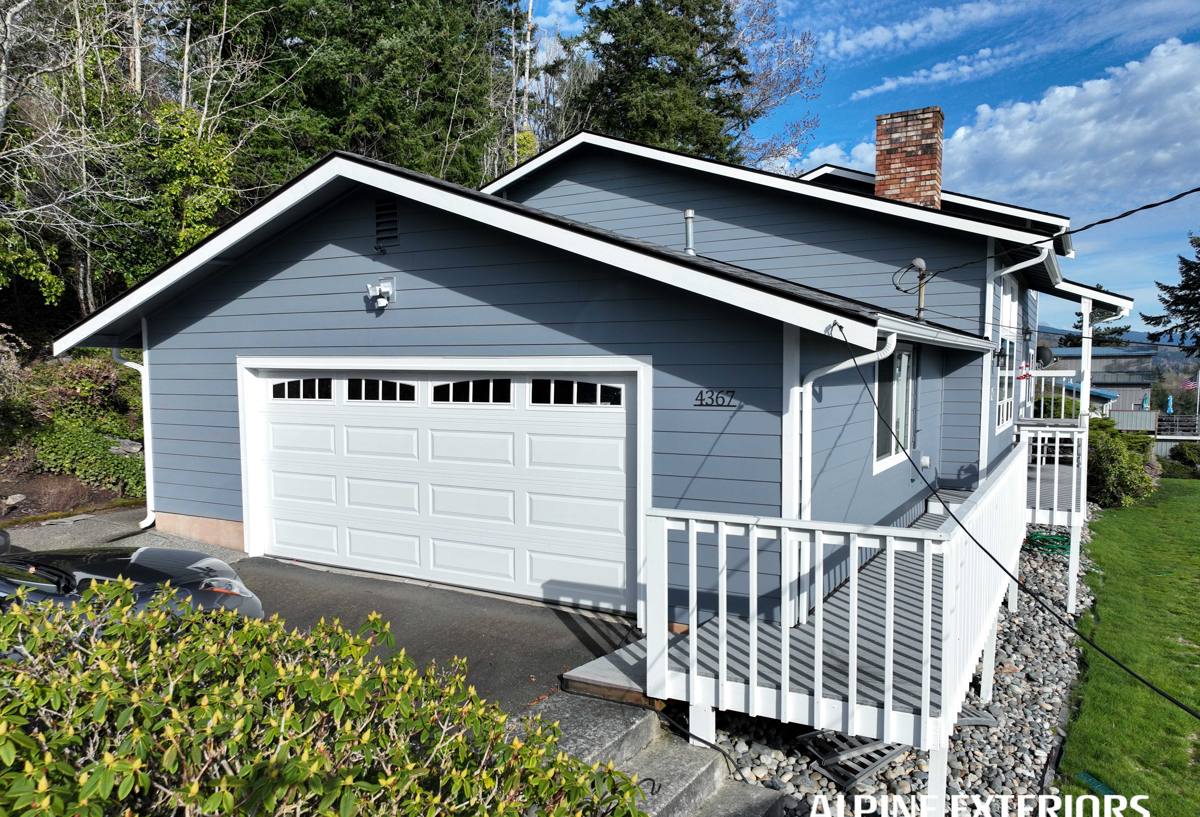
What a Correct Installation Looks Like Here
A new roof is really a system, not a single product. In a salt-air, high-rainfall environment, a handful of components do most of the work of keeping water and corrosion out over the long run:
- Underlayment: A synthetic, self-adhering underlayment at eaves, valleys, and penetrations gives you a second line of defense if wind-driven rain gets past the primary roofing material.
- Flashing: Step flashing, counter-flashing, and valley flashing should be corrosion-resistant metal, properly lapped, and never relying on caulk alone to stay watertight.
- Fasteners: Coastal air corrodes standard fasteners faster than most homeowners realize. We use fasteners rated for the exposure rather than whatever is cheapest by the box.
- Ventilation: Balanced intake and exhaust ventilation keeps moisture from condensing inside the attic, which matters more under Fairhaven's tree canopy where roofs stay damp longer after a rain.
- Drip edge and eave protection: Properly installed drip edge directs water away from fascia and soffits instead of letting it wick back into the roof deck.
Skipping or under-specifying any one of these doesn't usually show up as a leak in year one. It shows up in year five or six, as soft decking, rusted fasteners, or moss that keeps coming back no matter how many times it's cleaned off.
Material Options for Coastal Whatcom County Homes
There's no single "best" roofing material for Fairhaven — the right choice depends on your home's exposure, roof pitch, budget, and how much tree cover you have. Here's an honest comparison of the options we install most often in this area:
| Material | Coastal/Salt-Air Performance | Moss Resistance | Typical Lifespan |
|---|---|---|---|
| Architectural asphalt shingle | Good, with corrosion-resistant fasteners and flashing | Moderate — benefits from zinc/copper strips | 25–30 years |
| Standing seam metal | Excellent when properly coated and fastened | High — sheds moss growth surface | 40–50+ years |
| Synthetic/composite shingle | Good, low water absorption | Moderate to high | 30–50 years |
| Cedar shake | Requires more upkeep in salt air and shade | Low without regular maintenance | 20–30 years with upkeep |
Cedar can still be the right call for a homeowner who wants the look and is committed to maintenance, but we're honest about the tradeoff up front: in a shaded, coastal setting like Fairhaven, wood roofing demands more frequent moss treatment and inspection than asphalt or metal. We'd rather you know that before the job starts than after the first wet winter.
Zinc and Copper Strips
On asphalt and composite roofs in heavier-shade areas, we'll often recommend zinc or copper ridge strips. Rainwater washing over them releases trace amounts of metal that inhibit moss and algae growth down the slope. It's a small add during installation that meaningfully extends the time between cleanings.
Our Installation Process
Every new roof we install in Fairhaven follows the same sequence, whether it's a straightforward asphalt re-roof or a more involved metal installation:
- On-site inspection and measurement: We check the existing roof deck, ventilation setup, flashing conditions, and any moss or moisture damage before quoting anything.
- Tear-off and deck inspection: Old roofing comes off down to the deck so we can identify and replace any soft or water-damaged sheathing — this is where hidden problems from a previous roof usually surface.
- Underlayment and ice/water barrier: Self-adhering barrier goes in at eaves, valleys, and penetrations before the field underlayment is rolled out.
- Flashing installation: New flashing at all walls, valleys, chimneys, and vent penetrations — this is not an area where we reuse old flashing.
- Roofing material installation: Installed to manufacturer specification, with fastener patterns and exposure set for wind and rain conditions typical of this part of Whatcom County.
- Ventilation and moss-prevention details: Ridge and soffit venting checked and corrected as needed; zinc/copper strips installed where recommended.
- Final walkthrough: We walk the finished roof and the site cleanup with you before calling the job done.
Ventilation and Moisture Control During Moss Season
Moss doesn't cause roof failure on its own, but it holds moisture against the roofing surface for long stretches, and that moisture is what eventually works its way into fasteners, flashing laps, and eventually the deck. In Fairhaven's shadier lots, a roof can stay damp for days after a rain event, especially on north-facing slopes.
Good attic ventilation reduces one side of that equation by keeping the underside of the deck dry and reducing condensation that would otherwise add to the moisture load from outside. During installation, we balance intake vents (usually at the soffit) against exhaust vents (ridge or high-point) so air actually moves through the attic space instead of just sitting there. A roof with poor ventilation can look fine from the ground for years while the deck underneath is slowly deteriorating.
Signs Your Fairhaven Home May Need a New Roof
Roofs in this area rarely fail all at once — the signs build gradually. Worth checking for:
- Granule loss showing up in gutters or at downspout outlets
- Moss or algae that returns quickly after cleaning, even in the same season
- Curling, cupping, or cracked shingles, especially on south- and west-facing slopes
- Soft spots or noticeable sagging when walking the roof (a professional should check this, not a homeowner)
- Daylight visible through the attic roof deck, or water stains on attic sheathing
- Rusted or deteriorating flashing around chimneys, vents, and skylights
- Interior ceiling stains, particularly after wind-driven rain events
- A roof approaching or past the upper end of its material's expected lifespan
Any one of these on its own might just mean a repair. Several together, or a roof already past 20–25 years old, usually means it's worth getting a full inspection before deciding between repair and replacement.
What Affects the Cost of a New Roof
Every roof is priced based on its own specifics, but the main variables that move the number are consistent:
| Factor | Why It Matters |
|---|---|
| Roof size and complexity | More valleys, dormers, and penetrations mean more flashing work and labor time |
| Material choice | Asphalt, synthetic, and metal carry different material and installation costs |
| Deck condition | Rotted or water-damaged sheathing found during tear-off adds material and labor |
| Pitch and access | Steeper roofs and difficult site access increase labor and safety requirements |
| Ventilation upgrades | Adding or correcting ridge and soffit venting is often bundled into a re-roof |
We give straightforward, itemized estimates rather than a single lump number, so you can see what you're actually paying for and where the flexibility is if you need to adjust scope or material to fit a budget.
Why a Ferndale Crew That Already Works Fairhaven Matters
Roofing crews that mostly work drier, inland areas sometimes under-spec for what Fairhaven's exposure actually requires — not out of carelessness, but because it's simply not what they see every day. Working this part of Whatcom County regularly means we already know which details matter most here: which flashing details hold up against driving rain, where moss tends to establish first on a given roof orientation, and how much ventilation a shaded lot actually needs versus a sunnier one nearby.
It also means we're a known, reachable crew if something needs attention after the job — not a name attached to a one-time inland job that happened to include Fairhaven on the route.
Warranty and Long-Term Care
A new roof installation should come with both a manufacturer's material warranty and a workmanship warranty from the installer — those are two different things, and it's worth understanding what each one actually covers before you sign anything. We walk homeowners through both at the estimate stage, along with realistic maintenance expectations: periodic gutter clearing, moss treatment on a reasonable schedule, and an occasional visual check after major storms.
A roof that's installed correctly for this climate shouldn't need constant attention, but it does benefit from not being ignored for a decade at a time.
If your Fairhaven roof is showing its age, or you'd just like an honest opinion on repair versus replacement, we're happy to take a look. Fill out the form below for a free, no-pressure estimate — no obligation, just a straight answer about what your roof actually needs.