 Ferndale Siding
 Siding Installation Built for Bellingham's Climate
Bellingham sits close enough to Puget Sound and Bellingham Bay that salt-laden air is a real factor in how exterior materials age here, and it sits far enough north and west that rain isn't an occasional inconvenience — it's a season that runs most of the year. Add in the shaded, damp microclimates common in Whatcom County neighborhoods, where mature trees and marine humidity combine to create long moss seasons on roofs and siding alike, and you get a set of conditions that punishes the wrong siding choice quickly. A siding installation done for a home in a dry inland climate is not the same job as one done correctly for a home a few miles from Bellingham Bay. This page is about what that job actually involves when it's done right.
We install James Hardie fiber cement siding exclusively, and we've built our installation process specifically around what Bellingham-area homes need to hold up over decades, not just look good on install day.
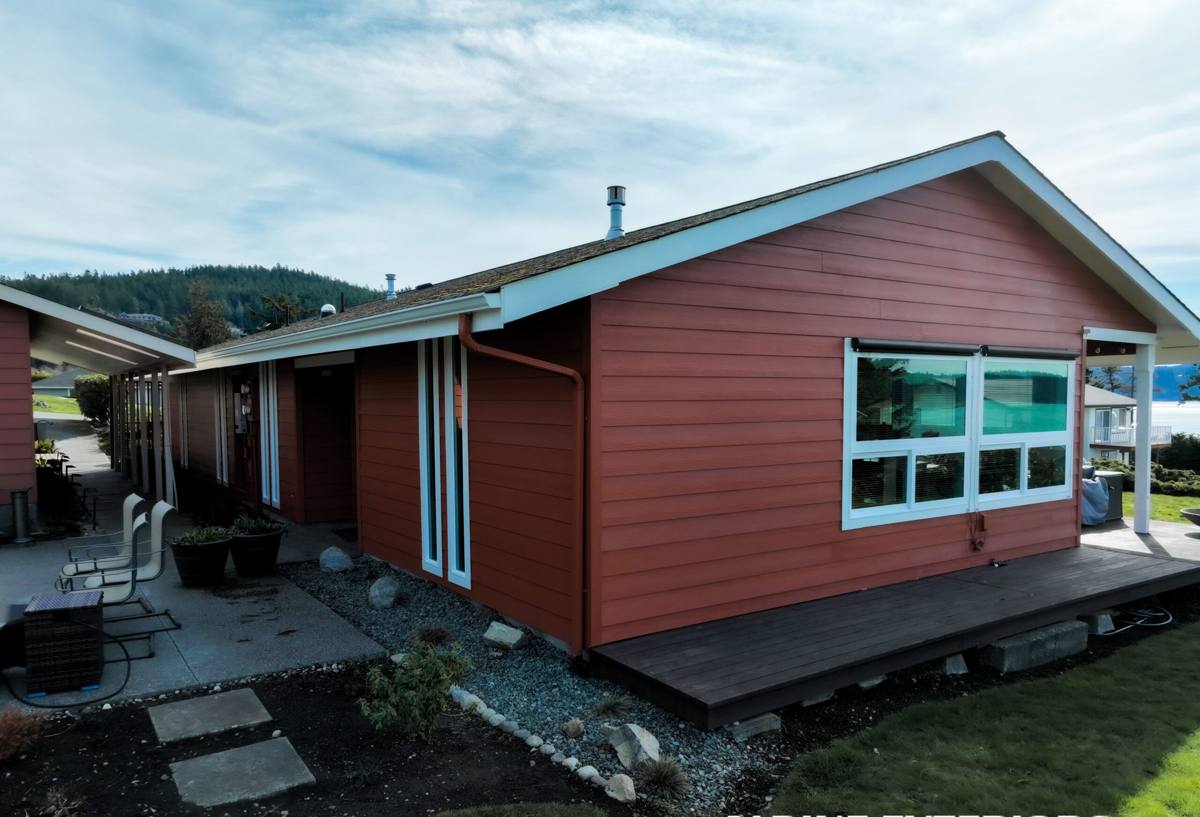
What Bellingham Homes Are Actually Up Against
Salt Air and Moisture
Proximity to Puget Sound means airborne salt and moisture reach painted and unpainted wood surfaces year-round, accelerating the breakdown of finishes and encouraging rot in anything that isn't genuinely moisture-resistant at the core. Wood-based and wood-composite siding products are especially vulnerable — a compromised factory finish or a poorly sealed cut edge becomes an entry point for moisture that doesn't dry out quickly in this climate.
Driving Rain
Whatcom County doesn't just get a lot of rain — it gets wind-driven rain that pushes water sideways into laps, seams, and penetrations that a fair-weather installation might overlook. Correct flashing, weather-resistant barrier detailing, and proper lap coverage aren't optional refinements here; they're the difference between siding that sheds water for 30 years and siding that starts letting water in behind year five.
Moss and Sustained Dampness
A long moss season means siding surfaces stay damp for extended stretches, particularly on north-facing walls and anywhere shaded by trees or neighboring structures. Moss and algae growth on siding isn't just cosmetic — sustained surface moisture retention is exactly the condition that degrades vulnerable substrates and finishes over time.
Why the Product Choice Matters More Here Than Elsewhere
In a milder, drier climate, the gap between a good siding product and a mediocre one might take a decade or more to show up. In Bellingham's marine climate, that gap shows up faster — usually in the form of swelling, delamination, finish failure, or moss-driven surface breakdown well before a homeowner expects to think about siding again. That's the core reason we standardized on James Hardie fiber cement rather than offering a menu of siding materials. We'd rather install one product we trust completely in this climate than install several and manage the trade-offs on the homeowner's behalf after the fact.
James Hardie fiber cement is engineered from cement, sand, and cellulose fibers — a composition that doesn't absorb and swell with moisture the way wood-based products can, and that resists the freeze-thaw and wet-dry cycling common in this region. Hardie's ColorPlus factory finish is baked on under controlled conditions, which gives it better adhesion and UV stability than field-applied paint, and it's backed by a real finish warranty. For a coastal Whatcom County home, that combination of moisture stability and finish durability is the whole ballgame.
What a Correct Bellingham Siding Installation Involves
Fiber cement siding is only as good as its installation. A rushed or generic install can undercut even the best material, especially in a climate this demanding. Here's what we treat as non-negotiable on every Bellingham-area job:
- Full removal of old siding and inspection of the sheathing underneath for hidden moisture damage or rot before anything new goes up
- Repair or replacement of any compromised sheathing — covering over a wet or rotted substrate is how "new siding" fails in five years instead of thirty
- A correctly installed weather-resistant barrier with proper overlap and sealed penetrations, sized to handle wind-driven rain, not just vertical rainfall
- Rainscreen or proper drainage gap detailing where appropriate, so moisture that does get behind the cladding has somewhere to go instead of sitting against the wall
- Precise flashing at windows, doors, and every roofline intersection — the highest-risk points for water intrusion on any home in this region
- Correct fastening per James Hardie's published installation specifications, including fastener type, spacing, and placement relative to panel edges
- Field-cut edges properly sealed, since an unsealed cut edge is the one place factory-finish protection doesn't reach
- Proper lap and clearance details at the foundation, deck ledgers, and roof-to-wall transitions, all of which are common failure points in wetter climates
Skipping any one of these doesn't necessarily show up as a problem on installation day. It shows up two, five, or ten years later, when it's a much more expensive fix than getting it right the first time.
Our Process, Start to Finish
| Step | What Happens | Why It Matters in This Climate |
|---|---|---|
| On-site assessment | We inspect existing siding, sheathing condition, and problem areas specific to your home's exposure | Identifies hidden moisture damage before it's covered up again |
| Product and color selection | Walk through James Hardie's HZ product lines and ColorPlus color options for your home | Matches the product to sun exposure, shading, and moss-prone areas |
| Written estimate | Clear scope, product specification, and timeline before any work begins | No surprises once tear-off starts |
| Removal and substrate repair | Old siding comes off, sheathing is inspected and repaired as needed | Prevents new siding from going over an already-compromised wall |
| Weather barrier and flashing | Installed per manufacturer spec at every penetration and transition | This is what actually keeps driving rain out, not the siding surface alone |
| Hardie installation | Fastened and sealed to James Hardie's specifications | Correct installation is what the warranty depends on |
| Final walkthrough | Review the completed work with you directly | Confirms the job matches what was scoped and estimated |
James Hardie Product Lines for This Area
James Hardie makes climate-specific HZ5 products engineered for regions with more moisture and temperature swing, which fits Bellingham's marine climate well. Depending on your home's style and exposure, that might mean lap siding, board-and-batten vertical siding, or a shingle-style panel for accent areas — all available in ColorPlus factory finishes that hold color and resist fading better than field-painted alternatives. We'll walk you through which line and profile fits your home during the on-site assessment rather than guessing from a brochure.
Signs Bellingham Homeowners Should Watch For
If you're not sure whether your current siding is holding up, a few warning signs are worth checking for before they become bigger problems:
- Persistent moss or algae streaking that returns quickly after cleaning
- Soft or spongy spots when you press on siding near the base of walls or under windows
- Visible gaps, warping, or separation at seams and corners
- Peeling or bubbling paint, especially on north- or west-facing walls
- Musty smells or visible staining on interior walls that back up to exterior siding
Any of these can indicate moisture has already found a way behind the cladding — which is exactly the failure mode a correctly installed fiber cement system with proper flashing and drainage detailing is designed to prevent.
What This Means for Long-Term Value
Siding is one of the few home improvements that does double duty: it protects the structure underneath and it's one of the first things anyone sees. In a climate that's hard on exteriors, a correctly installed, genuinely moisture-resistant siding system protects your investment in the rest of the house — the sheathing, framing, and interior finishes that a siding failure can eventually damage. James Hardie's transferable warranty also matters if you sell the home within the coverage period, since it can be a meaningful point in a Whatcom County market where buyers are increasingly aware of what marine climate exposure does to lower-grade exteriors.
Why Local Installation Experience Matters
A crew that already works Bellingham and the surrounding Whatcom County area knows which walls on a given home orientation tend to hold moisture longest, where moss establishes first, and how driving rain off the Sound behaves differently than a straight-down rainstorm. That's not something you get from a general contractor who does one siding job a year alongside decks and remodels. It comes from doing this specific work, on homes facing this specific climate, repeatedly enough to know where the real risk points are before the first piece of siding goes up.
If you're planning a siding project for a Bellingham-area home, we're happy to walk the property with you, look at what your current siding is telling us, and put together a straightforward, no-pressure estimate for a James Hardie installation built for what this climate actually demands. Use the form below to get started.