 Ferndale Siding
 Storm Damage Roof Repair for Sudden Valley Homes
A hard blow off the water, a night of driving rain, or a heavy limb coming down in a windstorm can leave a roof compromised in ways that aren't always obvious from the ground. For homes in Sudden Valley, storm damage doesn't happen in isolation — it happens on top of a roof that's already working hard against salt air, near-constant moisture, and a moss season that runs longer than most homeowners realize. Repairing storm damage here means understanding both the immediate problem and the conditions that will test the repair for years afterward.
This page covers what storm damage repair actually involves for homes in this part of Whatcom County, what we look for during an inspection, and why a repair done by a crew that already understands local conditions tends to hold up better than a generic patch job.
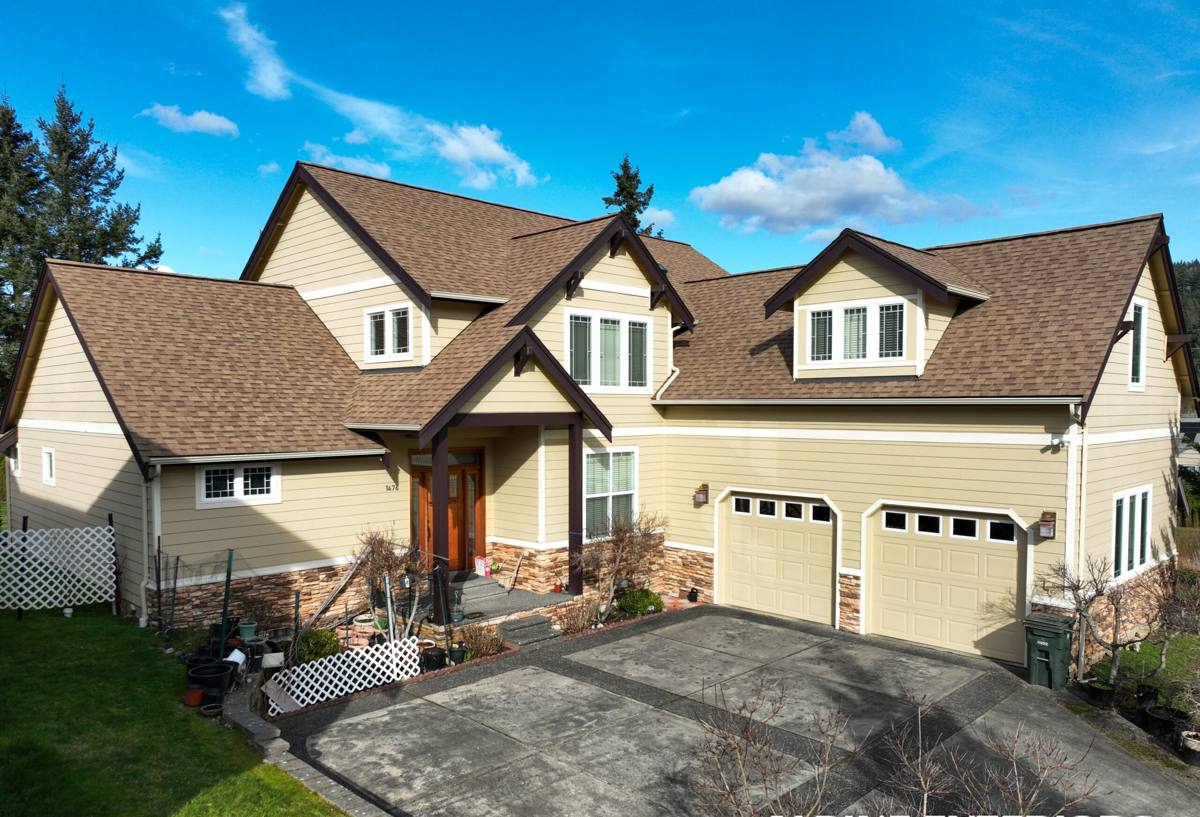
What Makes Sudden Valley Roofs Vulnerable to Storm Damage
Salt Air and Coastal Exposure
Even homes set back from the water pick up salt-laden air moving in off the Strait and the Sound. Salt accelerates corrosion on exposed metal — flashing, fasteners, gutter hardware, and vent caps all age faster here than they would further inland. A storm that loosens or lifts flashing on a roof with already-corroding metal fails much sooner than the same damage on a roof with fresh, well-protected metal components.
Driving Rain and Wind-Driven Water
Storms in this region rarely bring rain straight down. Wind pushes it sideways and up under laps, ridge caps, and flashing edges that are designed to shed water moving in one direction. A shingle or panel that looks fine in calm weather can still be letting water in during a windstorm if the seal or overlap has been compromised. This is why storm damage often shows up as an interior leak days or weeks after the actual event — the water finds its way in gradually, not all at once.
Moss Season and Moisture Retention
Whatcom County's long, damp stretch of the year gives moss plenty of time to establish itself on north-facing slopes and shaded areas. Moss holds moisture against the roofing material, and a storm-damaged section that's also carrying moss growth stays wet longer than a clean one. That extended moisture exposure speeds up rot in the decking underneath and shortens the life of the repair if the moss isn't addressed as part of the job.
Signs Your Roof Has Storm Damage
Some damage is obvious. Missing shingles or a visible hole aren't hard to spot. But a lot of storm damage is subtle enough that homeowners miss it until it's caused a secondary problem. After any significant wind or rain event, it's worth checking for:
- New or worsening water stains on ceilings or upper walls
- Granules collecting in gutters or at downspout outlets
- Shingles that look curled, lifted, or creased compared to the surrounding field
- Flashing around chimneys, vents, or roof-wall intersections that looks bent or pulled away
- Debris (branches, needles, moss clumps) built up in valleys where water concentrates
- Soft spots or sagging noticed when walking the attic, if it's safe to do so
- Daylight visible through the roof deck from inside the attic
Not every item on that list means an emergency, but any one of them is a reason to get a proper inspection rather than wait for the next storm to make it worse.
What a Correct Storm Damage Repair Involves
Inspection First, Not Assumptions
A repair that starts without a full inspection is a guess. We look at the roof surface, the flashing details, the decking condition where it's accessible, and the attic side for moisture evidence. Storm damage often extends further than the visible entry point — wind can lift a run of shingles beyond where the leak actually shows up inside, and water can travel along the decking before it drips through in a completely different spot from where it entered.
Matching Materials and Technique, Not Just Patching
A patch that doesn't match the surrounding roofing in material, age, and installation method creates a weak point of its own. We repair storm damage the way the section should have been installed in the first place — correct underlayment, proper flashing laps, and fasteners suited to coastal exposure — rather than layering a quick fix over a problem area. If the surrounding roofing is old enough that matching materials aren't practical, we'll say so plainly and lay out the honest trade-offs instead of pretending a mismatched patch will hold indefinitely.
Addressing the Cause, Not Just the Symptom
If moss contributed to the damage, or if undersized/clogged gutters let water back up under the roof edge during the storm, fixing the shingle without addressing that underlying issue just sets up a repeat problem. Part of a correct repair is telling you what set the damage up in the first place, even when that means recommending gutter or ventilation work alongside the roof fix itself.
Our Storm Damage Repair Process
- Initial contact and scheduling. We get a description of the damage and, where safe, a rough sense of urgency — an active leak gets prioritized over cosmetic damage.
- On-site inspection. We walk the roof and check the attic side, documenting the extent of the damage and identifying any contributing factors like moss buildup, clogged drainage, or aging flashing.
- Written scope and options. You get a clear explanation of what's damaged, what needs to be repaired versus what can wait, and an honest range for the work involved.
- Temporary protection if needed. If there's an active leak risk before the full repair can be scheduled, we'll discuss options to stop water intrusion in the meantime.
- The repair itself. Damaged materials are removed back to sound decking, the deck is checked and repaired if compromised, and new roofing and flashing are installed to match the surrounding system correctly.
- Final check. We confirm the repair area sheds water properly and walk you through what was done.
Repair vs. Replace: How We Help You Decide
Not every storm-damaged roof needs full replacement, and not every repair is a good long-term investment. The right call depends on a handful of factors we walk through with you honestly rather than defaulting to whichever option is more work for us.
| Factor | Favors Repair | Favors Replacement |
|---|---|---|
| Roof age | Under roughly half its expected service life | Nearing or past expected service life |
| Extent of damage | Isolated to one section or slope | Widespread or affecting multiple slopes |
| Decking condition | Sound, dry decking under the damage | Rot or soft decking found in multiple spots |
| Material availability | Matching shingles/panels still obtainable | Discontinued material, poor match likely |
| Prior repair history | First significant repair on this roof | Multiple past repairs in different areas |
We'll give you our honest read on where your roof falls, but the decision is always yours — our job is to make sure you're deciding with full information, not partial.
Why a Crew That Already Works Sudden Valley Matters
A roofer who works this area regularly already knows what salt exposure does to fasteners and flashing over time, how long moss season actually runs here, and what wind-driven rain patterns look like on this side of Whatcom County. That familiarity shows up in small decisions during a repair — which flashing detail to use, how much overlap to build in for wind-driven water, whether a given moss patch is cosmetic or a sign of moisture already working into the decking. Those aren't things you can fully account for with a generic repair approach built for a drier or less exposed climate.
It also means faster, more accurate estimates. We're not guessing at conditions from a phone description — we've seen the same storm patterns affect other roofs nearby and know what to check first.
Insurance and Storm Damage Claims
Many storm damage repairs are covered, in whole or part, by homeowner's insurance, depending on your policy and the cause of the damage. We're not your insurance adjuster and won't promise a specific coverage outcome, but we can provide clear documentation of the damage — photos, a written description, and our assessment of cause — that you can submit as part of a claim. If you're planning to file a claim, it's worth doing the inspection before any temporary repairs disturb the damaged area, since adjusters generally want to see the original condition.
Maintaining Your Roof Between Storms
The best storm damage repair is the one you never need. A few habits go a long way toward reducing storm vulnerability in this climate:
- Keep gutters and downspouts clear so wind-driven rain has somewhere to go instead of backing up under roof edges
- Have moss removed before it establishes a thick mat, rather than after it's already holding moisture against the roofing
- Trim back branches that overhang the roof, since falling limbs are a common source of impact damage in wind events
- Get flashing and vent seals checked periodically, since these are usually the first place storm damage shows up
- Address small leaks quickly — a minor issue caught early is a repair, while the same issue ignored through a few more storms can become a decking replacement
If you're dealing with storm damage on a Sudden Valley home, or you'd just like an honest inspection after a rough stretch of weather, we're glad to take a look. Reach out for a free, no-pressure estimate using the form below.