 Ferndale Siding
 Siding Replacement in Bellingham: Built for This Coastline
Bellingham sits where Puget Sound weather meets the foothills of the North Cascades, and that combination is hard on exterior siding. Homes here deal with salt-laden air rolling in off Bellingham Bay, long stretches of driving rain from fall through spring, and a moss season that can run eight months or more on shaded north- and west-facing walls. Siding that isn't built for this environment shows it early — through swelling, staining, soft spots, and paint failure. A correct siding replacement in Bellingham has to account for all three of those forces at once, not just look good on installation day.
We work throughout Whatcom County out of Ferndale, and Bellingham is one of the areas we're on the most. That regularity matters: crews who only see a neighborhood once every few years don't develop a feel for which walls take the worst weather, which older homes have hidden moisture damage behind their original siding, or which HOAs and permit offices have particular requirements. This page covers what Bellingham homes specifically need from a siding replacement, what a correct job actually involves, and how our process works from first call to final walk-through.
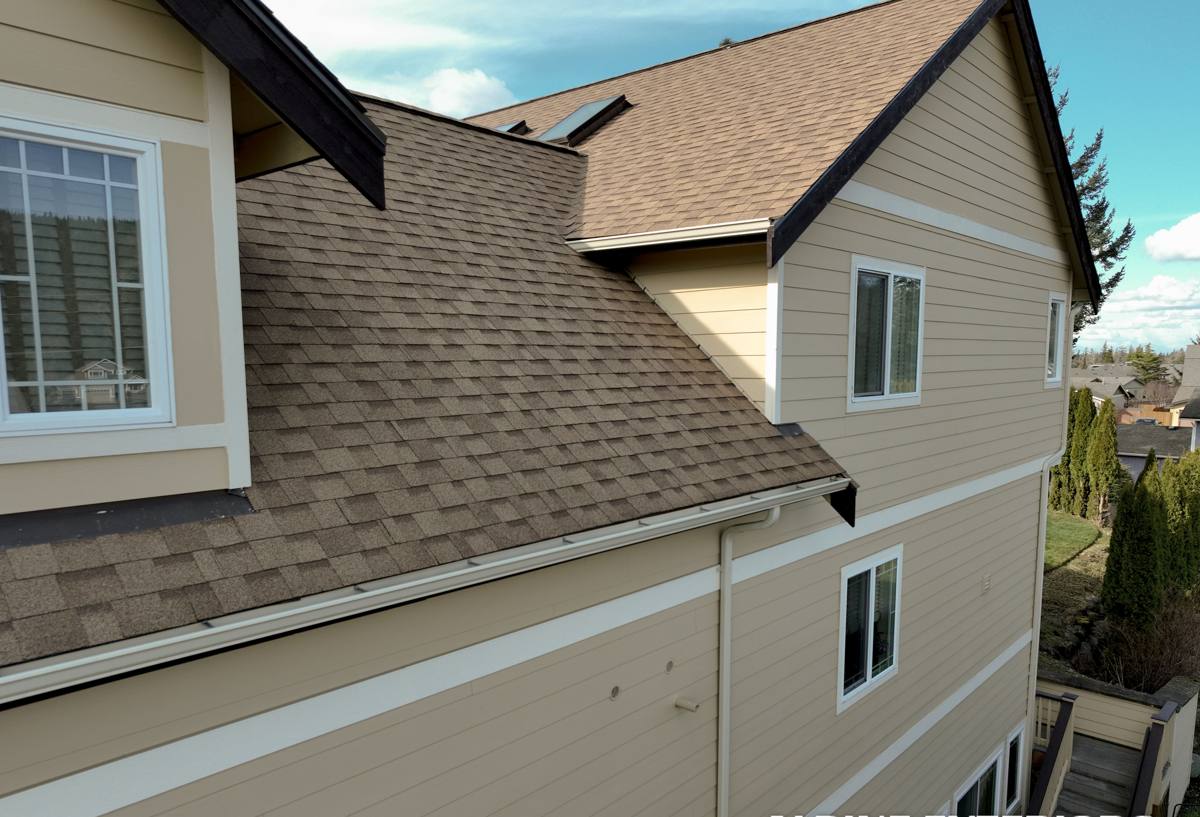
What Bellingham's Climate Does to Siding Over Time
Salt Air and Corrosion
Proximity to the bay means airborne salt settles on exterior surfaces, especially on homes closer to the water or exposed to onshore wind. Salt accelerates corrosion of fasteners, flashing, and any metal trim components, and it can degrade certain paint and coating systems faster than the manufacturer's rated lifespan would suggest inland. Siding materials and fastener hardware both need to be chosen with that exposure in mind, not just picked off a standard spec sheet.
Driving Rain and Wind-Driven Moisture
Storms coming off the Sound don't just fall straight down — wind pushes rain sideways into wall assemblies, especially on west and southwest exposures. This is where siding systems succeed or fail based on details most homeowners never see: how water-resistive barriers are lapped, how seams and butt joints are sealed, and how flashing directs water back out instead of behind the cladding. A siding product can be excellent and still fail locally if it's installed without those details done correctly.
Moss, Algae, and Prolonged Dampness
Shaded, tree-covered lots — common throughout Bellingham's older and newer neighborhoods alike — stay damp for extended periods. Moss and algae growth on siding isn't just cosmetic; sustained moisture at the surface is exactly the condition that causes swelling, delamination, and rot in moisture-sensitive materials. Siding that can tolerate repeated wetting and drying without breaking down is a real requirement here, not a nice-to-have.
Why We Install James Hardie Fiber Cement — and Nothing Else
We standardized on James Hardie fiber cement siding for every job we do, including here in Bellingham, and we don't install vinyl, LP SmartSide, cedar, primed spruce, Cemplank, or Allura. That's a deliberate decision based on how those products perform over the long run in exactly the conditions described above, not a sales preference.
- Non-combustible core: Hardie's fiber cement composition doesn't burn, which matters increasingly across Western Washington as wildfire risk and insurance underwriting both tighten.
- Engineered for wet climates: Hardie's HZ5 product line is specifically engineered for cold, wet Pacific Northwest conditions — moisture resistance and freeze-thaw durability are built into the formulation, not added after the fact.
- Factory-applied ColorPlus finish: Baked-on at the factory under controlled conditions, it holds color and resists fading, chipping, and cracking far better than field-applied paint on wood-based products.
- Resists what wood-based sidings can't: Fiber cement doesn't feed moss or algae growth the way wood fiber can, and it doesn't swell or delaminate from repeated wetting the way engineered wood products are prone to.
- Warranty structure: Hardie backs its siding with a strong, transferable limited warranty — a real consideration on a coastal property where buyers will ask about exterior condition at resale.
None of this means other products are without merit — vinyl is inexpensive and low-maintenance in mild climates, and cedar has genuine aesthetic appeal. But given what Bellingham's salt air, rain, and moss season do to a home over 20-plus years, fiber cement engineered for this exact climate is what we're willing to put our name behind.
Signs a Bellingham Home Needs Siding Replacement
Not every siding problem means a full replacement, but in a wet coastal climate, waiting too long often turns a repair into a much bigger job. Watch for:
- Soft, spongy, or visibly swollen spots when you press on the siding
- Paint that's peeling, bubbling, or failing repeatedly in the same areas
- Persistent moss or algae staining that returns shortly after cleaning
- Visible gaps, warping, or separation at seams and corners
- Rising interior humidity, musty smells, or staining on interior walls near exterior corners
- Siding that's original to a home built more than 20-25 years ago, especially wood-based products
If you're seeing more than one of these, it's worth a professional look before the underlying wall assembly takes on damage.
What a Correct Siding Replacement Involves
Tear-Off and Sheathing Inspection
Full replacement starts with removing the existing siding down to the sheathing. This is the point where hidden problems — rot, moisture-damaged OSB or plywood, compromised framing — get found and dealt with, rather than sealed behind new siding where they'll keep spreading unseen.
Water-Resistive Barrier and Flashing
A new weather-resistive barrier gets installed and properly lapped, with flashing detailed at every window, door, and penetration. Given how much wind-driven rain this area sees, this layer is arguably more important to long-term performance than the siding material itself — it's the backup system that keeps a home dry even if water does get past the cladding.
Fastening and Clearances
James Hardie specifies exact fastener types, spacing, and clearances from grade, decks, and roof lines. Corrosion-resistant fasteners matter more here given salt air exposure. Skipping or shortcutting these specs is one of the most common ways fiber cement installations underperform their rated lifespan — the material isn't the problem, the installation is.
Joints, Caulking, and Finish Details
Butt joints, corners, and trim need to be sealed correctly to shed water rather than trap it. Factory-primed and ColorPlus-finished panels reduce the amount of field painting needed, which also reduces the number of places moisture can get behind the finish.
Our Process for Bellingham Siding Replacement Jobs
- On-site assessment: We walk the exterior, check for existing moisture damage, and evaluate exposure — which walls take the worst weather, where moss and algae are established, and what the current siding and sheathing condition actually is.
- Detailed proposal: You get a clear scope of work, product selection from Hardie's line, and a firm cost estimate before anything starts — no surprise change orders for things we should have caught up front.
- Tear-off and sheathing repair: Old siding comes off, sheathing is inspected, and any rot or damage is repaired before new materials go on.
- Weather barrier and flashing installation: This layer goes in to spec, with particular attention to window and door flashing given the local rain exposure.
- Hardie siding installation: Installed to manufacturer specifications for fastening, clearances, and joint treatment.
- Final walk-through: We review the finished work with you and address anything before calling the job done.
Cost Factors for Bellingham Siding Replacement
Siding replacement costs vary based on home size, current condition, and how much sheathing repair is needed once tear-off begins. The table below covers the main factors that move the price up or down.
| Factor | Why It Matters |
|---|---|
| Home size and wall complexity | More square footage, corners, and architectural detail mean more material and labor |
| Condition of existing sheathing | Rot or moisture damage found during tear-off requires repair before new siding goes on |
| Siding profile and finish | Hardie offers multiple plank widths, textures, and ColorPlus color options at different price points |
| Trim and accent work | Window trim, corner boards, and accent details add labor and material |
| Access and site conditions | Steep lots, tight setbacks, or limited equipment access can affect labor time |
| Removal and disposal | Tear-off volume and disposal of old siding materials factor into total cost |
We don't publish blanket pricing because these variables genuinely change the number from one home to the next — but we'll give you a firm, itemized estimate after seeing the property in person.
Why Hire a Crew That Already Works in Bellingham
A siding contractor based nearby and familiar with Bellingham's specific conditions brings real advantages: knowledge of which neighborhoods see the worst wind-driven rain, experience with the moisture damage patterns common to homes of a certain age in this area, and familiarity with local permitting. Just as important is the ability to actually show up when something needs a follow-up look — a crew that's not local can be a lot harder to reach a season or two after the job is done. We service Bellingham regularly out of our Ferndale base, and we stand behind the work with that in mind.
Ready to Talk About Your Siding?
If your Bellingham home is showing signs of siding wear, or you're planning ahead before a problem gets worse, we're happy to take a look and give you an honest assessment — no pressure, no obligation. Fill out the form below to schedule a free estimate.