 Ferndale Siding
 Roof Repair in Blaine Calls for a Different Playbook
Blaine sits right on the water at the top of Whatcom County, and that location shapes everything about how a roof ages here. Salt-laden air drifts in off Semiahmoo Bay and Boundary Bay almost year-round, wind-driven rain comes in sideways off the Strait during winter storms, and the shade and dampness that blanket this corner of the county keep moss growing for a good chunk of the year. A roof repair done without accounting for those three things tends to fail again within a season or two. One done correctly accounts for all of them from the first inspection.
We work throughout Ferndale and up into Blaine regularly, so we're not guessing at what this climate does to a roof — we're repairing the same failure patterns on a routine basis and know which ones are cosmetic and which ones are structural.
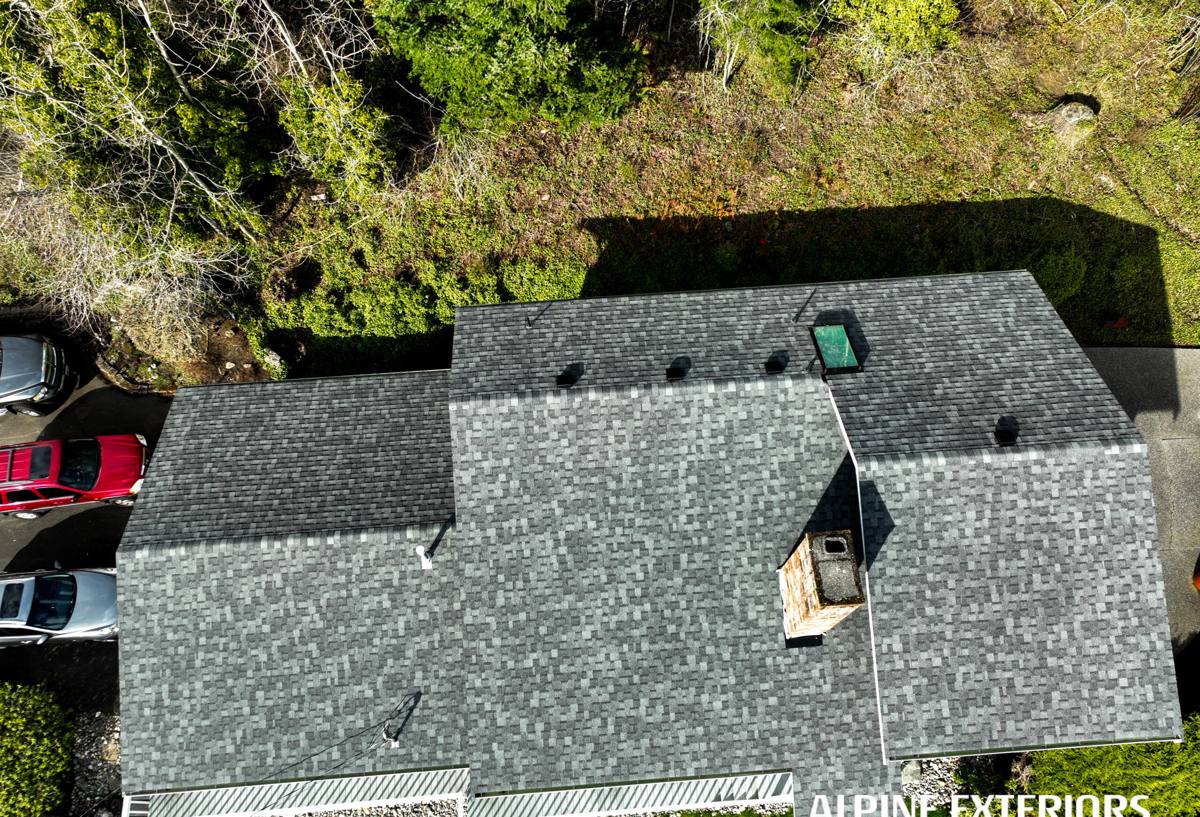
What Salt Air, Rain, and Moss Actually Do to a Roof
Salt Air and Corrosion
Airborne salt accelerates corrosion on anything metal on your roof — nail heads, flashing, drip edge, vent boots with metal collars, and gutter hangers. Standard electro-galvanized fasteners that hold up fine 20 miles inland can start rusting within a few years this close to the water. Rust streaking around nail heads or flashing seams is one of the more common repair calls we get in Blaine specifically, and it's rarely just cosmetic — a corroding fastener eventually loses its grip and its seal.
Driving Rain
Rain that falls straight down is easy for any roof to shed. Rain that's being pushed sideways by wind off open water finds every weakness in a roof's weakest points — step flashing, valleys, roof-to-wall transitions, and anywhere a penetration wasn't flashed with enough lap. Blaine's exposure to wind off the water means these details take more punishment than they would on a roof tucked into a sheltered lot further inland.
Moss and Prolonged Dampness
Whatcom County's long wet season and shaded, tree-covered lots give moss plenty of time to establish itself. Moss doesn't just sit on top of shingles — it lifts them at the edges as it grows, holds moisture against the roofing material long after a storm has passed, and works its way under tabs and around fasteners. A roof that looks mossy but otherwise intact is often hiding real damage underneath once the moss is cleared.
Signs a Blaine Roof Needs Repair Now
- Rust streaking or discoloration around nail heads, flashing, or metal vent collars
- Moss buildup along the north-facing slope or in shaded valleys
- Curling, lifted, or missing shingle tabs, especially near roof edges facing the water
- Water staining on interior ceilings near chimneys, skylights, or where two rooflines meet
- Granule buildup in gutters, a sign shingles are wearing faster than expected
- Soft or spongy spots underfoot when walking the roof deck
- Daylight visible through the attic at eaves, ridges, or around vent pipes
Any one of these on its own might be a small fix. Several together usually mean water has been getting past the surface layer for a while, and the repair needs to address the entry point, not just the visible symptom.
What a Correct Repair Actually Involves
A repair that holds up in this climate isn't just patching the spot that's leaking. It means finding where water is actually getting in — which is sometimes several feet from where the stain shows up inside — and rebuilding that section correctly rather than covering it.
Diagnosis First
We start by tracing the leak from the interior stain or attic evidence back to its actual source on the roof, since water travels along rafters and sheathing before it shows up indoors. Guessing at the source and patching the wrong spot is the single most common reason a "repaired" roof leaks again.
Matching Materials, Not Just Covering Gaps
Replacement shingles, flashing, and underlayment need to match the existing roofing in type and, where possible, appearance. A patch that doesn't match the surrounding material's flexibility or thickness can create a new weak point right at the seam.
Flashing Done Properly
Most roof leaks we trace back to flashing, not shingles. Step flashing at walls, counter-flashing at chimneys, and valley flashing all need to be layered correctly with the roofing material — not just sealed over with caulk. Caulk is a short-term patch, not a repair, and it fails faster in this climate than almost anywhere else in the county because of the constant damp-dry cycling.
Corrosion-Resistant Fasteners
Given how fast standard fasteners corrode this close to the water, we use hot-dip galvanized or stainless fasteners on Blaine repairs rather than standard electro-galvanized nails. It costs a little more up front and saves a callback in a few years.
Repair or Replace: How We Help You Decide
Not every roof that's showing damage needs to come off. But a repair on a roof that's genuinely near the end of its service life is often money spent to buy a year or two, not a real fix. Here's how we walk homeowners through that decision.
| Factor | Leans Toward Repair | Leans Toward Replacement |
|---|---|---|
| Age of roof | Under 15 years (asphalt) | Approaching or past 20-25 years |
| Extent of damage | Isolated to one section or flashing detail | Spread across multiple slopes |
| Moss/algae history | Recently treated, limited granule loss | Long-term moss damage, widespread granule loss |
| Decking condition | Solid, no soft spots found | Soft or delaminating sheathing found |
| Prior repairs | First repair on this roof | Third or fourth patch in the same area |
| Typical cost range | Several hundred to a few thousand dollars | Full tear-off and reroof, priced by square footage |
We'll always tell you plainly which side of that table your roof falls on, including when a repair is the honest answer and replacement isn't necessary yet.
How Our Blaine Repair Process Works
1. On-Site Inspection
We walk the roof and the attic where accessible, photograph the problem areas, and identify both the visible damage and its likely cause.
2. Straightforward Explanation and Estimate
You get a plain explanation of what's wrong, what we recommend, and why — along with a written estimate before any work starts. No pressure to upsize a repair into a full replacement unless the roof actually needs it.
3. The Repair Itself
We remove damaged material back to sound decking, address the actual entry point (not just the symptom), install matching materials and corrosion-resistant fasteners, and reflash any affected transitions properly.
4. Cleanup and Walkthrough
Job site debris, old materials, and stray fasteners get cleared from the roof, gutters, and yard. We walk you through what was done before we leave.
Why a Crew That Already Works Blaine Matters
A contractor who mostly works drier, more sheltered parts of the county can still do competent general roofing work, but they may not default to marine-grade fasteners, may under-flash a valley that would be fine forty miles inland, or may not recognize how far moss damage has actually spread under the surface. We do repair work up and down Whatcom County's coastal edge regularly enough that accounting for salt exposure, wind-driven rain, and moss isn't an upcharge or an afterthought — it's just how the job gets done correctly the first time.
That also means a faster response when something needs attention. Being local to the area, including Ferndale and the Blaine corridor, means we're not routing a crew in from across the region for a straightforward repair.
After the Repair: Keeping a Blaine Roof Ahead of the Climate
A repair holds longer with a little routine attention, especially in a climate that doesn't give a roof much of a dry season to recover in.
- Have moss treated or removed before it re-establishes, rather than after it's spread
- Keep gutters and downspouts clear so water isn't backing up under the roof edge
- Trim back overhanging branches that keep sections of the roof shaded and damp
- Have flashing checked during any gutter cleaning or exterior maintenance visit
- Address small leaks or stains as soon as they appear rather than waiting for the next dry stretch
- Schedule a roof check after major windstorms, since driving rain off the water can expose or worsen a weak spot fast
Get an Honest Look at Your Roof
If you're seeing moss buildup, rust staining, or a stain spreading on a ceiling, it's worth having someone look at it before the next round of coastal storms. We offer free, no-pressure estimates for roof repair work in Blaine and the surrounding Ferndale area — fill out the form below and we'll get back to you with a straight answer about what your roof actually needs.