 Ferndale Siding
 Why Custer Roofs Take a Different Kind of Beating
Custer sits close enough to the water and open farmland that roofs here deal with a mix most inland homes never see. Salt-laden air off the Strait moves through on the prevailing wind, driving rain comes in sideways during winter storms instead of falling straight down, and the long stretch of grey, wet months between fall and spring gives moss all the time it needs to take hold. None of that means a Custer roof is doomed to fail early. It means the repair work has to account for conditions a generic roofing crew from outside the county might not think about.
Salt air accelerates corrosion on exposed fasteners, flashing seams, and metal drip edge faster than it would fifty miles inland. Driving rain finds the smallest gap around a vent pipe, chimney, or valley and pushes water uphill under shingles rather than just running off. And moss doesn't just sit there looking bad — it holds moisture against the roofing material, lifts shingle edges as it grows, and works its way into seams where it doesn't belong. A repair that ignores any one of those three factors tends to come back within a year or two.
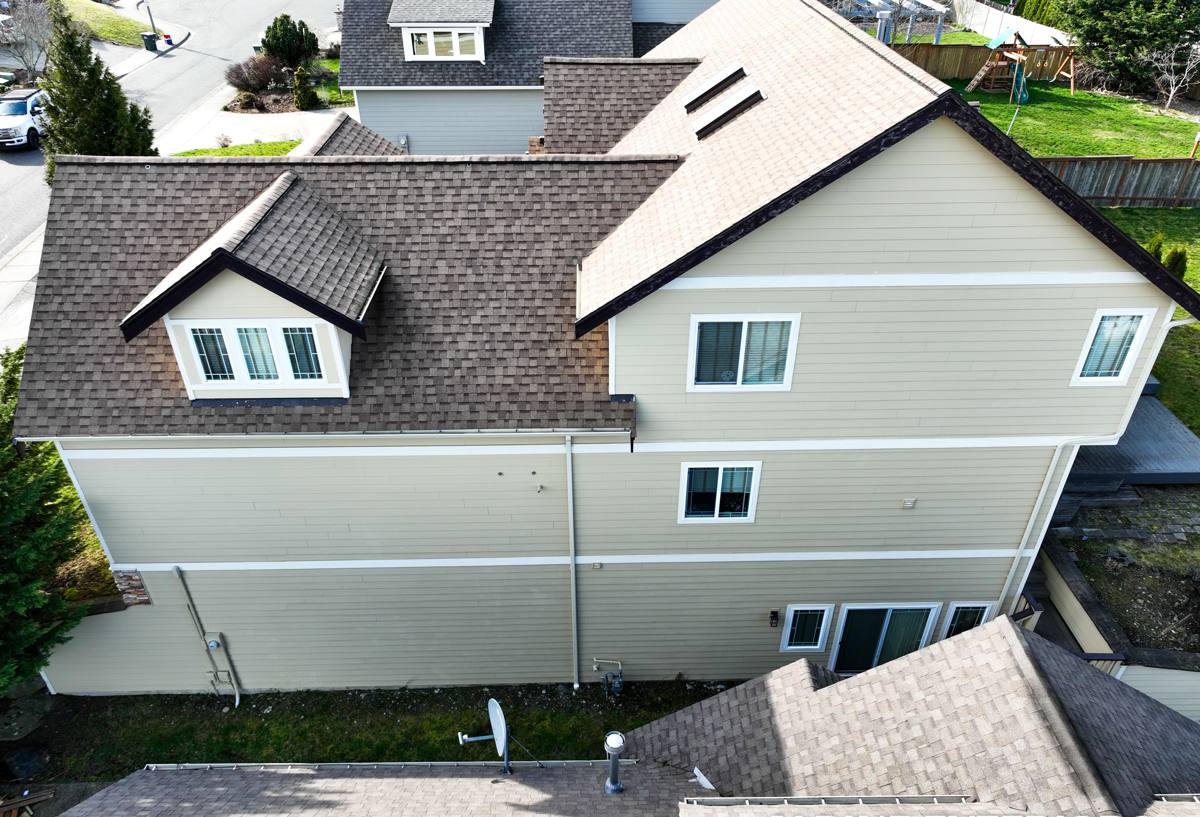
Signs a Custer Roof Needs Attention
Most roof problems don't announce themselves with a dramatic leak on day one. They show up as small, easy-to-dismiss signs first.
- Dark streaking or green-black patches on north-facing or shaded slopes
- Granules collecting in gutters or at the base of downspouts
- Soft or spongy spots when walked on, especially near valleys
- Daylight visible through the attic at roof penetrations
- Water stains on interior ceilings, particularly after a windy rainstorm
- Shingles that look cupped, lifted, or missing after a storm
- Rust streaks below metal flashing or vent stacks
Any one of these on its own might not mean much. Two or three together, especially after a stretch of hard weather, are worth having someone look at before the next round of rain arrives.
The Repairs We See Most Often Around Custer
Moss and Moisture Damage
Moss thrives on the shaded, north-facing slopes common on homes tucked among trees around Custer. Left alone, it lifts shingle tabs, traps water against the roof deck, and eventually leads to soft spots or rot. Repair work here usually means careful removal — not pressure washing, which can strip granules and shorten the life of the remaining roof — along with replacing any shingles or decking that moisture has already compromised.
Flashing and Valley Leaks
Flashing around chimneys, skylights, dormers, and roof valleys is where most leaks actually start, not out in the open field of shingles. Salt air speeds up corrosion at these seams, and driving rain exploits any gap that's opened up over time. Correct flashing repair means removing the old material rather than caulking over it, checking the underlayment beneath for hidden damage, and installing new flashing that's properly lapped and sealed for wind-driven rain.
Wind and Storm Damage
Winter storms coming off the water can lift or crack shingles, especially along ridgelines and roof edges where wind uplift is strongest. A proper repair replaces the damaged shingles and checks the surrounding field for hidden cracking or loosened nails that haven't failed yet but will during the next storm.
Vent and Pipe Boot Failures
Rubber pipe boots and vent seals degrade with age and sun exposure, and they're a common source of slow, hard-to-trace leaks. These are usually a straightforward repair on their own, but they're also one of the most commonly missed items during a rushed inspection.
What a Correct Repair Actually Involves
A repair that holds up in this climate isn't just about matching a shingle color. It starts with finding the actual source of the problem — which is often several feet away from where the water stain shows up inside — rather than patching the spot that's visible from the ground. It means checking the roof decking underneath for soft or rotted wood before laying new material over it, because covering damaged decking just hides the problem for another season. And it means using fasteners and flashing rated to hold up to salt air, not the cheapest option available.
Matching materials matters too. A patch using mismatched shingle profiles, granule colors, or flashing metals might solve the leak but create a weak point where the old and new materials meet — or simply look wrong from the street. We match existing materials wherever they're still available and explain honestly when an exact match isn't possible.
Our Process, Start to Finish
- Inspection. We get on the roof (or use a camera when steep pitch or safety conditions call for it) and trace the problem to its actual source, not just the visible symptom.
- Straight explanation. We tell you what we found, what's causing it, and what it will take to fix — including if we think a repair is the wrong call and replacement makes more sense.
- Written estimate. A clear scope of work and price before anything is touched, no vague allowances.
- The repair. Old or damaged material removed, decking checked and replaced where needed, new material installed and properly sealed against wind-driven rain.
- Cleanup and walkthrough. Debris and old material hauled off, and we walk you through what was done.
Repair or Replace? How We Help You Decide
Not every roof problem needs a full replacement, and not every roof problem should be patched forever. The table below covers how we generally think about it — every roof is different, so this is a starting point for the conversation, not a rule.
| Situation | Repair usually makes sense | Replacement usually makes sense |
|---|---|---|
| Age of roofing material | Well within its expected service life | Already near or past its expected lifespan |
| Extent of damage | Isolated to one area (a valley, a vent, a section) | Spread across multiple slopes or the whole roof |
| Decking condition | Solid, dry decking under the damaged area | Widespread soft or rotted decking |
| Moss and moisture history | Recent, first-time moss issue | Years of untreated moss with granule loss throughout |
| Shingle availability | Matching material still available | Discontinued product, patch will visibly mismatch |
Materials We Use — and Why
For repairs, we generally match what's already on your roof so the patch performs and looks consistent with the rest of the surface. When flashing needs full replacement rather than a patch, we lean toward metals that hold up better to salt air exposure over the cheapest stamped flashing available, since the difference in material cost is small compared to the labor of doing the job twice. We don't push a specific shingle brand — our standard is proper installation and correct material for the exposure, not brand loyalty. If we recommend against a particular product for your situation, it's because of how it performs under Whatcom County's rain and moss conditions specifically, not because of anything wrong with the manufacturer generally.
Why a Local Ferndale Crew Matters for Custer Homes
A crew that already works Custer and greater Ferndale knows what these roofs are up against without having to guess. We've seen how moss patterns show up differently on a shaded, tree-lined lot versus an open one, how flashing corrodes faster the closer a home sits to the water, and which roof details tend to leak first once wind-driven rain gets moving. That local pattern recognition means a faster, more accurate diagnosis instead of a repair that's really just a guess dressed up as a fix. It also means we're close by if a repair needs a follow-up check after the next big storm — not a crew that did the work and drove back to another county.
A Simple Maintenance Checklist
Between repairs, a few basic habits go a long way toward keeping small issues from becoming big ones in this climate.
- Clear gutters and downspouts at least twice a year, more often under overhanging trees
- Look for moss growth each fall before the wet season sets in fully
- Trim back branches that keep a roof section shaded and damp
- Check the attic after a hard storm for any new daylight or damp spots
- Have flashing and vent boots checked every few years, since they wear out well before shingles do
- Address small leaks right away — a slow drip in December is a rotted deck by spring
If you're noticing any of these signs on your Custer home, or just want an honest read on whether a roof repair is worth it before winter weather sets in again, we're happy to take a look. Fill out the form below for a free, no-pressure estimate.