 Ferndale Siding
 Composite Decking Built for Cordata's Weather, Not Just Its Look
Cordata sits close enough to the water and the lowland weather patterns that move through Whatcom County that homeowners here deal with a specific combination most decking products were never designed around: salty, damp air for much of the year, long stretches of driving rain, and a moss season that can run from fall through spring. A deck that looks great in a showroom in July can start showing problems by its second winter if it wasn't matched to this climate and installed with that climate in mind.
Composite decking, done correctly, holds up well here — but "composite" isn't one product. The board itself is only part of the equation. How the frame underneath is built, how water is allowed to drain and dry, and how the boards are fastened all matter as much as the brand name on the packaging. This page covers what actually goes into a composite deck that's built for Cordata conditions, not just a generic install.
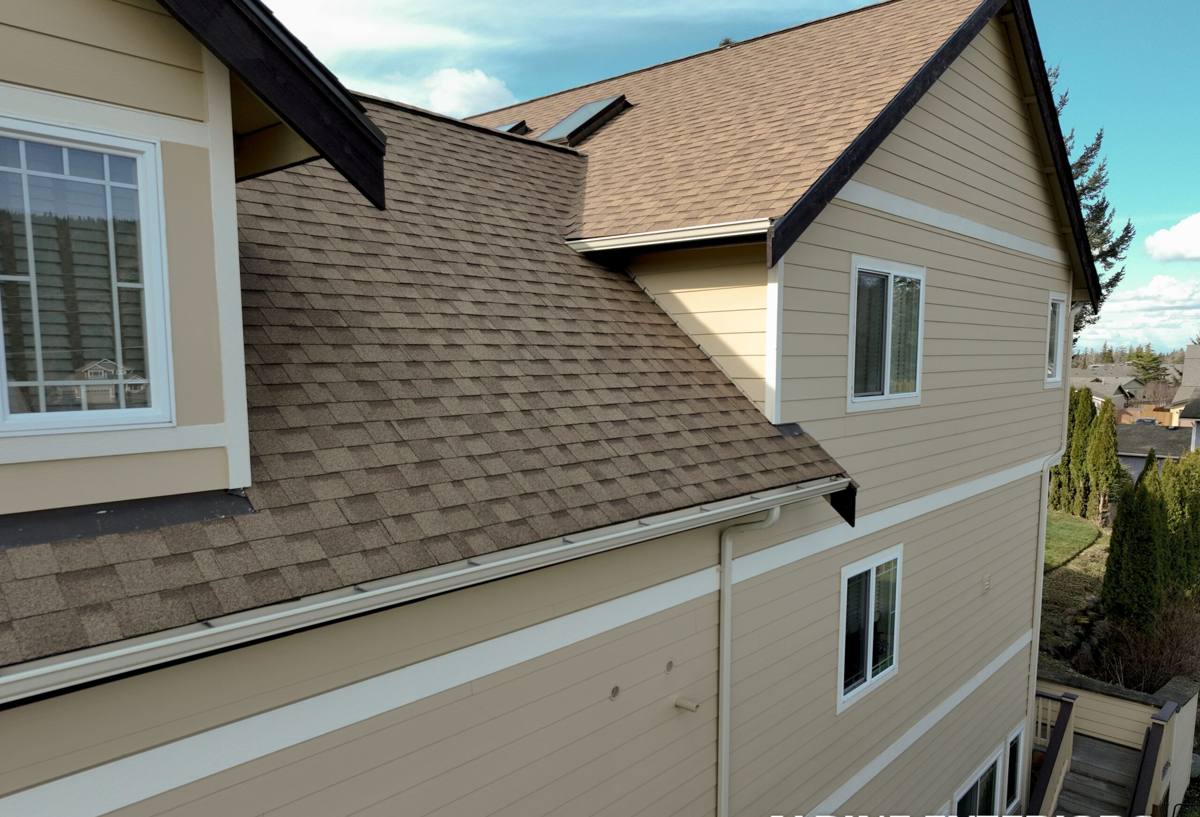
What Ferndale's Climate Does to a Deck Over Time
Salt Air and Moisture
Proximity to Puget Sound and the Strait of Georgia means a steady low-level exposure to salt-laden air, especially on west- and north-facing decks. Salt air accelerates corrosion on exposed fasteners and metal hardware, and it works its way into any small gaps or unsealed cuts in decking material. Over years, this is usually what causes the fastener rust streaks and edge deterioration homeowners notice on older or poorly installed decks.
Driving Rain
Rain here doesn't just fall — wind-driven rain gets pushed sideways into ledger boards, stair stringers, and the undersides of railings. A deck that isn't flashed and sloped correctly at the house connection will let water track behind siding or pool against framing, which causes rot in the structure even if the decking surface looks fine from above.
The Long Moss Season
Whatcom County's moss season is long because the conditions that grow moss — shade, moisture, and mild temperatures — persist for most of the year, not just a few winter months. Moss holds moisture against a surface far longer than open air would, which is a bigger issue for wood decks but still matters for composite: moss and algae buildup in low-traffic or shaded corners can make boards slick and, over time, stain surface caps if left unaddressed.
What a Correct Composite Deck Installation Actually Involves
A composite deck is only as good as what's underneath it and how it's assembled. In this climate, the details below are not optional upgrades — they're the difference between a deck that lasts and one that needs early repairs.
- Ledger flashing: A properly flashed ledger board with a drainage gap or capillary break so wind-driven rain can't wick behind the siding at the house connection.
- Joist protection: Joist tape or a comparable moisture barrier on every joist top, so the framing underneath isn't absorbing the same rain the decking surface sheds.
- Proper slope and drainage: A slight slope away from the house so standing water doesn't collect near the structure, especially under low-clearance decks where drying is slower.
- Hidden or corrosion-rated fasteners: Stainless or coated fasteners rated for coastal/marine exposure, since standard hardware is exactly what salt air attacks first.
- Ventilation under the deck: Enough clearance and airflow beneath the frame so the underside can actually dry out between rain events instead of staying damp for weeks.
- Board gapping per manufacturer spec: Correct expansion gaps between boards and at end cuts, since composite still expands and contracts with temperature and moisture.
Skipping any one of these doesn't usually show up as a problem in year one. It shows up in year three or four, as soft framing, fastener staining, or boards that have started to cup — after the visible surface warranty questions have already come up.
Composite vs. Wood vs. PVC: An Honest Comparison for This Climate
There's no single "best" decking material for every home — it depends on budget, maintenance tolerance, and how exposed the deck is to rain and salt air. Here's how the three common options actually compare for Cordata conditions.
| Material | Moisture & Salt Air Behavior | Maintenance | Typical Lifespan Here |
|---|---|---|---|
| Pressure-treated wood | Absorbs moisture readily; needs sealing to resist rot and moss staining | Annual cleaning and periodic staining/sealing | 10-15 years before major boards need replacing |
| Composite (capped) | Resists moisture absorption well; capped surface sheds water and resists moss staining better than uncapped boards | Occasional washing; no sealing or staining | 25-30+ years, per most manufacturer warranties |
| PVC / vinyl decking | Fully synthetic, essentially immune to moisture absorption and salt corrosion | Lowest maintenance; occasional washing | Comparable to or longer than capped composite |
We install composite most often in this area because it hits a practical middle ground: significantly better moisture and moss resistance than wood, without the higher material cost and different fastening requirements of full PVC systems. That said, we'll tell you honestly if your situation — heavy shade, ground-level proximity, or budget — points toward a different material instead.
Our Process, From Estimate to Finished Deck
- On-site assessment: We look at drainage, sun/shade exposure, existing framing condition (if this is a rebuild), and how the deck ties into your home's siding and roofline.
- Honest scope and material recommendation: We walk you through composite board options and framing upgrades based on what your specific site needs — not a one-size-fits-all package.
- Written estimate: Clear line items for demolition (if applicable), framing, decking, railing, and any drainage or flashing work, so there are no surprise add-ons mid-project.
- Framing and moisture protection first: Ledger flashing, joist tape, and structural work happen before a single deck board goes down — this is the part that determines whether the deck lasts.
- Decking, fastening, and finish work: Boards installed to manufacturer spec with corrosion-rated hardware, followed by railings, stairs, and trim.
- Final walkthrough: We go over care and maintenance specific to your deck's exposure before we consider the job done.
Maintenance: What Cordata Homeowners Actually Need to Do
One of the real advantages of composite is how little upkeep it needs compared to wood — but "low maintenance" isn't "no maintenance," especially with a moss season this long.
- Sweep off leaves, needles, and organic debris regularly, particularly in shaded corners where moss gets a foothold fastest.
- Wash the deck surface a couple of times a year with a soft-bristle brush and mild soap — a pressure washer on too high a setting can damage the cap layer, so keep pressure moderate.
- Check railing posts and stair connections annually for any looseness, since these fasteners take the most direct wind-driven rain exposure.
- Keep gutters and downspouts near the deck clear so runoff isn't dumping extra water directly onto or under the deck surface.
- Address any moss or algae film as soon as you notice it, rather than waiting — it's far easier to remove early than after it's set into surface texture.
Cost Factors Worth Understanding Before You Get Quotes
Composite decking costs vary by square footage, board tier, and how much framing or drainage work is needed — but a few factors move the price more than homeowners expect.
| Factor | Why It Affects Cost |
|---|---|
| Existing framing condition | Rot or undersized joists from a prior wood deck often need replacement before new decking goes down |
| Board tier | Entry-level capped composite vs. premium multi-tone or PVC boards carry a real material cost difference |
| Height and railing code requirements | Decks above a certain height require code-compliant railing systems, which add material and labor |
| Site access | Tight side-yard access or sloped lots increase labor time for material handling |
| Drainage and flashing scope | Homes with prior water intrusion at the ledger may need additional flashing or waterproofing work |
Broadly, expect composite decking projects to run from the mid four figures for a small, simple deck rebuild to well into five figures for larger decks with premium boards, railings, and structural work. Any contractor who gives you a firm number without seeing your site or asking about framing condition is guessing.
A Practical Checklist Before You Sign a Contract
- Does the estimate list the specific composite board brand and line, not just "composite decking"?
- Is joist tape or an equivalent moisture barrier included on the framing?
- Are fasteners specified as corrosion-resistant or marine-rated for coastal exposure?
- Does the quote address ledger flashing if the deck attaches to your house?
- Is there a written warranty on both materials and labor, and do you understand what voids it?
- Has the contractor actually seen your site in person before quoting?
Why a Crew That Already Works in Cordata and Ferndale Matters
A lot of decking problems in this area trace back to installation methods borrowed from drier climates — details that are fine in a low-humidity region but leave gaps for Whatcom County's rain and salt air to exploit. A crew that regularly works decks in and around Ferndale already knows to flash ledgers for wind-driven rain, spec fasteners for salt exposure, and plan for a moss season that outlasts what most manufacturer installation guides assume. That local pattern-recognition is what tends to separate a deck that needs attention in year three from one that's still solid at year twenty.
If you're weighing options for a deck in Cordata or elsewhere around Ferndale, we're happy to take a look and give you a straightforward, no-pressure estimate — including an honest read on your site's drainage and exposure before we ever talk board selection. Use the form below to get started.