 Ferndale Siding
 Siding Built for Cordata's Weather, Not Just Its Curb Appeal
Cordata sits close enough to Bellingham Bay and the Salish Sea that homes here take on a specific mix of weather stress: salt-tinged air moving in off the water, long stretches of driving rain through fall and winter, and a moss season that can run most of the year in shaded, north-facing spots. None of that is unique to one street or one subdivision — it's the baseline for anything built in this part of Whatcom County. What it means for siding is simple: a product and an install method that shrug off constant moisture and don't feed organic growth. That's the whole case for James Hardie fiber cement siding on a Cordata home, and it's the only siding system our crew installs.
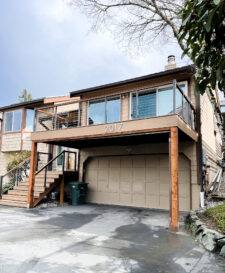
What This Climate Actually Does to Siding
Salt air doesn't just affect homes right on the water. Moisture carried inland reacts with metal fasteners, caulk, and paint film over years of exposure, which is why fastener corrosion and premature paint failure show up on homes well inland from the coast, not just beachfront property. Add in Whatcom County's rain totals — long, low-intensity storms rather than short downpours — and siding spends more of the year damp than dry. That combination is hard on wood-based products and on siding installed without real attention to drainage.
Moss and algae are the visible symptom of that moisture load. Shaded walls, areas under mature trees, and north- and west-facing elevations stay wet longer after a storm passes, and organic growth follows. Siding material that absorbs water gives moss something to root into; siding material that sheds water and dries out between storms doesn't.
The Three Things Local Siding Has to Manage
- Water absorption — how much moisture the siding material itself takes on during long wet stretches
- Drying capacity — how quickly the wall assembly gets rid of moisture once weather clears
- Surface resistance to organic growth — how well the finish resists moss, algae, and mildew taking hold
Why Fiber Cement Is the Right Answer Here
Fiber cement is a cement, sand, and cellulose fiber composite — it doesn't rot, doesn't swell and shrink with moisture the way wood does, and it's non-combustible. James Hardie takes that base material further with region-specific engineering: their HZ5 product line is formulated for climates like ours, where the concern isn't extreme heat but sustained moisture and freeze-thaw cycling. The factory-applied ColorPlus finish is baked on under controlled conditions and backed by a real finish warranty, which matters in a climate where field-applied paint has to cure and hold up through rain far more often than in drier regions.
We get asked why we don't install LP SmartSide, vinyl, or cedar alongside Hardie. The honest answer is that we standardized on one product because it lets us guarantee the install method, the flashing details, and the warranty coverage without hedging. Engineered wood products can perform well but are more sensitive to installation detail and moisture exposure at cut edges. Vinyl is affordable and low-maintenance but expands and contracts with temperature swings and has a shorter realistic lifespan. Cedar is a beautiful, legitimate material but requires ongoing maintenance — refinishing, caulking, moss treatment — that most homeowners underestimate going in. None of those are attacks on the products; they're trade-offs. For a climate like Cordata's, fiber cement's combination of dimensional stability, moisture resistance, and factory finish is the one we're willing to put our name behind.
James Hardie Product Lines for This Area
HardiePlank Lap Siding
The most common choice for Cordata homes — horizontal lap boards in a range of widths and textures (smooth, cedarmill). Works on nearly every architectural style in the neighborhood, from traditional ranch and split-level homes to newer builds.
HardiePanel Vertical Siding
Used for accent walls, gables, or full vertical applications on more contemporary homes. Often paired with HardieTrim boards to frame windows, corners, and transitions.
HardieShingle
A staggered or straight-edge shingle profile for homes wanting a cottage or craftsman look without the maintenance burden of real cedar shingles.
All three lines come in the ColorPlus factory-finish palette, which is worth choosing over field-applied paint in this climate specifically because the cure process happens in a controlled environment rather than between rain events.
What a Correct Installation Actually Involves
Fiber cement siding fails prematurely almost exclusively because of installation mistakes, not material defects. In a wet climate, the details below aren't optional extras — they're the difference between siding that lasts decades and siding that traps moisture behind it.
- Proper weather-resistive barrier installed and lapped correctly before any siding goes up
- Correct starter strip and minimum clearance from grade, decks, and roof lines so water doesn't wick up into the board
- Flashing integrated at every window, door, and roof-to-wall transition — not caulk used as a substitute for flashing
- Fasteners placed per Hardie's specification for our exposure zone, driven flush (not overdriven, which cracks the fiber cement edge)
- Proper joint treatment and gapping to allow for expansion without forcing water behind the plane
- Rainscreen or drainage gap where the wall assembly calls for one, so moisture that does get behind the cladding can drain and dry
Any one of these done wrong won't necessarily show up in year one. It shows up in year five or ten, as staining, soft trim, or paint failure at specific joints — usually in the same shaded, wet-prone spots that grow moss first.
How We Approach a Cordata Project
1. On-Site Assessment
We look at the home's exposure — which walls get the most weather, where moss and staining already show up, where the existing siding or sheathing has moisture damage — before we talk product or price.
2. Tear-Off or Overlay Decision
If the existing wall assembly has hidden rot or an inadequate weather barrier, we recommend full tear-off so it gets addressed rather than sealed behind new siding. We won't install over a wall we can't warranty.
3. Prep and Flashing
This is where most of the labor and most of the long-term performance comes from — housewrap, flashing, and trim details done correctly before a single piece of Hardie siding is hung.
4. Installation
Siding, trim, and corners installed to Hardie's fastening and clearance specs for our climate zone, with attention to the shaded and low-clearance areas that see the most moss and moisture in this area.
5. Final Walkthrough
We walk the finished job with the homeowner, point out the drainage and clearance details we built in, and go over basic care.
Cost Factors on a Cordata Home
Every home is different, but the same handful of factors drive most of the price variation we see on projects in this area:
| Factor | Why It Matters |
|---|---|
| Tear-off vs. overlay | Removing old siding and repairing sheathing adds labor but is often necessary to warranty the job |
| Home size and wall complexity | More corners, dormers, and roof transitions mean more flashing and trim work |
| Siding profile chosen | Lap, panel, and shingle styles differ in material and labor cost |
| Trim and accent detail | Custom trim work around windows and gables adds time |
| Existing moisture damage | Rotted sheathing or framing found during tear-off requires repair before siding goes on |
We give firm numbers only after seeing the home in person — anything quoted sight unseen in this climate is a guess, and guesses tend to be wrong in the homeowner's favor right up until change orders start.
Living With Fiber Cement Siding in a Moss-Prone Climate
Correctly installed Hardie siding is low-maintenance, not zero-maintenance. In an area with a long moss season, a periodic soft wash of shaded walls keeps organic growth from taking hold on the surface — the ColorPlus finish resists staining far better than field-applied paint, but nothing is immune to buildup if it's never cleaned. Keeping gutters clear and vegetation trimmed back from walls also matters more here than in drier climates, since standing water and constant shade are what let moss establish in the first place.
Why a Local Crew Matters for This Job
Fiber cement installation manuals are written for a national audience. Applying them correctly to a specific microclimate — knowing which walls in this area need extra flashing attention, which exposures grow moss fastest, how much clearance actually holds up through a wet Whatcom County winter — comes from having done the work here repeatedly, not from reading the spec sheet once. A crew that works Cordata and the surrounding Ferndale area regularly has already seen how local weather treats different installation details over time, and builds accordingly instead of learning it on your house.
If you're weighing a siding replacement or new install in the Cordata area, we're happy to walk the property, look at your specific exposure, and give you a straight assessment — no pressure, no upsell. Use the form below to request a free estimate.