 Ferndale Siding
 Siding Installation Built for Custer's Climate
Custer sits close enough to the water and open farmland north of Ferndale that homes here take a different kind of weather beating than houses tucked into town. Salt-laden air off the Strait, wind-driven rain that comes in sideways during fall and winter storms, and a moss season that can stretch from October through May all put steady pressure on exterior siding. A siding installation done right in Custer isn't just about appearance — it's about choosing a material and a install method that can shrug off years of that exposure without rotting, swelling, or feeding a moss colony.
We install James Hardie fiber cement siding exclusively, and this page walks through what that means specifically for homes in the Custer area: what the climate demands, what a correct installation actually involves, and why the details matter more here than they would in a drier, more sheltered part of Whatcom County.
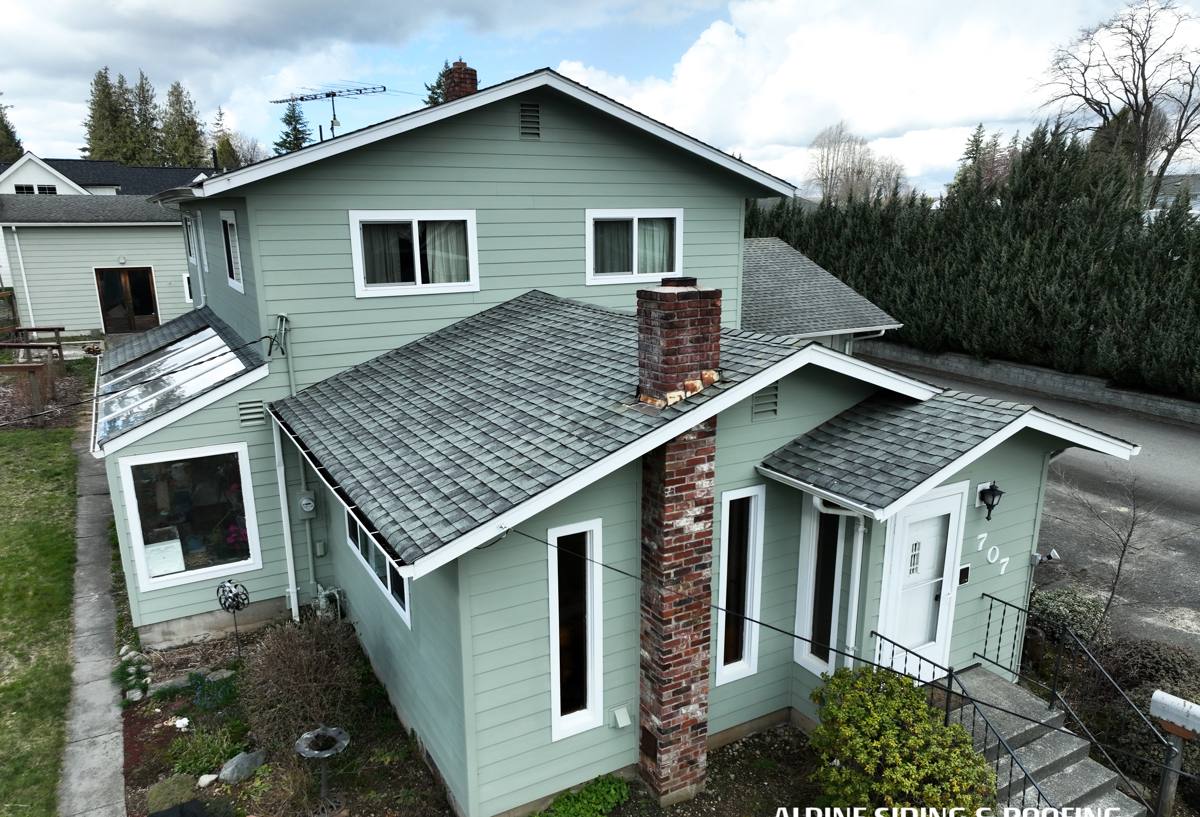
What Custer's Climate Does to Siding Over Time
Salt Air and Corrosion
Proximity to the water means airborne salt settles on every exterior surface, including siding, trim, and fasteners. Salt accelerates corrosion in exposed metal fasteners and can degrade some paint and coating systems faster than inland exposure would. Materials and finishes that aren't formulated to handle that exposure tend to show fading, chalking, or fastener bleed-through years before they should.
Driving Rain
Wind off open fields and the water pushes rain sideways into wall assemblies, not just straight down. That means water finds its way behind poorly lapped siding, undersized flashing, and gaps around windows and doors far more aggressively than it would in a calm-rain climate. Any weak point in the water management plan gets tested repeatedly every winter.
Moss and Sustained Moisture
Whatcom County's long, cool, wet season keeps exterior surfaces damp for extended stretches, and Custer's more open, less densely built lots often mean less afternoon sun to dry siding out between rain events. Moss and algae take hold readily on surfaces that stay damp, and once established, moss holds moisture directly against the siding surface — which is a much bigger problem for materials that absorb water or swell than for ones that don't.
Why Fiber Cement Fits This Environment
James Hardie siding is fiber cement — a mix of cement, sand, and cellulose fiber — which does not absorb and swell the way wood-based products can, and it does not corrode. It's also non-combustible, which matters given how many properties around Custer back up to open fields, brush, or larger rural lots where fire exposure is a real consideration. The factory-applied ColorPlus finish is baked on under controlled conditions and is formulated to hold color and resist the fading and chalking that salt air and UV exposure cause over time, backed by its own finish warranty separate from the product warranty.
Hardie also makes climate-engineered HZ10 product lines designed specifically for wetter, cooler regions like ours — this isn't one-size-fits-all fiber cement. That distinction matters in a place like Custer where the siding is going to spend a large share of the year damp.
What We Don't Install, and Why
We get asked about vinyl, LP SmartSide, and other fiber cement brands regularly, and we're upfront about why we've standardized on Hardie instead. Vinyl siding can warp and gap in sustained wind-driven rain, and its seams are a common entry point for water in a driving-rain climate. Engineered wood products like LP SmartSide use wood strand cores that are more moisture-sensitive at cut edges and fastener penetrations than fiber cement — manageable with strict detailing, but it raises the margin for error on a coastal-adjacent property where every seam gets tested repeatedly. Other fiber cement brands can be reasonable products, but we've built our crews, flashing details, and warranty process around one system so we can guarantee the install quality end to end. That consistency is worth more to us than offering five options we can't all install to the same standard.
What a Correct Installation Involves
Water Management Comes First
Before any siding panel goes up, the wall needs a proper weather-resistive barrier, correctly lapped and taped, with flashing at every window, door, and horizontal penetration that directs water outward and down — never letting it track behind the siding. In a driving-rain environment like Custer, this step is where most long-term failures actually originate, not in the siding material itself.
Rainscreen Gap
We install with a drainage gap behind the siding wherever conditions call for it, giving any moisture that does get past the outer layer a path to drain and the wall assembly a chance to dry out between storms. This is especially valuable in a climate where surfaces stay damp for days at a time.
Fastening and Clearances
Hardie specifies exact fastener types, spacing, and embedment depth, along with minimum clearances from grade, roof lines, and decks. Skipping these specs is the single biggest cause of premature caulk failure, staining, and moisture intrusion we see on improperly installed fiber cement.
Joints and Caulking
Butt joints, corners, and trim intersections get treated with the sealants and flashing details Hardie's install guide requires — not just caulked and painted over. In a wet climate, a joint that relies on caulk alone as its only water barrier will eventually fail.
Our Installation Process for Custer Homes
- On-site assessment — we look at your home's exposure to wind and rain, current siding and sheathing condition, and any moisture or moss issues already visible.
- Product and color selection — choosing the right Hardie panel style, texture, and ColorPlus color for your home, factoring in HOA or neighborhood considerations where relevant.
- Tear-off and sheathing check — removing old siding and inspecting the sheathing underneath for rot or damage before anything new goes up.
- Weather barrier and flashing installation — the step that determines how the wall performs for the next several decades.
- Siding installation to Hardie spec — proper fastening, clearances, and joint treatment throughout.
- Final detailing and walkthrough — trim, caulking review, and a walk-through so you understand what was done and why.
Comparing Siding Options for a Custer Property
| Factor | Vinyl Siding | LP SmartSide | James Hardie Fiber Cement |
|---|---|---|---|
| Moisture behavior in driving rain | Seams and panels can warp or gap over time | Moisture-sensitive at cut edges and fasteners | Does not absorb or swell |
| Salt air / coastal exposure | Can fade and become brittle | Finish can wear faster in harsh exposure | ColorPlus finish engineered for UV and weather |
| Moss and algae resistance | Moderate; surface can trap moisture at seams | Moderate; wood-based core is more vulnerable if compromised | Strong; non-organic material |
| Fire resistance | Combustible | Combustible | Non-combustible |
| Typical lifespan when correctly installed | 20-30 years | 20-30 years | 30-50+ years |
These are general industry characteristics, not claims about any specific product failing — every material can perform reasonably well when installed correctly and maintained. Our point is simply that fiber cement gives Custer homes a wider margin of safety against the specific stresses this climate creates, which is why it's the only product we put on a wall.
Maintenance Custer Homeowners Should Expect
- Rinse siding periodically to remove salt residue and organic buildup, especially on north-facing or shaded walls
- Inspect caulking at trim and joints annually, ideally before the wet season ramps up
- Keep gutters clear so overflow doesn't run down and saturate siding at corners
- Trim back vegetation and landscaping that keeps siding shaded and damp
- Address any moss growth early rather than letting it establish and hold moisture against the surface
- Watch for and promptly repair any impact damage that could compromise the weather barrier behind the siding
Fiber cement dramatically reduces how much maintenance this list demands compared to wood-based sidings, but no exterior material is truly maintenance-free in this climate.
Why Local Installation Experience Matters
Installing Hardie correctly isn't complicated in theory, but getting the water management details right in a place like Custer — with its wind exposure and long wet season — takes a crew that has actually worked through those conditions on real homes, not just read the install manual. A crew that already knows how Whatcom County's weather behaves against a wall assembly makes fewer assumptions and catches problems, like a marginal flashing detail or a sheathing area holding moisture, before they become the reason a siding job fails early. That local track record is part of what you're paying for as much as the panels themselves.
Get an Estimate for Your Custer Home
If you're planning a siding replacement or new installation in Custer, we're happy to come take a look, walk you through what your home specifically needs, and give you a straightforward, no-pressure estimate. There's no obligation — just an honest assessment from a crew that installs one product and knows how to install it right for this climate.