 Ferndale Siding
 Custom Decks in Blaine: Building for a Working Coastline
Blaine sits at the northern edge of Whatcom County, close enough to Semiahmoo Bay and Drayton Harbor that salt air and wind off the water are part of daily life for most homes in town. A deck built here doesn't just need to look good for a season or two — it needs to hold up to conditions that are noticeably harder on wood, fasteners, and finishes than what you'd find in a drier, more sheltered part of the county. We're based in Ferndale and our crew works Blaine regularly, so this isn't a one-off job for us. We've seen how decks age here over years, not just how they look the day they're finished.
A custom deck means the layout, framing, and materials are chosen for your specific property and how you actually plan to use the space, rather than pulled from a generic template. In Blaine, that customization has to account for the site's exposure: how much direct weather a given wall of the house takes, how much shade the deck will sit in, and how close it is to the water. Two decks a few blocks apart can need genuinely different approaches once you factor those things in.
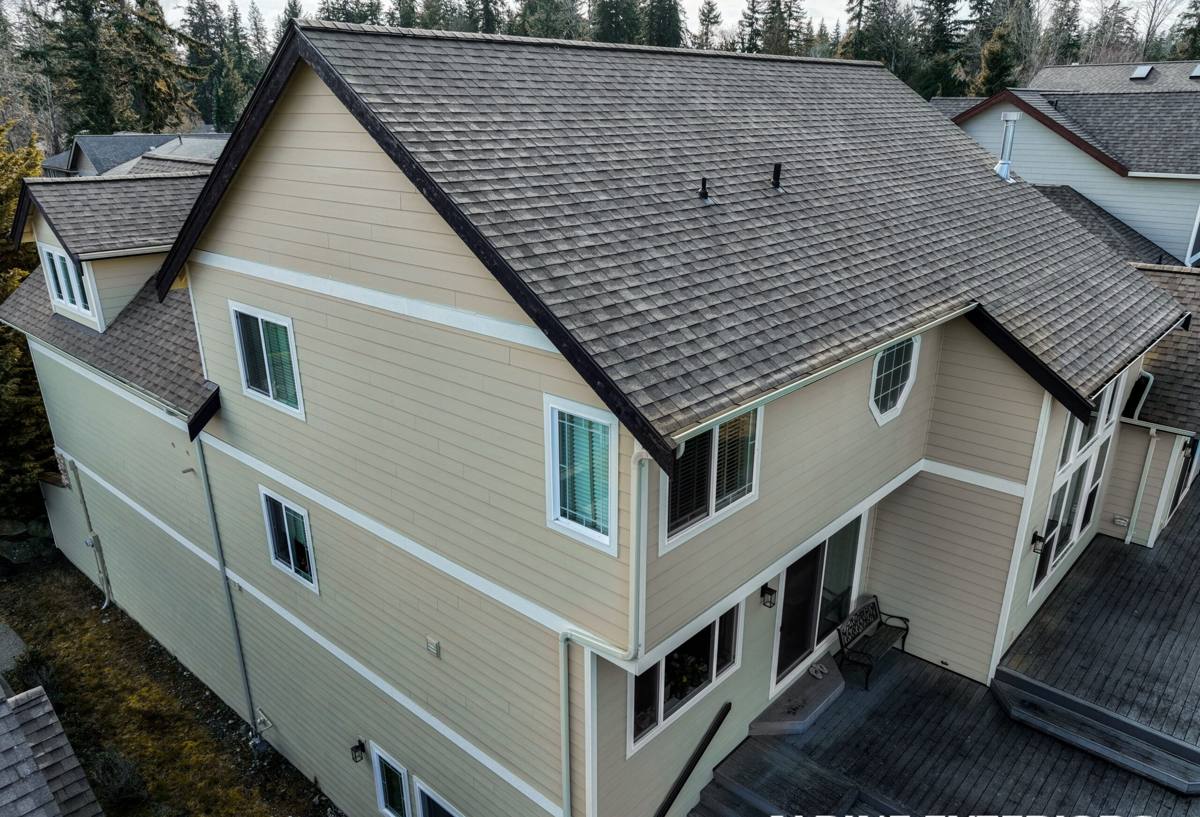
What Blaine's Climate Does to a Deck
Salt Air and Corrosion
Salt-laden air off the bay accelerates corrosion on any exposed metal — fasteners, joist hangers, railing hardware, post bases. A deck built with standard hardware in Blaine can show rust and weakened connections years before the same deck would in an inland town. This is one of the first places a corner gets cut on a budget deck, and it's one of the last places that shows up as a visible problem until a board or railing section is already compromised.
Driving Rain and Standing Moisture
Storms coming off the water push rain sideways as much as straight down, and a horizontal deck surface takes on and holds moisture differently than a vertical wall does. Water that can't drain or dry between storms works into board ends, fastener holes, and ledger connections over time. In Blaine's wetter months, a deck that was designed with drainage as an afterthought stays damp far longer than it should.
A Long Moss Season
Mild temperatures and near-constant moisture give moss a growing season that runs most of the year on shaded or north-facing surfaces. On a deck, moss doesn't just look bad — it holds moisture against the board surface and turns into a slip hazard, especially on stairs and any part of the deck that doesn't get much direct sun. Tree-shaded lots and decks tucked against the house tend to see it first and worst.
Decking Material Options for a Blaine Property
There's no single right material for every deck, and we'll talk through the real trade-offs rather than push whatever has the best margin. What changes in a town like Blaine is how much weight moisture resistance and hardware corrosion resistance should carry in that decision.
| Material | Upfront Cost | Moisture Behavior | Maintenance |
|---|---|---|---|
| Pressure-treated wood | Lowest | Resists rot when properly sealed and maintained; end cuts and fastener holes are the weak points | Needs re-staining or sealing every 2-3 years, more often in constant damp shade |
| Cedar | Moderate | Naturally rot-resistant but still needs sealing to hold color and shed water well | Regular sealing; graying and surface checking over time without upkeep |
| Capped composite | Higher | Doesn't absorb water into the board core; performs consistently in constant moisture | Occasional washing; no staining or sealing |
| PVC decking | Highest | Fully synthetic, essentially unaffected by moisture or rot | Lowest ongoing maintenance of the group |
For a deck that sits in heavy shade, close to the water, or gets minimal sun exposure through the winter, we usually steer homeowners toward composite or PVC precisely because those boards don't absorb moisture the way natural wood does. That's not a knock on wood decking — plenty of Blaine homeowners choose cedar or pressure-treated for the look and lower upfront cost, and it's a perfectly reasonable choice as long as the maintenance schedule is kept up. The honest trade-off is time and upkeep versus material cost, and we'll lay out both sides before you decide.
What a Correctly Built Deck Involves
The framing and connection details under the boards matter more than the decking material itself, and they're the part a homeowner can't easily inspect once the project is finished. In a coastal town like Blaine, a few details aren't optional:
- Corrosion-resistant fasteners and hardware: Stainless steel or heavy hot-dip galvanized hardware throughout, not the standard-grade hardware that's fine in a drier inland climate.
- Properly flashed ledger board: Where the deck attaches to the house, flashing has to shed water away from the wall framing, not just seal the connection with caulk.
- Board spacing for drainage: Gaps between boards need to be consistent enough to let water and debris pass through rather than pool on the surface.
- Footings set below frost depth and on solid bearing soil: This is a structural requirement everywhere, but wetter soil conditions near the water make getting it right the first time more important.
- Joist protection: Flashing tape or a comparable barrier over the top of each joist keeps standing water from working into the wood through fastener holes.
None of this is unusual or exotic — it's standard deck-building practice followed consistently rather than shortcut on the parts that get covered up once the decking goes down.
Permits and Local Requirements
Most decks above a certain height or size need a building permit through the City of Blaine or Whatcom County, depending on the property's location, and railing height and guard spacing are governed by code once a deck reaches a certain height off the ground. The specifics depend on your lot and the scope of the project, so we handle that conversation as part of the design process rather than leaving a homeowner to sort out permitting on their own.
Custom Deck Features Worth Considering
"Custom" covers a lot of ground, and the right features depend on how you actually use the outdoor space. Common requests we work through with Blaine homeowners include multi-level decks that step down with a sloped yard, built-in bench seating along a railing line, covered or partially covered sections that offer some shelter from the wetter months, and lighting built into stair risers or post caps for evening use. Railing style is worth its own conversation too — cable rail and glass panel options preserve a water view where the lot allows for one, while a more traditional baluster railing may make more sense on a lot without that sightline.
The point of a custom design conversation is matching the deck to the site and to how you'll actually use it, not defaulting to whatever's fastest to frame. A deck built for entertaining a crowd looks different from one built as a quiet spot off a bedroom, and the framing plan should follow from that decision, not the other way around.
Our Process for a Blaine Deck Project
- Site visit and design conversation: We walk the property, look at sun exposure, drainage, and how the deck will connect to the house, and talk through how you plan to use the space.
- Material and layout decisions: We lay out the honest trade-offs between decking materials and framing options for your specific site and budget.
- Permit handling: Where a permit is required, we prepare and submit what the local jurisdiction needs before work starts.
- Build: Footings, framing, ledger flashing, decking, and railing, in that order, with the structural work inspected before it gets covered up.
- Final walkthrough: We go over the finished deck with you before calling the job done.
Cost Factors for a Blaine Custom Deck
| Factor | What Drives It | Coastal Climate Consideration |
|---|---|---|
| Size and shape | Square footage, number of levels, custom angles or curves | Multi-level designs need more footings and framing to handle sloped, often damp yards |
| Decking material | Pressure-treated, cedar, composite, or PVC | Moisture-resistant materials cost more upfront but hold up better in constant dampness |
| Framing and hardware | Standard vs. corrosion-resistant fasteners and connectors | Salt air makes upgraded hardware a practical necessity, not a luxury option |
| Railing style | Traditional baluster, cable, or glass panel | View-preserving railings cost more but matter more on water-facing lots |
| Site conditions | Ground slope, existing structure to remove, access for equipment | Soil drainage and frost depth for footings near the water table |
These are general drivers, not a quote for your project. Every lot in Blaine sits at a slightly different distance from the water and under different tree cover, and the only way to give you an accurate number is to walk the site and see what we're actually building on.
Before You Start a Custom Deck Project, Check
- Whether an existing deck's footings and framing are sound enough to reuse, or whether a full rebuild makes more sense
- How much direct sun the site gets through the year, which affects both material choice and moss risk
- Whether the deck's location and height will require a building permit
- How the new deck will drain water away from the house foundation and any crawlspace vents nearby
- Whether railing height and spacing on an older deck already meets current code, especially before resurfacing over it
Why a Blaine-Based Crew Matters
A crew that works across Whatcom County regularly sees how salt air, driving rain, and moss actually affect decks over years, not just how a material performs on a spec sheet. That experience shapes real decisions on a Blaine job site: which hardware is worth the upgrade, where extra flashing attention pays off at the ledger board, and which boards and framing choices hold up on a shaded, water-facing lot versus a sunnier inland one. Blaine's exposed coastal position isn't the same as more sheltered towns further inland in the county, and a deck built without accounting for that difference tends to show problems years earlier than it should.
Get a Free, No-Pressure Estimate
If you're planning a new deck or replacing an aging one on your Blaine property, we're glad to walk the site and talk through what makes sense for your yard, your budget, and this coastal climate. Reach out using the form below to schedule a free estimate — no pressure, no upsell script.