 Ferndale Siding
 Building New in Everson? Get the Windows Right the First Time
If you're framing a new home or addition near Everson, the windows you choose and how they're installed will outlast almost every other decision made during the build. Siding gets replaced. Roofs get replaced. Windows that are installed correctly the first time, on the other hand, can go 20-30 years without a callback — and windows installed poorly can start leaking behind the wall before the house is even a year old. New-construction windows are a different job than a retrofit or pocket replacement, and in Whatcom County's wet climate, the installation details matter more than the window brand.
Everson sits in a part of Whatcom County that sees a long wet season, heavy fall and winter rainfall, and enough humidity and shade in places to grow moss on roofs and siding within a few years of a build. New-construction framing gives us a rare opportunity: full access to the rough opening, the wall sheathing, and the weather-resistive barrier before anything is closed in. Done right, that access is what keeps a house dry for decades. Done wrong, it's the reason a builder ends up chasing water stains behind drywall two winters later.
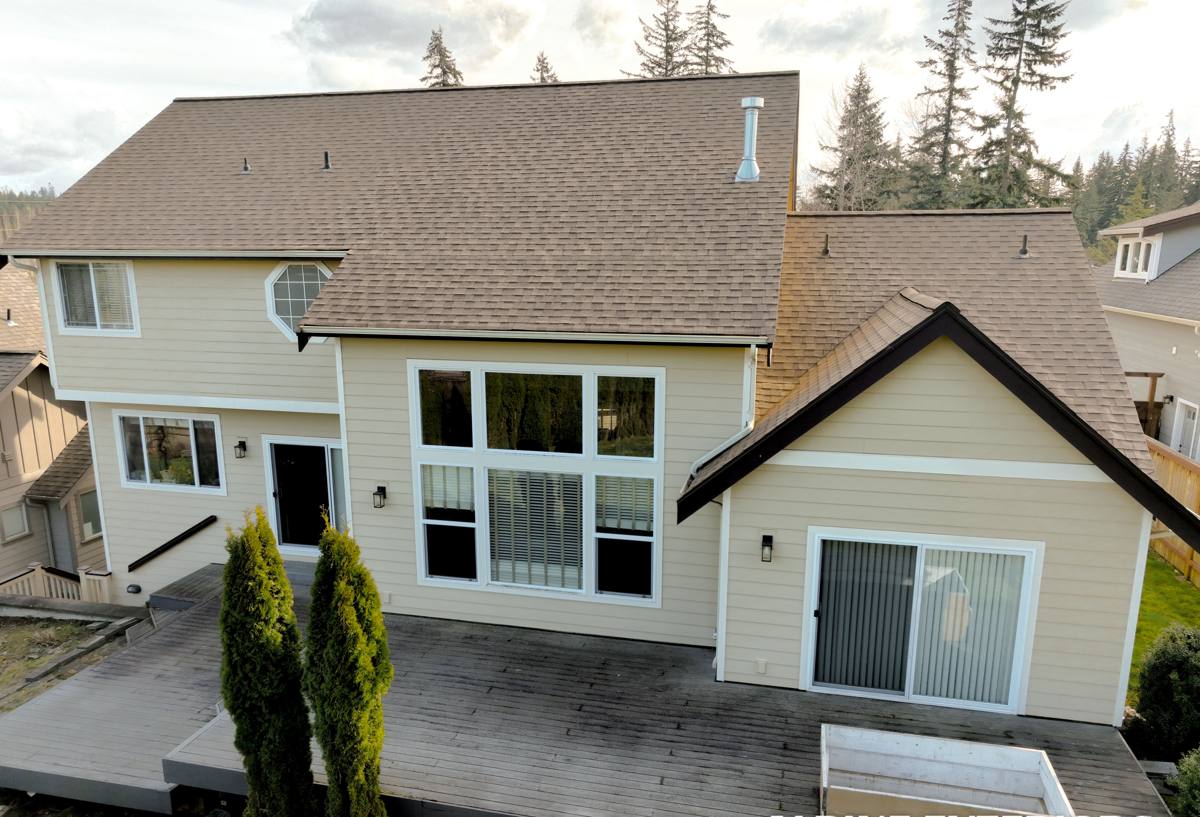
What Local Weather Demands From a New-Construction Window
Whatcom County's climate isn't extreme, but it's persistent — and persistent wet weather finds every shortcut in a window installation eventually. A few things we design around on every new build in the Everson area:
- Driving rain: Wind-driven rain off the valley pushes water sideways against window openings, not just straight down. Flashing has to shed water outward and downward at every layer, not just at the sill.
- Long wet seasons: Whatcom County gets extended stretches of damp weather where wall cavities rarely get a chance to fully dry out. Any moisture that gets trapped behind a window frame has months to do damage before a dry spell arrives.
- Moss and organic growth: Shaded lots and persistent moisture support moss and algae growth on sills, trim, and nearby siding. This is mostly a maintenance issue, but it's also a sign of how much standing moisture the exterior envelope is dealing with — which is exactly what a good window installation is designed to manage.
- Temperature swings between seasons: Cold, damp winters and warmer summers mean frame materials and sealants expand and contract. Products and installation methods need to tolerate that movement without cracking seals.
None of this requires exotic materials. It requires a disciplined, correctly sequenced installation — which is where most window problems in this region actually start.
New-Construction Installation vs. Replacement — Why the Method Matters
"New-construction" isn't just a window style — it describes an installation method that only works when the wall is open. Understanding the difference is useful even if you're not doing the installation yourself, because it explains why we insist on certain steps.
| Factor | New-Construction Installation | Replacement/Pocket Installation |
|---|---|---|
| Access to rough opening | Full access to studs, sheathing, and WRB | Limited — works within the existing frame |
| Flashing | Sill pan and full flange flashing integrated with the WRB | Relies on existing flashing, sealant, and window design |
| Water management | Built into the wall assembly from the ground up | Retrofitted around what's already there |
| Best suited for | New homes, additions, full wall reframes | Existing homes keeping their original frame |
| Long-term risk if done wrong | Hidden leaks behind fresh drywall and insulation | Leaks usually show up faster and are easier to isolate |
On a new build, there's no excuse for cutting corners on flashing — the wall is wide open. That's exactly why we treat new-construction installs as the standard the rest of the trade should be held to.
What a Correct New-Construction Window Installation Actually Involves
Sill Pan and Flashing Sequence
Every opening gets a sloped sill pan before the window ever goes in, so any water that gets past the window has somewhere to go besides the framing. Flashing tape is layered in the correct shingle-lap order — jamb flashing under the head flashing, head flashing lapped over the weather-resistive barrier — so water is always directed outward and down, never trapped behind a lap.
Integration With the Weather-Resistive Barrier
The window's nailing flange has to tie into the house wrap or building paper as one continuous water plane, not just get caulked and hoped for. Gaps or reversed laps here are one of the most common causes of slow leaks that don't show up until the drywall is already stained.
Squaring, Shimming, and Fastening
A window that's slightly out of square will bind, won't seal evenly, and puts stress on corner welds and hardware over time. We shim and check square and level before fastening, not after, and fasten through the flange into solid framing at the spacing the manufacturer specifies — not just "enough to hold it."
Insulation and Interior Air Sealing
The gap between the window frame and rough opening gets filled with low-expansion foam or backer rod and sealant — never packed with fiberglass alone, which does nothing to stop air and moisture movement. This step also matters for energy performance, since gaps around the frame are a common source of drafts in an otherwise well-insulated new home.
Exterior Trim and Final Sealant
Once siding and trim go on, the final sealant joints get tooled properly and left to cure before the house is buttoned up. Rushing this step in wet weather is a common shortcut that leads to poor adhesion and early sealant failure.
Choosing Window Products for a Whatcom County New Build
We work with several manufacturers rather than pushing one product line, because no single window is the right fit for every budget and every home style. That said, a few practical guidelines apply to almost every new build in this area:
Frame Material
Vinyl frames are the most common choice for new construction — they're cost-effective, don't require repainting, and handle moisture well. Fiberglass frames cost more but hold their shape better across temperature swings and are worth considering on larger openings or homes where long-term durability is the priority. Wood and wood-clad windows offer a traditional look but require more maintenance in a climate this wet, and we're upfront with clients about that trade-off before they commit to one for exterior-facing rooms.
Glass and Energy Performance
Double-pane, low-E glass with an argon fill is the practical baseline for new construction here — it's a meaningful step up in comfort and energy performance over single-pane or basic double-pane glass without a major cost jump. Homes with a lot of west- or south-facing glass sometimes benefit from a slightly different low-E coating to manage solar heat gain, which is worth discussing during design rather than after the windows are ordered.
Hardware and Operation Style
Casement windows tend to seal tighter against driving rain than double-hung or sliding styles, since the sash compresses against the frame rather than sliding past a track. That doesn't mean every window on the house should be a casement — but it's a factor worth weighing for walls that take the brunt of the weather.
Our Process for New-Construction Window Projects in Everson
Whether we're working directly with a homeowner or coordinating with a builder or GC, the sequence stays consistent:
- Review the plans and rough openings before framing is finalized, so window sizes and swing directions are confirmed early
- Walk the site once the wall is framed and sheathed, before the WRB goes on, to check openings for square and proper blocking
- Install sill pans and layer flashing in the correct sequence, integrated with the house wrap
- Set, square, shim, and fasten each window per manufacturer specs
- Air-seal and insulate the perimeter gap
- Coordinate timing with the siding and trim crew so exterior sealant goes in under dry conditions
- Final walkthrough to check operation, sweep for gaps, and confirm every unit locks and seals properly
We also photograph flashing and sill pan work at each opening before it's covered up, so there's a record of what's behind the wall — useful for the builder's file and for any future work on the home.
Why It Matters to Hire a Crew That Already Works in Everson
Window installation standards on paper look the same everywhere. What actually varies is how a crew handles the wet-weather realities of building in this part of Whatcom County — sequencing work around rain, knowing which sealants cure reliably in cooler damp conditions, and not rushing flashing details because a schedule is tight. A crew that regularly works new construction in and around Ferndale and the Everson area has already made those judgment calls on other builds and isn't learning them on your house.
There's also a coordination piece that's easy to underestimate: new-construction window installs have to be timed with framing, house wrap, and siding crews. A contractor unfamiliar with local building patterns and typical scheduling in this county is more likely to create gaps in that sequence — the kind of gaps where water gets in before anyone notices.
Get a Free, No-Pressure Estimate
If you're framing a new home or addition near Everson and want window installation done right from the rough opening forward, we're happy to take a look at your plans or site and walk through what a correct install looks like for your build. Use the form below to request a free estimate — no pressure, no obligation.