 Ferndale Siding
 Why Deck Replacement Looks Different in Sudden Valley's Climate
A deck built for a dry climate and a deck built for Whatcom County are not the same structure, even if they look identical from the yard. Homes in and around Sudden Valley deal with a specific combination of conditions: salt-laden air moving in off the water, long stretches of driving rain, and a moss season that can run most of the year in shaded spots. Individually, each of those is manageable. Together, over ten or fifteen years, they're what turns a solid-looking deck into one with soft joists, rusted fasteners, and a surface that's more moss than wood.
We see the same failure pattern over and over on replacement calls in this area: the top of the decking looks rough but survivable, while the real damage is hidden underneath — at the ledger board, the joist tops, and the fastener heads. A repair patches the part you can see. A replacement fixes the part that's actually failing. Knowing which one your deck needs is the first real decision, and it's one we walk through honestly before recommending either.
Signs Your Deck Has Reached the End of the Road
Not every tired-looking deck needs to come out. But certain signs point to structural fatigue rather than cosmetic wear, and those are the ones worth taking seriously before someone gets hurt.
- Soft or spongy spots when you walk across the boards, especially near the house or stair stringers
- Visible gaps or dark staining where the deck attaches to the house (the ledger board)
- Rust streaks running down from screws, bolts, or joist hangers
- Persistent moss or algae growth that comes back within weeks of cleaning
- Railings that flex or wiggle more than they did a few years ago
- Boards that have cupped, split lengthwise, or pulled away from fasteners
- A deck more than 20-25 years old that has never had the substructure inspected
If you're seeing two or more of these, it's worth having someone look underneath before another wet season passes.
What Correct Deck Replacement Actually Involves
A deck replacement done right isn't just new boards on old bones. The framing, the connection to the house, and the hardware matter more than the decking material itself — they're what determines whether the deck lasts five years or twenty-five.
Framing and Footings
We check post spacing, beam sizing, and footing condition against current load requirements, not just what was there before. A lot of older Whatcom County decks were framed to a different standard, and replacement is the natural point to bring the structure up to what code actually expects today.
Ledger Board and Flashing
This is where we find the most hidden rot. The ledger board bolts the deck to the house, and if it wasn't flashed correctly when the house was built — or the flashing has failed over the years — water gets trapped between the deck and the siding. In driving rain like this area gets, that's a slow, steady leak path. Replacement means pulling the ledger, inspecting the rim joist and sheathing behind it, and reflashing it properly before anything new goes back on.
Fasteners and Hardware
Salt air corrodes standard fasteners faster than most homeowners expect. We use stainless steel or coated fasteners and joist hangers rated for exterior, coastal-adjacent exposure — not the cheapest option on the shelf. It costs a little more up front and saves you from rust streaks and failed connections a decade sooner.
Decking Material Options for Salt Air and Moss
There's no single "right" material for every deck — it depends on budget, sun exposure, and how much upkeep you actually want to do. Here's how the common options hold up under this region's conditions specifically.
| Material | Moss & Moisture Behavior | Maintenance | Typical Lifespan Here |
|---|---|---|---|
| Pressure-treated wood | Absorbs moisture, needs sealing to resist moss and rot | Annual cleaning, resealing every 2-3 years | 10-15 years with upkeep |
| Cedar | Naturally moisture-resistant but still needs sealing in shaded, damp areas | Regular cleaning and periodic finish | 15-20 years with upkeep |
| Capped composite | Sheds moisture well, resists moss buildup better than wood | Occasional washing, no sealing or staining | 25-30 years |
| PVC decking | Fully synthetic, doesn't absorb water or feed moss growth | Lowest upkeep of the group | 25-30+ years |
We install what fits the homeowner's budget and expectations rather than pushing one product line. What we won't do is install a material in a way that fights its own design — for example, wood decking without adequate airflow underneath, which traps moisture and accelerates the exact moss and rot problems this climate already encourages.
Cost Factors Homeowners Should Understand
Deck replacement pricing varies widely based on size, material, and how much of the substructure needs work, so we'll only speak in broad terms here — an honest estimate always requires seeing the deck in person.
| Factor | Why It Moves the Price |
|---|---|
| Deck size and shape | More square footage and cut angles mean more material and labor |
| Substructure condition | Rotted framing or a failed ledger adds repair scope beyond surface replacement |
| Decking material | Composite and PVC cost more per board than wood, but need less upkeep over time |
| Height and stairs | Multi-level decks and stair runs add framing, railing, and labor time |
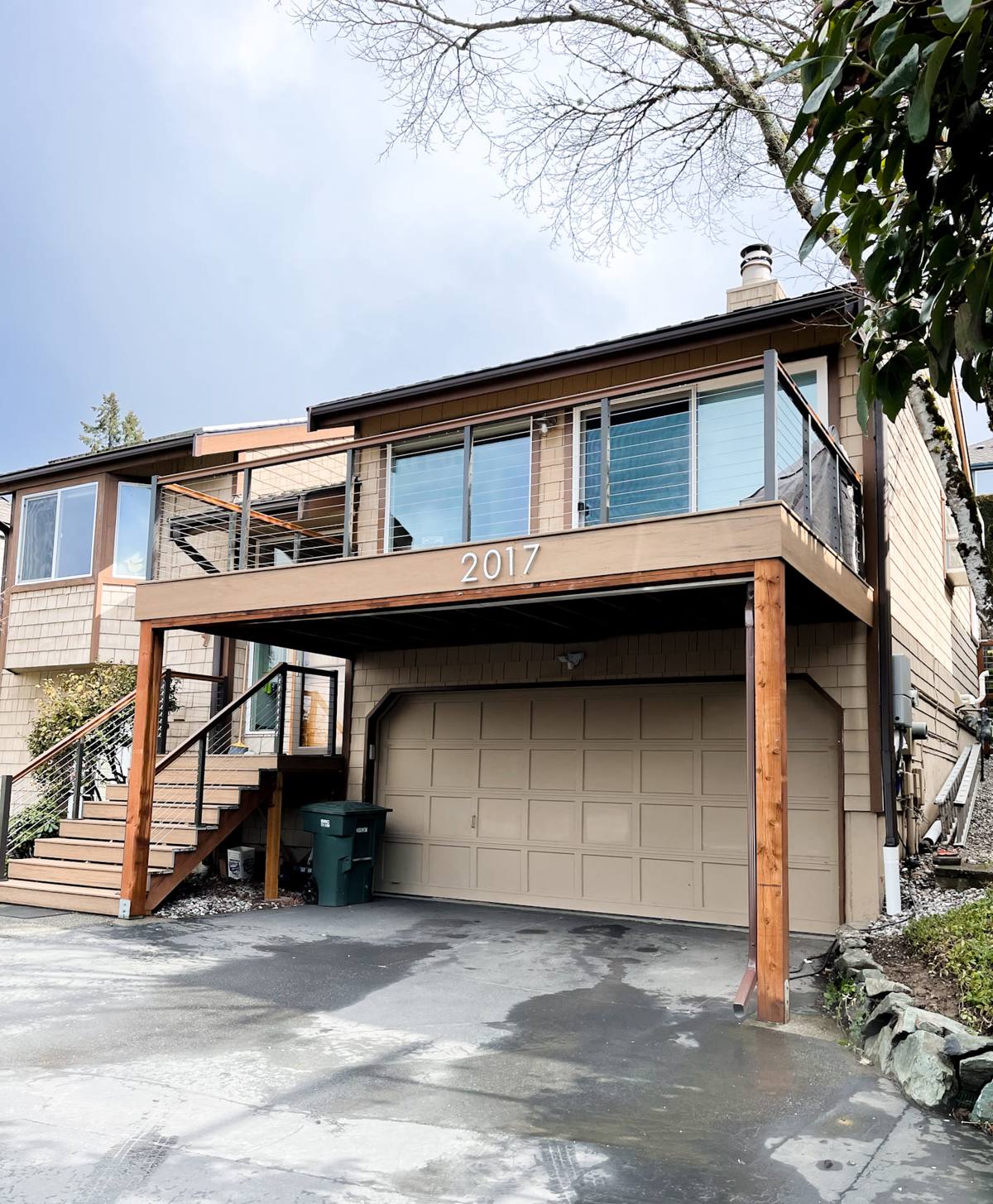
| Railing style | Cable, glass, and custom railing systems cost more than standard baluster rail |
| Permit and inspection needs | Structural changes may require engineering review, adding time and fees |
Most full deck replacements for an average-size home run into the five figures once the substructure and railing are accounted for — but the only way to know your actual number is a walk-through, which is exactly what we offer at no cost.
Our Deck Replacement Process, Start to Finish
Assessment and Planning
We start underneath the deck, not on top of it — checking ledger attachment, footing condition, and joist health before talking materials. This is also when we pull any required permit paperwork so there are no surprises mid-project.
Demolition and Framing
Old decking, railing, and any compromised framing come out. We rebuild the structure to current requirements, reflash the ledger connection, and confirm footings before a single deck board goes down.
Decking, Railing, and Finish Details
Decking is installed with fastener spacing and gapping appropriate to the material and our local moisture conditions — too tight and boards can't shed water or dry out between rains. Railing, stairs, and trim finish out the job, followed by a final walk-through with the homeowner.
Permits and Neighborhood Guidelines
Deck replacement in Whatcom County often requires a permit, particularly when framing, footings, or railing height are involved — a straight decking swap on an unchanged structure may not, but it's worth confirming rather than assuming. If your property is part of a community with an architectural committee or design guidelines, it's also worth checking those before material and color decisions are finalized. We handle the permit process as part of the job so it's one less thing on your plate.
Living With Your New Deck Through Moss Season
Even a well-built deck benefits from a little seasonal attention in this climate. A few habits go a long way toward protecting the investment:
- Sweep off standing leaves and debris regularly during fall and winter
- Rinse shaded, north-facing areas more often — they dry slowest and grow moss fastest
- Check that gaps between boards stay clear so water can drain instead of pooling
- Reseal wood decking on the schedule recommended for the product, not just "when it looks dry"
- Have railings and stair connections checked periodically, since these take the most daily stress
Why Local Experience in Sudden Valley Matters
A crew that's replaced decks throughout the Sudden Valley area already knows how the microclimate here behaves — which sides of a house hold moisture longest, how much moss pressure to expect in shaded lots, and what framing details actually hold up rather than just meeting the letter of code. That's different from general contracting experience picked up somewhere drier. It shows up in the small decisions: fastener choice, flashing details, and where extra ventilation gets built in versus where it's not needed.
It also matters for accountability. A local, established crew is easy to reach if a question comes up two years down the road, and has a reputation in the area worth standing behind.
If your deck is showing its age, we're happy to take a look and give you a straight answer on repair versus replacement — no pressure, no hard sell. Fill out the form below to schedule a free estimate.