 Ferndale Siding
 Windows Built for the Semiahmoo Climate
Semiahmoo sits close enough to the water that homes there deal with a different set of conditions than houses further inland in Whatcom County. Salt-laden air off the bay, wind-driven rain that comes in sideways during winter storms, and long stretches of gray, damp weather that keep moss and mildew active most of the year all put extra demands on a home's windows. Standard replacement windows sold at a big-box store are engineered to a generic spec sheet. They aren't necessarily wrong for the job, but they aren't chosen with this specific stretch of coastline in mind either.
When we work on window projects for homes in and around Semiahmoo, we're thinking about three things at once: how well the unit will actually cut heating costs through a Northwest winter, how well the frame and flashing will hold up against salt exposure and constant moisture, and how the installation itself will perform once it's buttoned up and the crew has moved on to the next job. Energy efficiency and weather durability aren't separate problems out here — they're the same problem, because a window that lets in air also tends to be a window that lets in water.
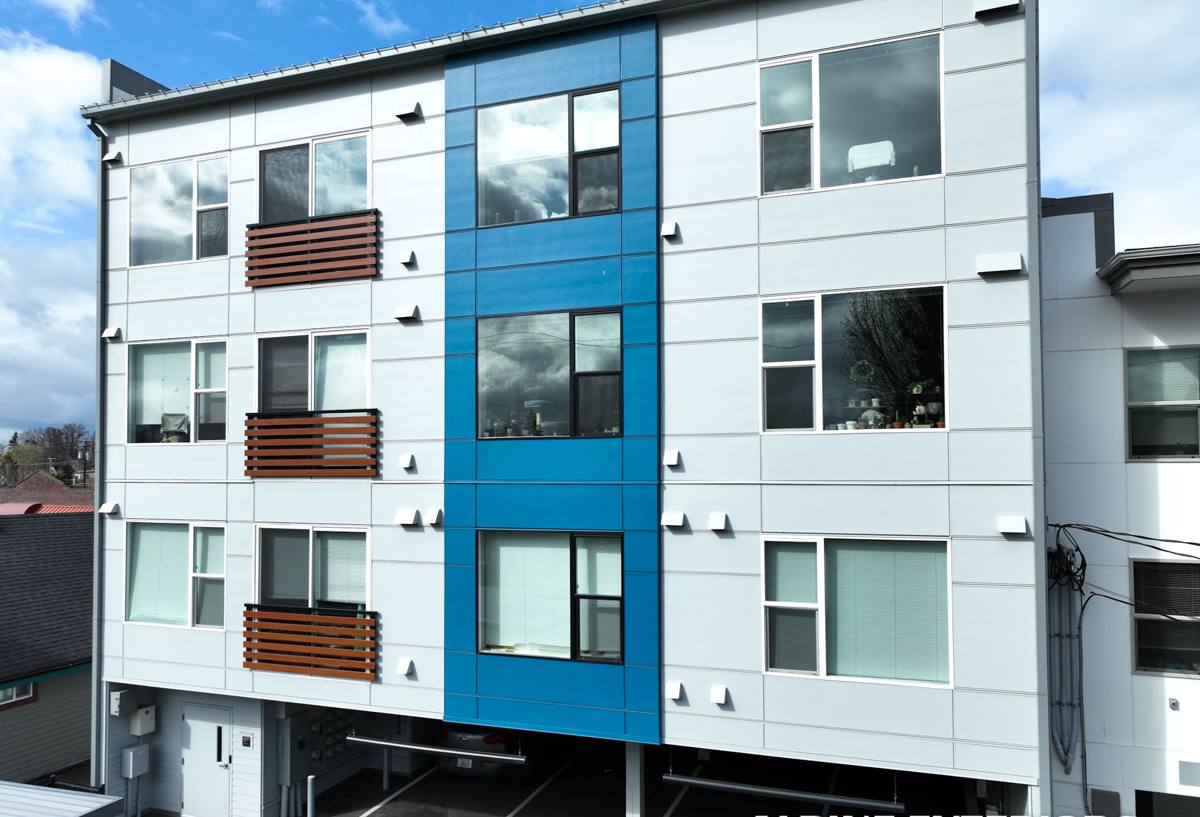
What "Energy-Efficient" Actually Means for This Area
Energy-efficient windows are rated using a few standard numbers, and it's worth knowing what they mean before you're staring at a quote:
| Rating | What It Measures | Why It Matters in Semiahmoo |
|---|---|---|
| U-Factor | How much heat escapes through the window | Lower is better for our long heating season — less heat loss through fall and winter |
| Solar Heat Gain Coefficient (SHGC) | How much solar heat passes through the glass | Moderate values work well here since we don't get intense summer sun, but southern and western exposures still benefit from some control |
| Air Leakage (AL) | How much air passes through the window assembly when closed | Directly tied to wind infiltration during winter storms off the water |
| Condensation Resistance | How well the window resists interior condensation | Important in a climate where indoor/outdoor humidity differences are common much of the year |
For this area, we generally steer homeowners toward double-pane or triple-pane vinyl or fiberglass units with low U-factors and good air-leakage numbers, paired with warm-edge spacer technology that resists seal failure over time. The glass package matters, but so does everything around it — and that's where a lot of window jobs actually go wrong.
Frame Material Trade-Offs
- Vinyl: Good energy performance, low maintenance, resists salt corrosion well, budget-friendly — our most common recommendation for straightforward replacements
- Fiberglass: Excellent dimensional stability in temperature swings, very durable against coastal weather, higher upfront cost
- Wood/wood-clad: Attractive and traditional, but requires ongoing maintenance to hold up against salt air and moisture — we're honest with clients that this is a higher-upkeep choice out here
- Aluminum: Strong but a poor insulator unless thermally broken, and can be more prone to corrosion near the water without the right coatings — we don't typically recommend it for this location
Why Installation Quality Matters More Than the Window Itself
A high-end energy-efficient window installed poorly will underperform a mid-range window installed correctly. This is true everywhere, but it's especially true in a place that gets sustained, wind-driven rain. Water doesn't need much of a gap to find its way behind siding and into a wall cavity, and once it's in, it can sit there for months before anyone notices a problem.
Correct installation around Semiahmoo means:
- Removing old flashing and building paper back far enough to properly integrate new flashing with the existing water-resistive barrier — not just caulking over what's there
- Installing sill pan flashing under every window opening so any water that does get past the frame has somewhere to drain instead of pooling
- Using window flashing tape and head flashing in the correct shingle-lap order so water sheds downward and outward, never trapped behind the next course
- Sealing and insulating the gap between the window frame and rough opening with low-expansion foam or backer rod and sealant — a gap that's just caulked on the surface will fail faster than one that's properly air-sealed
- Checking that the window is level, plumb, and square before final fastening, since a racked frame stresses the seals and can cause the sash to bind or leak over time
This is also where salt air becomes a practical concern rather than just a talking point. Salt accelerates corrosion on fasteners, hardware, and some flashing metals. We pay attention to using corrosion-resistant fasteners and compatible flashing materials on homes this close to the water, because a window installed with the wrong hardware can develop problems years before it should.
Moss, Mildew, and Long-Term Window Performance
Whatcom County's moss season is long, and it doesn't stay confined to roofs. Moss and algae growth around window trim, sills, and the surrounding siding is common on homes that get consistent shade and moisture, which describes a lot of properties in this area. Growth itself won't destroy a window, but it's often a sign that water is sitting somewhere it shouldn't — on a sill that doesn't drain properly, in a corner where flashing was cut short, or behind trim that's held moisture against the wall.
When we're on site for a window project, we look at how water moves around the opening, not just the opening itself. Sometimes the fix is part of the window install — better sill pan slope, a drip cap that actually sheds water away from the wall instead of into it. Sometimes it's a signal that gutters, downspouts, or nearby landscaping are dumping extra water onto that side of the house. We'll tell you which one it is rather than just replacing the window and hoping the underlying issue goes away on its own.
Our Process for Semiahmoo Window Projects
1. On-Site Assessment
We walk the exterior with you, check existing window condition, look at flashing and trim details, and note any areas showing water staining, soft wood, or moss buildup that points to a moisture path worth addressing during the project.
2. Product Selection
We go over frame material, glass package, and performance ratings against your budget and priorities — whether that's lowest possible heating bills, best resistance to the coastal environment, or a balance of both.
3. Proper Removal and Opening Prep
Old units come out carefully so we can inspect the rough opening, sill, and surrounding framing for hidden rot or moisture damage before anything new goes in. This step gets skipped by crews in a hurry — we don't skip it.
4. Flashing and Air Sealing
Sill pans, flashing tape, and air sealing go in following manufacturer specs and standard water-managed assembly sequencing, not shortcuts.
5. Install, Adjust, Finish
Windows are set level and plumb, fastened per manufacturer requirements, insulated, and trimmed out to match the home.
6. Walkthrough
We check operation on every window, confirm the exterior finish work is clean, and answer any questions about care or warranty before we call the job done.
Signs Semiahmoo Homeowners Should Watch For
- Drafts or cold spots near window frames during winter storms
- Visible condensation or fogging between panes, which usually means a failed seal
- Difficulty opening, closing, or locking windows — often a sign of a frame that's shifted or swelled
- Soft or discolored trim and sill areas, especially on walls facing prevailing wind and rain
- Persistent moss or algae growth immediately around a window opening
- Rising heating bills without a clear cause, which can point to air leakage rather than just insulation
Why a Local Crew Matters for This Job
Window installation isn't a one-size-fits-all trade, and a crew that regularly works Semiahmoo and the surrounding Ferndale area already understands the practical realities of this stretch of Whatcom County — the wind exposure on waterfront and near-waterfront lots, the way moss and moisture behave on shaded north and west-facing walls, and which flashing and fastener choices hold up against salt air over the long run. That's knowledge you build by working the same conditions repeatedly, not something you get from a install crew passing through from out of the area.
We're not going to tell you every window needs to be the most expensive option on the shelf. Plenty of homes do fine with a solid mid-range vinyl window installed correctly. What we will do is walk you through the honest trade-offs for your specific home, your exposure, and your budget, and install whatever we recommend the right way the first time.
If you're weighing window replacement for a home in Semiahmoo or elsewhere around Ferndale, we're happy to take a look and put together a straightforward, no-pressure estimate. Use the form below to get started.