 Ferndale Siding
 Siding Built for Everson's Damp, Wind-Exposed Climate
Everson sits in the Nooksack River valley in Whatcom County, close enough to the water and the farmland flats to catch the same weather pattern that shapes siding decisions across the Ferndale area: salt-tinged marine air, long stretches of driving rain off the water, and a wet season that runs far longer than most homeowners expect. Add the shade from mature trees and low winter sun angles common on valley lots, and you get siding that stays damp longer after every storm. That combination is exactly what wears out the wrong siding material fastest, and it's why the crew that installs your siding needs to understand this specific climate, not just siding in general.
We work Everson as part of our regular Ferndale-area service area. We are not driving in blind on a one-off job — we know how this valley's weather behaves through a full year, and we install accordingly.
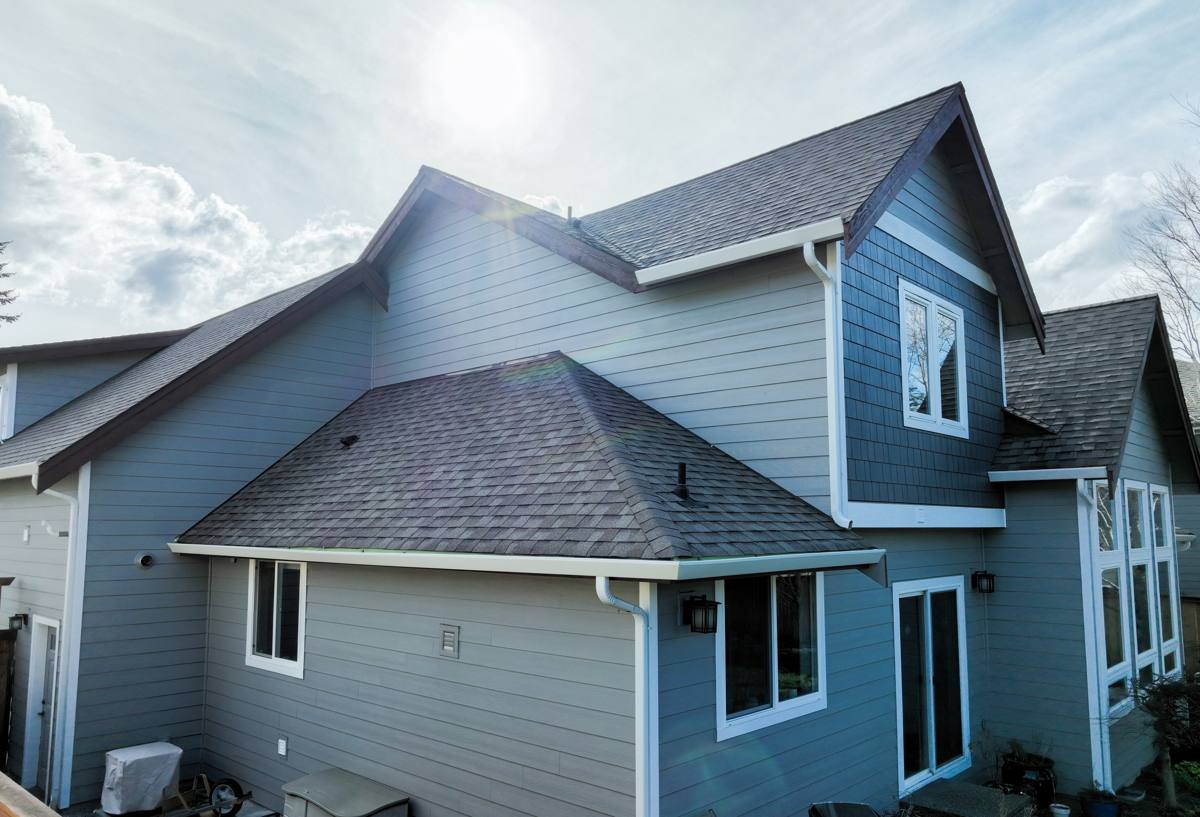
Why We Only Install James Hardie Fiber Cement
We made a deliberate decision as a company to install James Hardie fiber cement siding exclusively. We don't install vinyl, LP SmartSide, Cemplank, Allura, primed spruce, or cedar. That's not a marketing angle — it's a standard we hold because of what we've seen happen to other materials in exactly this kind of climate over time.
Vinyl softens, warps, and can crack in cold snaps, and it has no real fire resistance. Wood and primed spruce need consistent repainting and are vulnerable to moisture intrusion and pests if maintenance ever slips, which is common with rental properties or busy households. Engineered wood products like LP SmartSide perform better than raw wood but are still an organic-fiber substrate that depends on an intact factory coating to keep moisture out over decades. James Hardie fiber cement is non-combustible, doesn't rot, resists moisture-driven swelling, and holds its factory ColorPlus finish far longer than field-applied paint. For a valley climate with this much sustained damp exposure, that durability difference compounds year after year.
Engineered for This Region
James Hardie makes climate-specific HZ product formulations, and the Pacific Northwest falls under their wetter-climate engineering profile. That means the plank composition and moisture performance are built around exactly the conditions Everson sees — not a generic national spec.
What a Correct James Hardie Installation Actually Involves
James Hardie siding is only as good as its installation. The product itself resists moisture and rot, but a poorly installed job can still trap water behind the boards, and that defeats the purpose of choosing fiber cement in the first place. A correct install is a system, not just boards nailed to a wall.
Moisture Management Details
Every water-resistive barrier lap, every piece of flashing at windows, doors, and rooflines, and every horizontal joint has to be sequenced so water sheds outward and down, never inward. Butt joints get properly flashed or sealed per Hardie's published details, not just caulked and hoped for. Kick-out flashing at roof-to-wall intersections is non-negotiable in a region with this much sustained rainfall — skipping it is one of the most common causes of hidden rot damage behind otherwise good siding.
Fastening and Clearances
Fasteners have to hit framing at the spacing and pattern James Hardie specifies, with corrosion-resistant fasteners appropriate for a marine-influenced, high-moisture environment. Bottom clearance from grade, decks, patios, and roof lines has to meet Hardie's minimums so the siding isn't sitting in standing water or splash-back during heavy rain events. These details are inspected, not assumed.
Choosing the Right Hardie Product Line for an Everson Home
James Hardie isn't a single product — it's a system of lines suited to different home styles and exposure levels. Part of doing this job right is matching the line to the house, not defaulting to whatever is easiest to install.
| Product Line | Best Suited For | Notes for This Climate |
|---|---|---|
| HardiePlank Lap Siding | Most single-family homes, classic and modern styles | Most common choice locally; wide color and texture range in ColorPlus finish |
| HardieShingle | Accent gables, Craftsman and cottage-style detailing | Adds texture contrast; installed with the same flashing discipline as lap siding |
| HardiePanel | Modern builds, board-and-batten look | Requires careful vertical joint detailing given regional rain volume |
| HardieTrim | Corners, fascia, window and door trim | Pairs with any line above for a fully non-combustible exterior system |
Our Process From Estimate to Finished Job
Site Walk and Assessment
We start by walking the home's exterior with you, looking at the existing siding condition, trim, flashing, window details, and any trouble spots — areas with tree shade, low grade clearance, or past water staining. This tells us what's driving the replacement and whether there's hidden sheathing damage to plan for before boards go up.
Prep and Installation
Old siding comes off, sheathing is inspected and repaired where needed, and the water-resistive barrier and flashing system go in before a single piece of Hardie board is hung. Installation follows James Hardie's published fastening, clearance, and joint details, not shortcuts to save a day of labor.
Final Walkthrough
We walk the finished job with you, checking caulk lines, paint touch-up at cut edges, and that every clearance and flashing detail was executed as planned. You should be able to see and understand what was done, not just take our word for it.
Signs Your Current Siding Is Already Failing
Given how long moisture exposure runs in this area, siding problems often start quietly. Some signs worth a closer look:
- Soft or spongy spots when you press on the siding, especially near the bottom courses
- Paint that's peeling, bubbling, or needs repainting far more often than it used to
- Visible gaps, warping, or boards pulling away from the wall
- Persistent moss or dark streaking that keeps returning shortly after cleaning
- Musty smell or staining on interior walls that share an exterior wall
- Cracked or missing caulk at trim, window, and door joints
Any one of these on its own isn't necessarily an emergency, but a combination usually means moisture has been getting behind the siding for a while.
Cost Factors on a Siding Project
Every home is different, but the variables that actually move the price on a Hardie project are consistent. We're not going to quote a number without seeing the house, but here's what shapes the estimate:
| Factor | Why It Matters |
|---|---|
| Home size and wall complexity | More corners, gables, and dormers mean more cutting, flashing, and trim work |
| Current siding removal | Tear-off and disposal of old material adds labor beyond a straightforward install |
| Sheathing condition | Rot or moisture damage found underneath has to be repaired before new siding goes on |
| Product line and profile | Lap width, shingle accents, and panel styles carry different material costs |
| Access and site conditions | Steep grades, tight setbacks, or landscaping can affect scaffolding and staging |
Why Hiring a Crew That Already Works Everson Matters
Siding installation quality depends heavily on judgment calls made on-site — how much clearance to leave at a deck ledger, how to flash an odd roof intersection, where extra fastening is worth the time. A crew that regularly works Ferndale and the surrounding Whatcom County communities, including Everson, has already made those calls on homes facing the same rain exposure, the same moss growth patterns, and the same seasonal moisture load. That familiarity shows up in fewer callbacks and a job that holds up through the wet season rather than just looking good on installation day.
It also matters for permitting and inspection. Local crews know what building departments in this area expect to see on a siding replacement, which keeps the job moving instead of stalling on avoidable paperwork issues.
Maintenance After Installation
James Hardie siding is low-maintenance, not zero-maintenance. In a climate with this much sustained moisture and moss pressure, a little upkeep goes a long way toward protecting the investment:
- Rinse siding periodically to keep moss and organic growth from taking hold, especially on shaded north-facing walls
- Keep gutters clear so overflow doesn't run down the siding face repeatedly
- Trim back vegetation and tree limbs that keep siding shaded and damp
- Check caulking at trim and joints every year or two and touch up as needed
- Address any impact damage or chips promptly so moisture can't find a way behind the board
None of this is intensive work, but skipping it undercuts the durability that's the whole reason to choose fiber cement in the first place.
If your Everson home's siding is aging, showing moisture damage, or you're just planning ahead, we're happy to walk the exterior with you and give you a straight, no-pressure estimate. Use the form below to get started.