 Ferndale Siding
 Deck Replacement Built for Fairhaven's Marine Climate
Fairhaven sits close enough to Bellingham Bay that salt-laden air is part of daily life, and that changes what a deck needs to survive. Add Whatcom County's long wet season, heavy moss growth on any shaded or north-facing structure, and the freeze-thaw swings that show up most winters, and you have a environment that is genuinely hard on outdoor wood and hardware. A deck built with inland assumptions — standard fasteners, generic sealants, framing that doesn't account for prolonged dampness — tends to show problems in Fairhaven years before it would somewhere drier. Deck replacement here isn't just swapping old boards for new ones; it's correcting for a climate that never really lets a deck dry out completely.
Ferndale Siding Company works decks and exterior structures throughout Whatcom County, including Fairhaven, and we build every replacement around the reality of coastal exposure rather than a generic spec sheet.
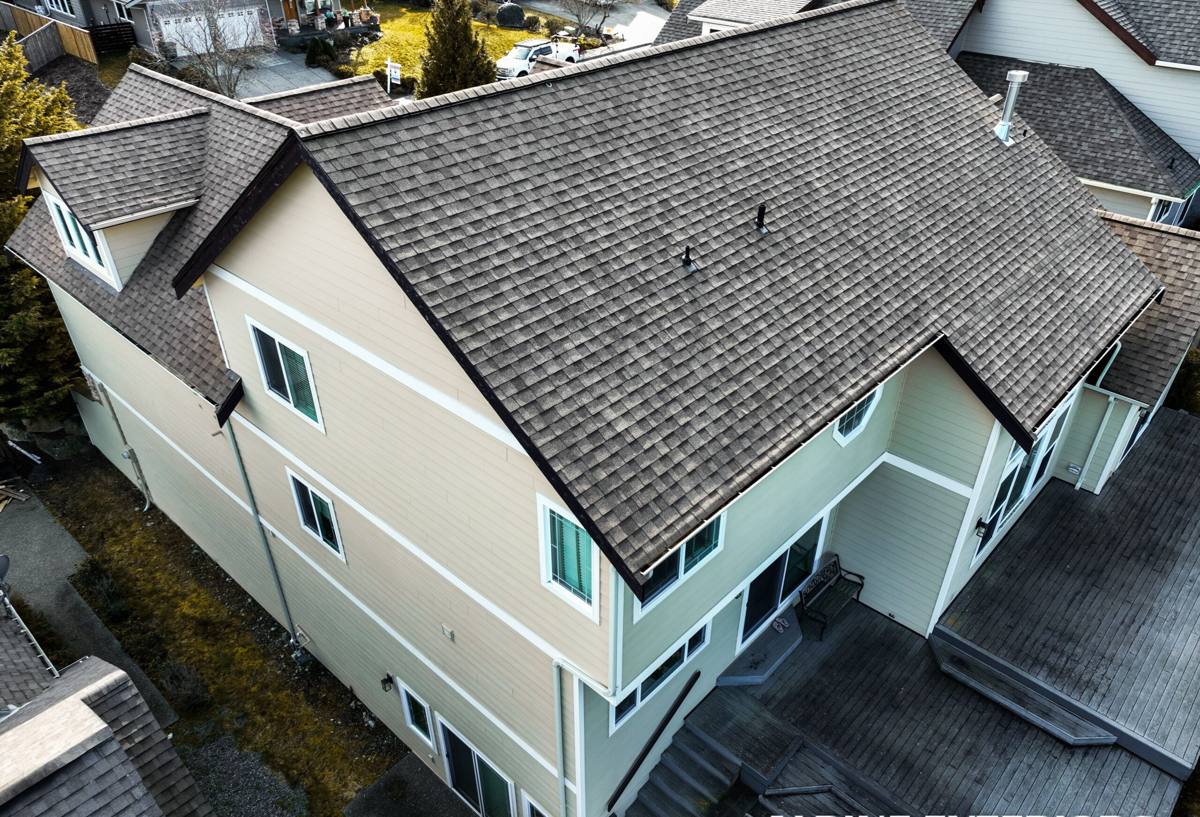
Why Decks Fail Faster Near the Water
Most deck failures we find during inspections in this area trace back to a handful of causes that are all more aggressive near the coast:
- Moisture that never fully clears — driving rain off the bay combines with shade and marine humidity so decking and framing stay damp longer between dry spells, feeding rot in ledger boards, joists, and post bases.
- Salt-accelerated corrosion — standard zinc-coated fasteners and connectors corrode faster in salt air, weakening joist hangers and structural screws well before the wood itself fails.
- Moss and organic buildup — moss holds moisture against the board surface, and on many older decks it's doing quiet damage to decking and stair treads long before it's visible as a problem.
- UV and rain cycling — repeated wet-dry-sun cycles crack and check surface wood and open the door to water intrusion at fastener holes and board ends.
- Undersized or missing flashing — ledger boards attached without proper flashing are one of the most common hidden failure points we find, especially on decks over 12-15 years old.
None of these are unusual for the region — they're just the normal cost of building near saltwater, and a correctly built replacement deck accounts for every one of them.
Signs a Deck Should Be Replaced, Not Repaired
Not every aging deck needs a full replacement. But there's a point where patching individual boards stops being cost-effective and starts hiding bigger problems. Homeowners in Fairhaven should take these seriously:
- Soft, spongy, or springy decking underfoot, especially near the house or around post locations
- Visible rot, dark staining, or fungal growth at the ledger board where the deck meets the house
- Rusted, stained, or loose fasteners and joist hangers
- Persistent moss that regrows within weeks of cleaning
- Railings or stair stringers that flex or feel loose
- A deck older than 15-20 years that has never had its framing inspected
If a deck is showing two or more of these signs, a framing inspection is worth doing before spending more money on surface repairs.
What a Correct Deck Replacement Involves
Full Structural Assessment First
We start below the decking, not at it. That means checking ledger board attachment and flashing, post footings, joist condition, and hardware corrosion before deciding what to replace versus rebuild. In coastal Whatcom County, it's common to find the visible decking is more worn than the framing underneath, or the opposite — clean-looking boards over a rotting substructure. Either way, you need to know before pricing the job.
Framing and Fasteners Matched to the Climate
Where framing needs replacing, we use pressure-treated lumber rated for ground contact where applicable and stainless or heavy hot-dip galvanized fasteners and connectors — standard zinc hardware is a false economy this close to the water. Ledger board flashing is corrected or installed to current best practice regardless of what was there before, since that single detail causes a disproportionate share of the rot we find on older decks in this area.
Decking Material Selection
We install both quality wood decking and composite decking, and the right choice depends on the homeowner's priorities more than any single "best" answer:
| Factor | Wood Decking | Composite Decking |
|---|---|---|
| Upfront cost | Lower | Higher |
| Maintenance | Regular cleaning, staining/sealing, moss treatment | Occasional washing; no staining or sealing required |
| Moss and mildew resistance | Requires upkeep to prevent buildup | Generally sheds moisture better, though still needs periodic cleaning in shaded areas |
| Appearance over time | Natural grain, will gray and weather without maintenance | Consistent color, resists fading and splintering |
| Typical lifespan (this climate) | 15-25 years with consistent maintenance | 25-30+ years, manufacturer-dependent |
| Repairability | Individual boards easy to replace | Board replacement straightforward; matching older colors can be harder |
Neither option is wrong. A well-maintained wood deck can look great for decades; a composite deck trades a higher upfront cost for less ongoing labor. We'll walk through both honestly based on how much upkeep you actually want to do.
Our Deck Replacement Process
- On-site evaluation — we inspect the existing deck's framing, footings, ledger connection, and hardware condition, not just the decking surface.
- Written scope and estimate — you get a clear breakdown of what's being replaced, what materials are used, and why, before any work starts.
- Demolition and disposal — old decking, and any compromised framing, is removed and hauled off.
- Structural correction — footings, framing, ledger flashing, and hardware are brought up to standard, not just matched to what was there.
- Decking, railing, and stair installation — installed to manufacturer spec with attention to drainage and airflow underneath, which matters more here than in drier climates.
- Final walkthrough — we go over the finished deck with you, including basic care guidance suited to a marine climate.
Design Choices That Matter More in a Coastal Climate
A few details get overlooked on inland decks but matter a lot in Fairhaven:
Gapping and Airflow
Board spacing needs to allow water to shed quickly rather than pool, and the space underneath a deck needs enough clearance and ventilation to actually dry out between rain events — not always the case on older, lower-profile decks.
Stair and Railing Hardware
Stairs take more direct weather exposure and foot traffic than the main deck surface, so hardware corrosion often shows up there first. We build stairs and railings with the same corrosion-resistant hardware as the rest of the structure, not a lighter-duty spec.
Shaded and North-Facing Sections
Decks or deck sections that stay shaded through the day hold moisture and grow moss faster. Where layout allows, we'll flag drainage or material choices that reduce that burden, though we won't claim any deck in this climate is maintenance-free.
Maintenance Checklist for a New Deck in This Climate
Whatever material you choose, a little seasonal attention goes a long way near the coast:
- Sweep debris and standing organic matter off the deck surface regularly, especially in fall
- Clean moss and algae before it establishes rather than after — annual cleaning is typical for shaded sections
- Check and re-seal or re-stain wood decking on the manufacturer's recommended schedule
- Inspect stair and railing hardware yearly for rust or loosening
- Keep gutters and downspouts clear so runoff isn't draining directly onto or under the deck
- Confirm under-deck ventilation isn't blocked by stored items or landscaping
Why Hiring a Crew That Already Works Fairhaven Matters
Deck framing standards, fastener corrosion resistance, and ledger flashing details that are optional in a dry inland climate are not optional this close to Bellingham Bay. A contractor who builds mostly inland may default to specs that are fine there and undersized here. Working regularly in Fairhaven and the surrounding Whatcom County coastline means we've seen how salt air, sustained rain, and moss actually age a deck over years, not just at handoff — and we build accordingly rather than learning that lesson on your project.
We also know the local permitting and inspection expectations for deck work in this area, which keeps the project moving instead of stalling on paperwork you didn't know you needed.
What Replacement Typically Involves Cost-Wise
Every deck is different, and final pricing depends on square footage, framing condition, material choice, and stair/railing complexity. In general terms, replacing decking and hardware on sound existing framing costs meaningfully less than a full rebuild that includes new footings and framing. The only way to know which category a specific deck falls into is a structural inspection — which is why we start there rather than quoting off a phone description.
If your Fairhaven deck is showing its age, soft spots, rust, or moss that keeps coming back, we're happy to take a look and give you a straight, no-pressure assessment. Use the form below to request a free estimate.