 Ferndale Siding
 Bellingham's Climate Is Harder on Siding Than Most Homeowners Realize
Bellingham sits right on the water, and that proximity to Bellingham Bay and the Salish Sea shapes everything about how exterior materials age here. Salt-laden air moves inland on the wind, driving rain comes in sideways off the water for months at a stretch, and the shade from mature evergreens keeps north- and east-facing walls damp long after a storm has passed. Add in a moss season that can run from October through May in a typical Whatcom County year, and you have an environment that punishes any siding product with a weak moisture-management system or a finish that can't hold up to salt and organic growth.
Homeowners in Ferndale and across the Bellingham area often don't notice the damage until it's advanced — a soft spot near a downspout, a stain pattern that won't wash off, caulk lines that have pulled away from trim. By the time those signs show up, the siding has usually been losing the fight for a while.
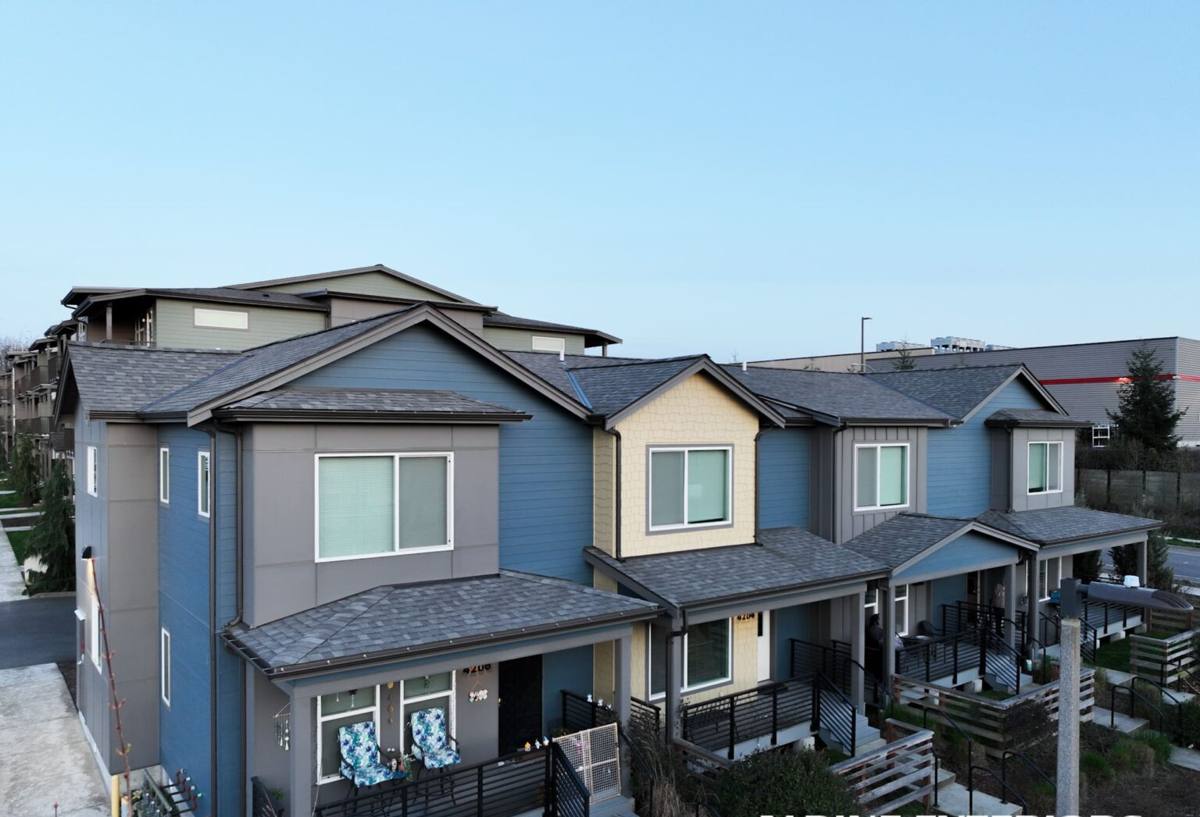
Why Fiber Cement Is the Right Material for This Environment
Fiber cement is cement, sand, and cellulose fiber formed under pressure into a dense, stable board. It doesn't absorb bulk water the way wood-based products can, it won't warp or cup when it gets wet and dries repeatedly, and it's non-combustible — a genuine advantage during the dry summer stretch when wildfire smoke and ember exposure become a regional concern even this far north. None of that means fiber cement is maintenance-free. It means the material itself isn't the weak point; installation quality and finish quality are.
What Fiber Cement Doesn't Solve on Its Own
A fiber cement board installed with the wrong flashing details, tight to the ground, or without proper drainage behind it will still trap moisture and fail early — just more slowly than a lesser product would. The board is only as good as the assembly around it: flashing, house wrap, gaps at penetrations, and caulking all have to work together. This is the part of the job that separates a correct installation from one that just looks right on day one.
What Correct Installation Looks Like on a Bellingham Home
Given the rain volume and salt exposure here, a handful of details matter more in this area than they might inland:
Drainage Plane and Rainscreen Gap
A wall assembly needs a way for incidental moisture to drain and dry out from behind the siding, not just resist it from the front. In a climate with this much sustained rain, a ventilated rainscreen gap between the house wrap and the siding gives bulk water somewhere to go and lets the wall breathe between storms, which matters even more on shaded, north-facing elevations that rarely get direct sun to dry them out.
Flashing at Every Horizontal Surface
Window heads, deck ledgers, roof-to-wall transitions, and any horizontal trim piece need proper metal flashing, not just caulk. Caulk is a maintenance item; flashing is the actual water management. Sealant fails over time — often faster near the water where salt and UV exposure both accelerate breakdown — so the assembly underneath has to be right regardless of how the caulk is holding up in year eight.
Correct Fastening and Clearances
Fiber cement has manufacturer-specified nailing patterns, minimum clearances from grade, roofing, and decks, and gapping requirements at butt joints. Skipping these to save time is the single most common source of early failure — trapped moisture at a joint with no clearance to drain, or a fastener pattern that lets a board work loose in windy weather off the water.
Moss, Algae, and the Long Wet Season
Moss and algae don't just grow on roofs here — they take hold on siding too, especially on shaded walls, under eaves, and anywhere airflow is restricted. A correctly installed rainscreen gap helps by keeping the back side of the siding drier and better ventilated, which reduces the conditions moss needs to establish. But the front-facing finish matters just as much.
This is one of the practical reasons we standardized on James Hardie's ColorPlus factory finish rather than field-applied paint. A factory-baked finish is more uniform and more resistant to the streaking and biological growth that shows up fastest on inconsistently coated surfaces. It won't make a shaded wall in Whatcom County immune to moss, but it holds its color and resists staining longer than a site-painted finish typically does in this climate, and it comes backed by its own finish warranty.
Why We Install Only James Hardie — Not LP SmartSide, Vinyl, Cemplank, Allura, or Wood
We get asked why we don't offer alternatives, and the honest answer is that we've standardized on one system because it lets us guarantee the details above every time, rather than re-learning a different product's quirks on every job.
- Vinyl is inexpensive and low-maintenance in mild climates, but it expands and contracts significantly with temperature swings, and in sustained wind-driven rain off the water, its overlapping panel system is more prone to water intrusion behind the cladding than a properly flashed fiber cement wall.
- LP SmartSide is a wood-strand product with a real engineered treatment, but it is still wood-based at its core — meaning edge and cut-end sealing has to be perfect and maintained, which is a harder standard to guarantee over decades in a climate this wet.
- Cemplank and Allura are also fiber cement, and reasonable products in their own right. We simply standardized on one manufacturer's system, factory finish, and warranty structure so our crews install one thing to one spec, consistently, rather than splitting expertise across several similar-but-different products.
- Primed spruce or cedar looks excellent and has real appeal, but natural wood requires a maintenance commitment — repainting, caulk inspection, moisture monitoring — that most homeowners underestimate until the first sign of rot shows up near grade or at a butt joint.
None of these are bad products across the board. They're products with trade-offs that, in a marine climate with this much rain and salt exposure, add risk and maintenance burden we're not willing to install and stand behind.
James Hardie Product Lines for This Climate
James Hardie engineers its siding by climate zone, and homes here fall into the HZ5 zone — the line built for regions with significant moisture exposure and temperature swings, as opposed to the HZ10 line built for hot, dry climates. That distinction matters: an HZ5 board is formulated to handle the freeze-thaw and moisture cycling that's normal for a Whatcom County winter and spring, where an inland or southern product might not be.
| Product Line | Typical Use | Why It Fits Bellingham |
|---|---|---|
| HardiePlank Lap Siding | Most common — full wall coverage | Classic profile, factory-finished, engineered for HZ5 moisture exposure |
| HardiePanel Vertical Siding | Modern facades, accent walls, gables | Fewer horizontal joints to detail and maintain in high-rain areas |
| HardieShingle | Accent gables, dormers, Craftsman-style detailing | Matches regional architectural styles common in this area |
| HardieTrim | Window and door surrounds, fascia, corners | Non-combustible, stable trim that pairs correctly with the field siding |
ColorPlus Factory Finish
Every project uses the ColorPlus finish system rather than job-site painting. It's baked on at the factory in multiple coats, which gives more consistent coverage and better resistance to fading and staining than field-applied paint — a real advantage on shaded, moss-prone elevations where a thinner or uneven coat would show wear first.
Our Process for a Bellingham-Area Project
The steps themselves aren't unusual — what changes is the attention we put into the moisture-management details given the local conditions.
- On-site assessment. We look at existing siding condition, moisture staining, shaded elevations, and drainage around the foundation and downspouts before we quote anything.
- Tear-off and sheathing check. Old siding comes off and we inspect the sheathing underneath for hidden rot or water damage — common on north- and east-facing walls in this climate — before anything new goes up.
- House wrap and rainscreen installation. A new weather-resistant barrier goes on with a ventilated gap behind the siding, not directly against it.
- Flashing at every penetration. Windows, doors, decks, and roof lines get proper metal flashing before trim and siding close in around them.
- Hardie board and trim installation to spec. Correct nailing pattern, gapping, and clearances from grade, roofing, and decking, per manufacturer requirements.
- Final detailing and walkthrough. Caulk joints, touch-up paint matched to the ColorPlus finish, and a walkthrough so you understand what was done and why.
What Affects the Cost of a Fiber Cement Job Here
| Factor | Why It Matters Locally |
|---|---|
| Existing sheathing condition | Hidden rot from years of moisture exposure sometimes isn't visible until tear-off, and repair adds cost |
| Home size and number of stories | Affects material quantity, staging, and labor time directly |
| Trim and architectural detail | Gables, dormers, and multiple roof lines need more flashing and cutting |
| Siding profile chosen | Lap, panel, and shingle accents each have different material and labor costs |
| Access and site conditions | Shaded, wet, or tight lots common in wooded Whatcom County properties can affect staging and schedule |
We won't quote a number without seeing the home, but broadly, fiber cement siding projects run in the range of most reputable full-replacement siding jobs — priced by square footage, complexity, and the amount of repair work uncovered once old siding comes off.
Why Hiring a Crew That Already Works This Area Matters
A contractor who works Ferndale and Bellingham regularly already knows what shaded, moss-prone walls look like before tear-off even starts, what kind of hidden moisture damage tends to show up on homes exposed to salt air off the bay, and which flashing details actually hold up through a full Whatcom County winter. That's not something you can fully substitute with a generic installation manual — it's pattern recognition built from working the same climate, on the same kinds of homes, over and over.
It also means realistic scheduling. Rain isn't an occasional interruption here — it's a planning variable. A crew used to this area builds it into the timeline rather than treating every delay as a surprise.
Questions Worth Asking Before You Hire
- Do you install a rainscreen gap, or does the siding go directly against the house wrap?
- How do you flash window heads, deck ledgers, and roof-to-wall transitions?
- What's the clearance requirement from grade, roofing, and decking, and will you follow it even where it's tight?
- Is the finish factory-applied or field-painted, and what warranty backs it?
- Will you check the sheathing for hidden moisture damage before installing new siding, not just after?
If your siding is showing staining, soft spots, or failing caulk lines, or you're planning ahead for a replacement, we're happy to take a look and walk you through what we'd actually recommend for your home. The form below gets you a free, no-pressure estimate — no obligation, just a straight answer about what your house needs.