 Ferndale Siding
 Metal Roofing Built for the Lynden Stretch of Whatcom County
Homes on the Lynden side of our service area sit in a specific weather pattern: cool, wet winters, a long moss season that never fully lets up, and enough proximity to salt air off the Strait and the bay to matter for anything metal or fastener-based. A roof out here doesn't just need to shed water — it needs to survive months of sitting damp, resist the moss and lichen that thrive in that dampness, and hold up to wind-driven rain that gets pushed sideways under poorly lapped materials. Metal roofing, installed correctly, handles all three better than most alternatives. Installed carelessly, it fails in the exact same ways a bad asphalt job does, just with more expensive materials involved.
This page is about metal roofing specifically for Lynden-area homes — what the local climate asks of the system, what a correct installation actually involves, and how our process works when we're out there.
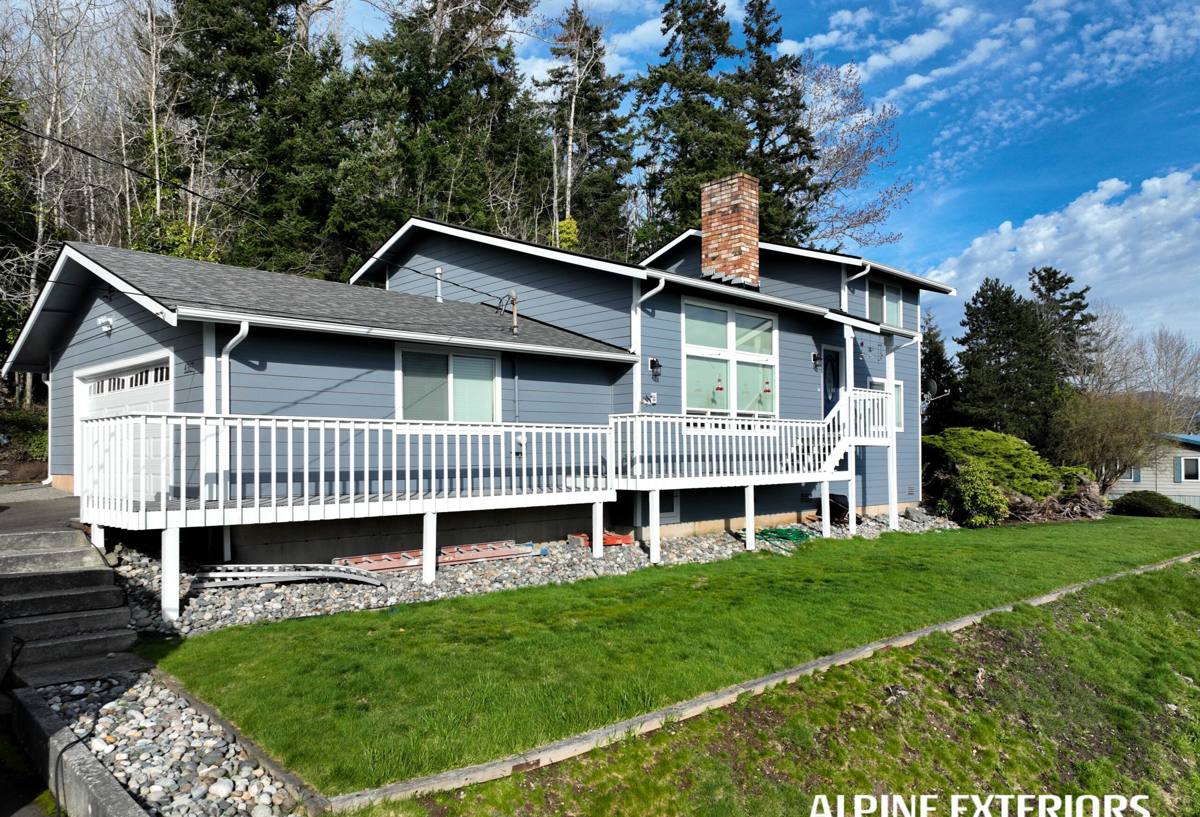
What This Climate Actually Does to a Roof
Three things drive most of the roofing problems we see in this part of Whatcom County, and they all show up together rather than one at a time.
Moisture That Doesn't Dry Out Quickly
Long stretches of overcast, drizzly weather mean roof surfaces stay damp far longer than they would in a drier climate. That extended dampness is what feeds moss, algae, and lichen growth, and it's also what finds its way into any gap in flashing or underlayment that a rushed installer left behind.
Moss and Organic Growth
Moss doesn't just sit on top of a roof — its root structure works into seams, under shingle tabs, and into any texture that holds moisture. On a metal roof, moss is less of a structural threat than on asphalt or wood, but it still traps moisture against seams and fasteners if it's allowed to build up, and it's unsightly enough that most homeowners want it kept off.
Salt Air and Corrosion
Proximity to marine air means airborne salt settles on exposed metal over time. That's not a reason to avoid metal roofing — it's a reason to be selective about panel coating, fastener grade, and flashing metal. The wrong combination of metals in contact with each other (galvanic corrosion) or an undercoated fastener will show rust well before the panel itself has any business failing.
Why Metal Roofing Is a Good Fit Here — With Honest Trade-Offs
Metal roofing has real advantages for this climate: it sheds water and moss far better than a textured surface, it doesn't absorb moisture the way wood shakes do, and a quality coated panel system can run several decades before it needs more than fastener maintenance. It also handles wind-driven rain well when the panel laps and flashing details are done correctly, which matters given how often storms here come in sideways rather than straight down.
It's not the right call for every house or every budget, and we'll say so plainly during an estimate rather than push a product that doesn't fit. Trade-offs worth knowing up front:
- Upfront material and labor cost is higher than architectural asphalt shingles, though lifetime cost often evens out or comes out ahead.
- Noise during heavy rain is a common concern — proper solid-decking installation with underlayment largely eliminates the "drumming" effect people worry about.
- Panel and fastener selection has to account for coastal air; a system spec'd for an inland, dry climate isn't automatically right for this one.
- Some HOA or neighborhood aesthetic preferences lean toward traditional shingle profiles — worth checking before committing.
Panel Systems: What We Install and Why
Not all metal roofing is the same product wearing different colors. The panel type and how it's fastened matters more than the marketing around it.
| System | How It's Fastened | Best Fit |
|---|---|---|
| Standing seam | Concealed clips, no exposed fasteners on the field of the panel | Homes wanting the longest service life and lowest maintenance; our default recommendation for this climate |
| Exposed-fastener panel | Screws driven through the panel face into decking or purlins | Lower upfront cost; requires periodic fastener inspection since gaskets age faster than the panel |
| Metal shingle / shake profile | Interlocking panels resembling traditional shingle or shake texture | Homeowners who want a metal roof's durability without the visual look of standing seam |
We steer most Lynden-area homeowners toward standing seam or a well-gasketed exposed-fastener system with corrosion-resistant hardware, not because other systems are bad products, but because the concealed-fastener approach removes the single most common maintenance item — aging gaskets on exposed screws — from a roof that's already sitting in damp, salt-influenced air for most of the year.
What a Correct Installation Actually Involves
The panel itself is often the least important variable in how long a metal roof lasts. What's underneath and around it does most of the work.
Deck Condition and Underlayment
Any soft, rotted, or moisture-damaged decking gets identified and replaced before a panel goes down — covering a bad deck with new metal just hides the problem. A high-temperature, self-adhered synthetic underlayment goes down as the water and ice barrier, particularly at eaves and valleys where wind-driven rain concentrates.
Flashing and Penetrations
Every chimney, vent pipe, skylight curb, and wall intersection is a place where two materials meet, and that's where leaks actually start — panels rarely leak in the field. Flashing has to be matched in metal type to avoid galvanic reaction and lapped correctly so water runs over every seam, never into one.
Fastener and Metal Compatibility
Mixing incompatible metals — aluminum flashing against steel fasteners, for example — sets up a corrosion cell that will eat through the less noble metal well before the roof's rated lifespan. We match fastener and flashing metal to the panel system for this exact reason.
Ventilation
A roof deck that can't breathe traps moisture underneath the panel, which defeats a lot of the corrosion resistance you paid for. Ridge and soffit ventilation gets checked and corrected as part of the job, not treated as a separate line item nobody asked about.
Our Process on a Lynden-Area Metal Roof
- On-site assessment. We walk the roof, check the deck, look at existing ventilation, and note anything — chimneys, skylights, dormers — that needs custom flashing.
- Written estimate. Panel system, underlayment, flashing plan, and fastener spec are laid out in writing before any work starts, with the moss and moisture context specific to your property called out.
- Deck prep. Old roofing removed, deck inspected, any damaged sheathing replaced.
- Underlayment and flashing installation. Water and ice barrier down first, then all flashing detail work at penetrations, valleys, and wall transitions.
- Panel installation. Panels run and fastened to spec, with attention to proper overlap direction relative to prevailing wind and rain patterns on your specific roof.
- Final walkthrough. We review the finished roof with you, including what routine maintenance looks like going forward.
What Drives Cost on a Metal Roof Here
| Factor | Why It Matters |
|---|---|
| Roof pitch and complexity | Steep or multi-plane roofs with several valleys and dormers take more labor and more custom flashing |
| Panel system chosen | Standing seam runs higher than exposed-fastener panels due to labor and clip hardware |
| Deck condition | Rot or moisture damage found during tear-off adds material and labor not visible from the ground |
| Number of penetrations | Every chimney, vent, and skylight adds custom flashing work |
| Existing ventilation | Correcting inadequate ridge or soffit ventilation adds a modest but worthwhile cost |
We don't publish flat pricing because these variables genuinely change the number, but we'll give you a clear, itemized estimate after walking your roof — no surprise add-ons buried until mid-project.
Keeping a Metal Roof Ahead of Moss and Salt Air
Metal roofing is low-maintenance, not no-maintenance. A little attention once or twice a year keeps it performing the way it should for the decades it's rated for.
- Clear debris and organic buildup from valleys and around penetrations, where moisture and moss concentrate even on metal.
- Check exposed fasteners (if that's your system) for gasket wear or early rust every year or two.
- Rinse off accumulated salt film and grime periodically, especially on roofs with more direct exposure to marine air.
- Trim back overhanging branches that keep sections of the roof shaded and damp longer than the rest.
- Have flashing and sealant at penetrations visually checked after major storms.
Why It Matters That We Already Work This Area
A metal roof spec'd for a dry inland climate isn't automatically right for a property sitting in salt-influenced, moss-prone Whatcom County air. Fastener grade, flashing metal compatibility, and underlayment choice all shift when the roof is going to sit damp for months at a stretch. A crew that regularly works Lynden and the surrounding Ferndale area already knows which details cause callbacks in this specific climate — because we've seen what happens when they're skipped. That's not a generic service-area claim; it's the difference between a roof spec sheet written for anywhere and one written for here.
If you're weighing metal roofing for a Lynden-area home, we're glad to walk your roof, talk through what your specific situation calls for, and give you a straightforward estimate — no pressure, no sales script, just an honest look at what your roof needs.