 Ferndale Siding
 Metal Roofing Built for Custer's Weather, Not Just Its Look
Custer sits close enough to the water and open farmland north of Ferndale that roofs here take a different kind of beating than roofs twenty miles inland. Wind-driven rain off the Strait, salt-laden air, and long stretches of gray, wet weather each winter mean a roof spends most of the year damp, not just rained on occasionally. Add the moss season that stretches from fall through spring in this part of Whatcom County, and you have a set of conditions that will find every weak point in a roofing system within a few years, not decades. Metal roofing, installed correctly for this specific environment, handles that combination better than most alternatives — but "correctly" is doing a lot of work in that sentence, and it's worth understanding what that actually means before you commit to a roof that's supposed to last 40-plus years.
This page is about metal roofing specifically for homes in and around Custer. We're not going to sell you on metal roofing in general — you can find that anywhere. We're going to talk about what this climate does to a metal roof over time, what a correctly detailed installation looks like out here, and why a crew that already works this area has an advantage over one that doesn't.
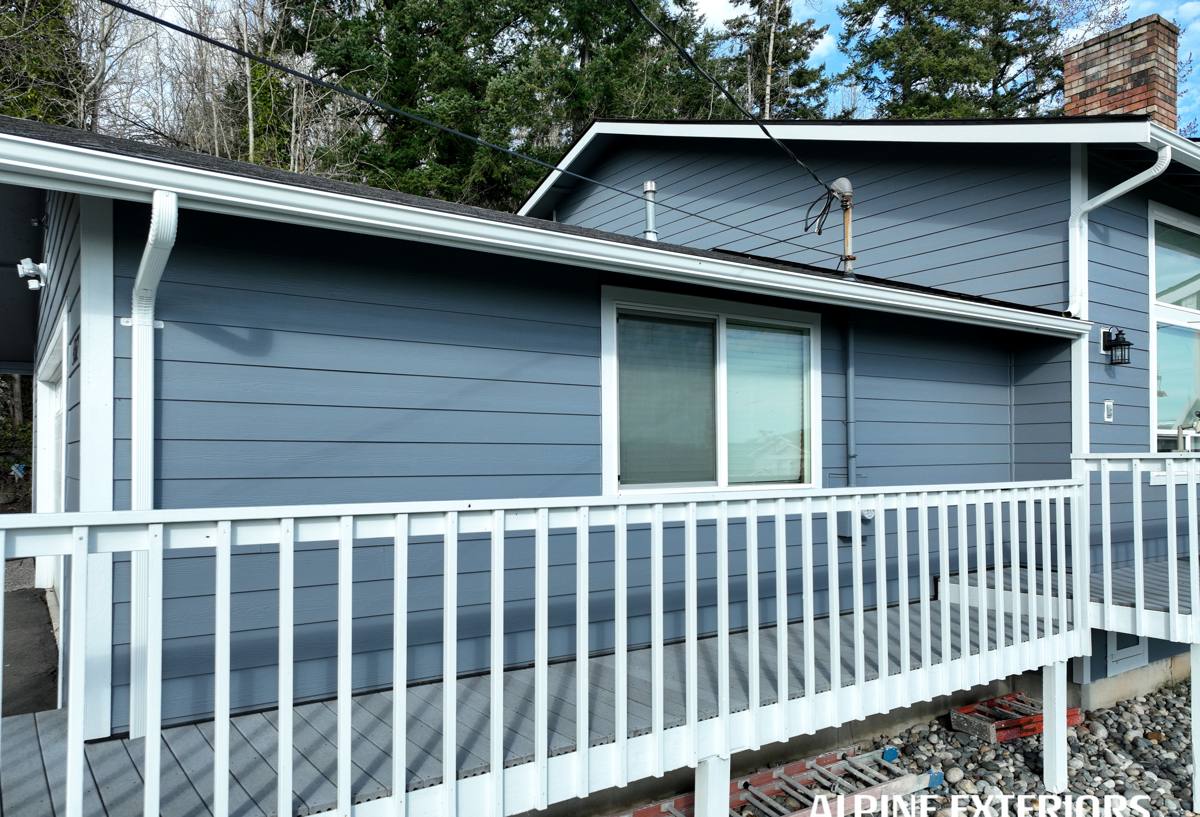
What Custer's Climate Actually Does to a Roof
It helps to separate the individual stresses instead of lumping them together as "bad weather."
Salt air and corrosion
Proximity to the water means airborne salt settles on exposed metal — fasteners, flashing, panel edges — and accelerates corrosion if the materials or coatings aren't rated for a marine-influenced environment. This isn't unique to Custer, but it's a real factor here that inland Whatcom County homes don't deal with to the same degree. The practical impact is that fastener choice and finish quality matter more here than they would on a roof in, say, Sumas or Deming.
Driving rain
Storms coming off the water frequently push rain sideways, not straight down. A roofing system that only manages water moving downhill under gravity — relying on gaps, laps, and gravity alone — will eventually let water find its way sideways and upward under panels, especially at ridges, valleys, and wall transitions. This is a detailing issue more than a material issue, and it's where a lot of roofing failures actually start.
Moss and sustained moisture
Whatcom County's moss season is long because the conditions that grow moss — shade, moisture, and moderate temperatures — persist for months at a time here. Moss doesn't damage metal panels the way it damages shingles, but it does hold moisture against fasteners, seams, and any organic debris that collects at valleys and eave edges, which speeds up corrosion at exactly the spots most vulnerable to it.
Temperature swings and panel movement
Metal expands and contracts with temperature more than most roofing materials. Whatcom County doesn't see extreme heat, but the daily swing between a cold, wet night and a sunny afternoon is enough to matter over hundreds of cycles a year. Fastening systems that don't account for that movement loosen over time, which is one of the more common causes of leaks on older exposed-fastener metal roofs.
Standing Seam vs. Exposed Fastener: What Actually Matters Here
Homeowners researching metal roofing usually run into two main system types, and the difference between them matters more in a climate like Custer's than it would somewhere drier.
| Factor | Standing Seam | Exposed Fastener |
|---|---|---|
| How panels attach | Concealed clips under the seam — no fastener penetrates the panel face | Screws driven through the panel face, typically with rubber washers |
| Handling driving rain | Seams interlock and shed water even under wind pressure | Relies on washer seals staying intact; more vulnerable in wind-driven rain |
| Long-term maintenance | Very low — no exposed fasteners to fail | Washers harden and shrink over 10–20 years and need periodic replacement |
| Salt air exposure | Fewer exposed metal-to-metal contact points that can corrode | Every screw head is an exposed corrosion point |
| Upfront cost | Higher material and labor cost | More budget-friendly upfront |
We install both, and exposed-fastener systems are a legitimate, honest option for outbuildings, shops, and budget-conscious projects. But for a primary residence in a location exposed to salt air and driving rain the way Custer is, standing seam is the system we recommend first, because it removes the two biggest long-term liabilities — fastener corrosion and washer failure — from the equation entirely. If budget is the deciding factor, we'll tell you that plainly rather than talk you into something the site doesn't call for.
Coatings and Fasteners: The Details That Decide Whether This Lasts
Two things determine how a metal roof actually performs in this environment more than the panel profile does.
Panel coating
The paint or coating system on a metal panel is what actually resists salt exposure and UV — the bare metal underneath is doing very little on its own. Coating quality varies significantly between manufacturers and product lines, and it's the single biggest factor in how a roof looks and performs after 15–20 years near the water. We only install products with coating systems appropriate for coastal-influenced exposure, and we'll walk through the manufacturer's warranty terms with you so you know exactly what's covered and for how long.
Fastener material
On any exposed-fastener application, or at trim and flashing attachment points on a standing seam roof, fastener quality is not a place to cut cost. Fasteners rated for coastal or high-moisture exposure cost more per piece but are a small fraction of total project cost — and they're the part of the roof most likely to fail first if under-specified. This is one of the most common shortcuts we see on older or budget re-roofs in this area, and it's usually invisible until fasteners start failing 8–12 years in.
Underlayment
Metal panels aren't the waterproofing layer by themselves — the underlayment beneath them is the backup system that protects the roof deck if wind-driven rain ever gets past the panels at a seam, fastener, or flashing point. In a climate that sees as much sustained wet weather as this one, we treat underlayment as a real line item, not an afterthought, and we use synthetic, high-temp-rated underlayment rather than older felt products that degrade faster under sustained moisture.
Where Metal Roofs Actually Fail Around Here
Most metal roof problems we see on service calls in this area trace back to a handful of recurring issues, almost never the panels themselves:
- Valleys and roof-to-wall transitions that weren't flashed to handle sideways-driven rain
- Fastener washers that hardened and cracked years after installation, especially on south- and west-facing slopes exposed to more sun cycling
- Debris and moss buildup at valleys and eaves holding moisture against seams and fasteners
- Panel penetrations for vents, skylights, or solar mounts that were sealed with caulk instead of proper flashing
- Under-ventilated attics trapping moisture underneath the roof deck, which shows up as deck rot before it ever shows up on the metal itself
Every one of these is a detailing or maintenance issue, not a reason to avoid metal roofing. It's why we spend more time on flashing, ventilation, and fastener spec than on panel selection when we scope a Custer-area project.
Our Process for a Custer Metal Roof
- On-site assessment — we look at slope, exposure direction, existing ventilation, and any current signs of moisture or moss buildup before recommending a system.
- System and coating recommendation — based on exposure and budget, with the trade-offs explained plainly, not just a single option presented as the only answer.
- Tear-off and deck inspection — we don't install new metal over a compromised deck; any rot or soft spots get addressed before anything else happens.
- Underlayment and flashing detail — this is where most of our labor time actually goes, particularly at valleys, walls, and penetrations.
- Panel installation — with attention to expansion allowance so temperature cycling doesn't stress seams or fasteners over time.
- Ventilation check — confirming intake and exhaust venting is adequate for the attic space, since a well-installed roof over a poorly vented attic will still trap moisture.
- Final walkthrough — going over the completed work, warranty documentation, and basic maintenance expectations with the homeowner.
Maintenance: What a Metal Roof Actually Needs Out Here
One of the appeals of metal roofing is that it needs far less maintenance than shingles, but "far less" doesn't mean none, especially in a climate that grows moss on nearly everything.
- Clear debris from valleys and around penetrations once or twice a year, particularly after fall leaf drop
- Keep gutters clear so water isn't backing up against eave edges
- Watch for moss or organic growth accumulating in shaded valleys and remove it before it holds moisture long-term
- Have fastener washers (on exposed-fastener systems) visually checked every several years as they age
- After any major windstorm, a quick visual check for lifted trim or flashing is worth the ten minutes it takes
None of this requires a specialist — it's the kind of upkeep a homeowner can do themselves, and we're happy to point out what to look for during any service visit.
Why Local Experience on This Roof Type Matters
Metal roofing rewards good detailing and punishes shortcuts more visibly than shingle roofing does, because there's no second layer of material hiding a flashing mistake. A crew that installs metal roofs across a range of climates but doesn't specifically work Custer, Ferndale, and the surrounding Whatcom County coastline may not default to coastal-rated fasteners and coatings unless asked — because in most of the country, they don't need to. We spec for salt air and driving rain as a baseline here, not an upgrade, because that's what this specific stretch of coastline actually requires for the roof to hold up on schedule.
Get a Straight Answer on Your Roof
If you're weighing metal roofing for a home in Custer, we're glad to come take a look, walk the roof, and give you a straightforward assessment of what your specific exposure and slope call for — no pressure, no upsell. The estimate is free, and there's a form below to get started.