 Ferndale Siding
 Why Siding Wears Differently on the Nooksack Side of Ferndale
Homes in and around Nooksack sit in a stretch of Whatcom County that takes weather from two directions at once. Marine air moves in off the Salish Sea carrying salt and moisture, while the surrounding lowlands hold onto damp, shaded conditions long after a storm has passed. Add a rainy season that stretches across most of the fall, winter, and spring, and you get siding that's rarely given a real chance to dry out between soakings.
That combination shows up as a specific pattern of wear: paint that fails from the bottom up on north-facing walls, trim that softens at butt joints and corners, and a green-black moss film that creeps across siding faces that don't get much sun. None of this is unusual for the area — it's just what siding here is up against, and it's why a replacement done for a Nooksack home needs to be planned around moisture and shade, not just curb appeal.
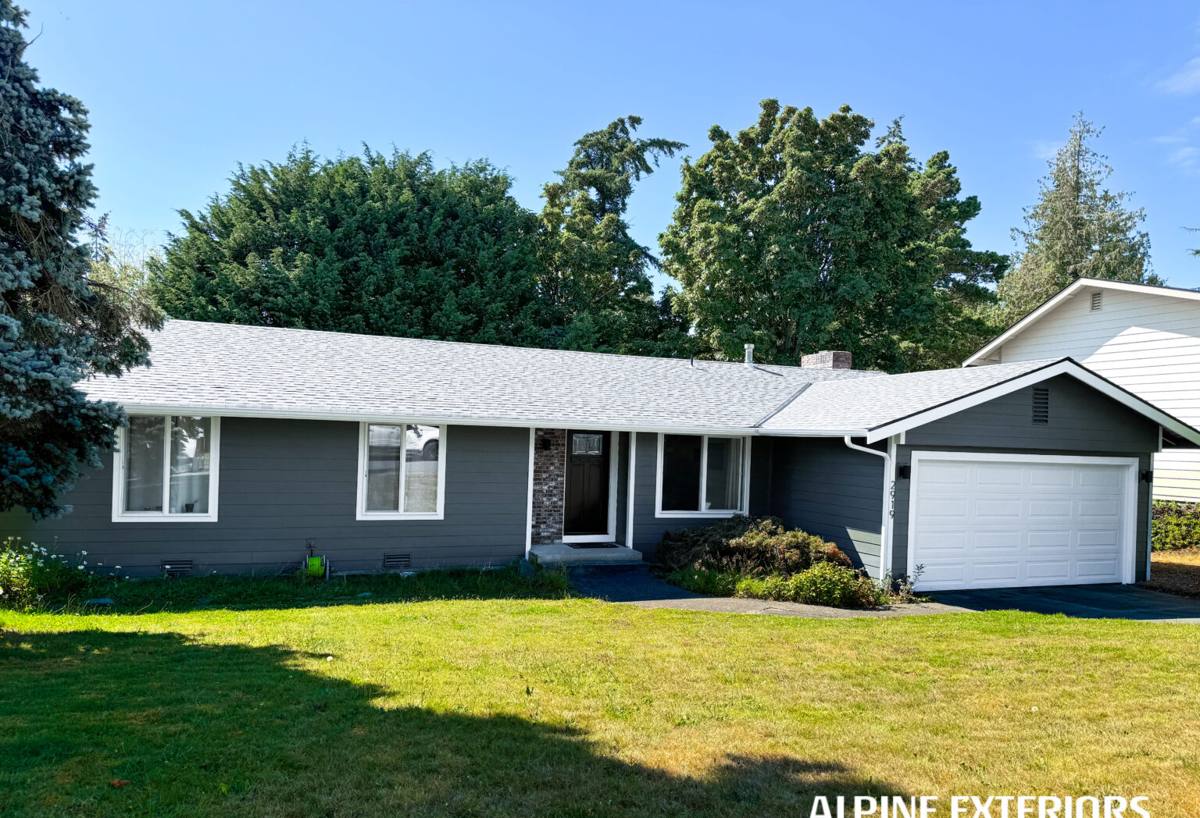
What Constant Damp and Salt Air Actually Do to Siding
Moisture that doesn't fully leave
Wood-based siding products absorb water at cut edges, fastener holes, and seams. In a climate where it can rain on and off for days, that moisture doesn't get the drying window it would in a drier region. Over years, that cycle of swelling and drying is what causes delamination, soft spots, and paint failure — even on siding that looked fine when it went up.
Salt air and metal fasteners
Being close enough to tidal influence for salt-laden air to reach exterior walls accelerates corrosion on fasteners and trim flashing that aren't rated for it. Corroding fasteners eventually loosen, letting water behind the siding plane — a slow problem that's invisible until it isn't.
Moss and shaded wall assemblies
Nooksack's tree cover and overcast stretches keep some wall faces damp and shaded for most of the year. Moss and algae don't just look bad — they hold moisture against the siding surface longer, which is exactly the condition that breaks down absorbent siding materials fastest.
Signs a Nooksack Home Needs Siding Replacement, Not Just Repair
- Paint that keeps failing in the same spots within a year or two of repainting
- Soft, spongy, or crumbling siding when pressed near the bottom edge or around windows
- Visible gaps or buckling at seams and corners
- Persistent moss or dark staining that returns quickly after cleaning
- Rust streaks below fasteners or trim
- Rot or discoloration around windows, doors, or where siding meets the foundation
Any one of these can sometimes be spot-repaired. Several at once, especially on a home with siding that's already 15-20+ years old, usually means the material itself is at the end of its useful life and full replacement is the more honest recommendation.
What a Correct Siding Replacement Involves
Replacing siding is not just removing old boards and nailing up new ones. Done right for this climate, the job includes several steps that matter more here than they would in a drier part of the country:
Full tear-off and wall inspection
Once old siding is off, the sheathing underneath gets inspected for rot, soft spots, or prior water damage — problems that are common on homes that have been dealing with years of driving rain and don't show up until the wall is open.
Water-resistive barrier and flashing
A correctly lapped weather-resistive barrier, properly integrated window and door flashing, and correct kick-out flashing at roof-to-wall intersections are what actually keep water out — the siding itself is the visible layer, but the drainage plane behind it is what does the real work in a wet climate.
Fastener and hardware selection
Corrosion-resistant fasteners rated for the exposure matter more here than in drier inland regions, given the salt air reaching this part of the county.
Proper clearances
Correct gaps at grade, decks, and roof lines keep the bottom edge of the siding from sitting in standing moisture, which is one of the most common failure points we see on older homes in this area.
Why We Install Only James Hardie Fiber Cement
We standardized on James Hardie fiber cement siding for every home we side, including Nooksack replacements, and we don't install vinyl, LP SmartSide, cedar, primed spruce, Cemplank, or Allura. That's a deliberate call, not a sales preference.
Fiber cement is non-combustible and doesn't absorb water the way wood-based products do, which matters directly in a climate where siding stays damp for extended stretches. James Hardie's HZ5 product line is engineered for the kind of moisture and freeze-thaw exposure common in this part of Washington. The factory-applied ColorPlus finish is baked on under controlled conditions rather than field-applied, which gives it better resistance to the fading and peeling that shaded, damp walls are especially hard on. It also carries a strong transferable warranty backed by a manufacturer with a long track record, which is worth more on a coastal-influenced property than it is somewhere drier.
None of that means other products are junk — it means that after years of installing and repairing exterior siding in this climate, fiber cement is what we're comfortable standing behind for the long term, and it's the only product we put our name on.
Our Process for a Nooksack Siding Replacement
- On-site assessment — we look at existing siding condition, wall exposure, moisture patterns, and any rot or damage before quoting anything
- Written scope and product selection — plank profile, exposure, and color are chosen for the home, with HZ5 specified where exposure calls for it
- Tear-off and sheathing repair — any water-damaged sheathing found during removal is addressed before new siding goes up, not covered over
- Weather barrier and flashing install — done to manufacturer spec, since this is what actually protects the wall assembly
- Hardie installation — following James Hardie's fastening, clearance, and joint-treatment requirements, which is what keeps the warranty valid
- Final walkthrough — trim, caulking, and touch-up are reviewed with the homeowner before we call the job done
Cost Factors for a Nooksack Siding Replacement
| Factor | Why It Affects Cost |
|---|---|
| Extent of sheathing/framing repair found at tear-off | Rot repair discovered mid-project is common on older homes with long-term moisture exposure |
| Home size and wall complexity | More corners, gables, and window/door openings mean more cutting, flashing, and labor time |
| Siding profile and exposure width chosen | Lap width, texture, and trim details change material quantities and install time |
| Accessibility | Tree cover, tight lot lines, or difficult access common in this area can affect staging and labor |
| Existing paint/material removal | Some older siding types require more careful, time-consuming removal than others |
We give a firm, written number after the on-site assessment rather than a phone estimate — too much of the real cost depends on what's actually behind the old siding.
Choosing a Contractor for Siding Work in This Area
Not every siding crew is set up to handle the moisture and access challenges specific to Whatcom County's marine-influenced lowlands. A few things worth checking before hiring anyone for a Nooksack-area replacement:
- Ask whether they're a certified James Hardie installer, not just someone who's "worked with it before"
- Ask how they handle sheathing repair if rot is found mid-project — get this in writing, not verbally
- Confirm they carry current liability insurance and any required state contractor licensing
- Ask for the specific flashing and weather-barrier approach they'll use, not just the siding brand
- Get a written scope that names the product line, exposure, fastener type, and warranty terms
A crew that already works regularly in this part of the county will recognize the wear patterns specific to it on sight, rather than treating every job the same as one in a drier climate.
After the Install: Keeping Nooksack Siding Performing
Fiber cement is low-maintenance compared to wood-based siding, but it isn't zero-maintenance in this climate. A yearly rinse to knock back moss and algae buildup on shaded walls, a look at caulking around windows and trim every year or two, and prompt attention to any gutter or downspout issues that could be dumping extra water against a wall will keep a correctly installed Hardie system performing for decades.
If your Nooksack-area home is showing paint failure, moss buildup, soft spots, or siding that's simply reached the end of its life, we're happy to take a look and give you a straightforward, no-pressure assessment and estimate — just fill out the form below.