 Ferndale Siding
 Roof Replacement Built for Blaine's Coastal Exposure
Blaine sits about as close to the water and the border as a Whatcom County roof can get, and that location shapes everything about how a roof ages here. Salt-laden air off the Strait of Georgia and the bay works its way into fasteners, flashing, and granule coatings faster than it does even a few miles inland. Add driving rain that comes in sideways during winter storms and a moss season that can run eight or nine months out of the year, and you've got a roofing environment that punishes shortcuts. When we replace a roof in Blaine, we're not just matching a general Pacific Northwest spec — we're accounting for the extra salt exposure and wind-driven wet that this stretch of Whatcom County sees more than towns set back from the water.
A roof replacement is a big-ticket decision, and most homeowners only go through it once or twice in a house's lifetime. Our job is to make sure the one you get is sized correctly for Blaine's conditions, not just installed to a minimum code standard.
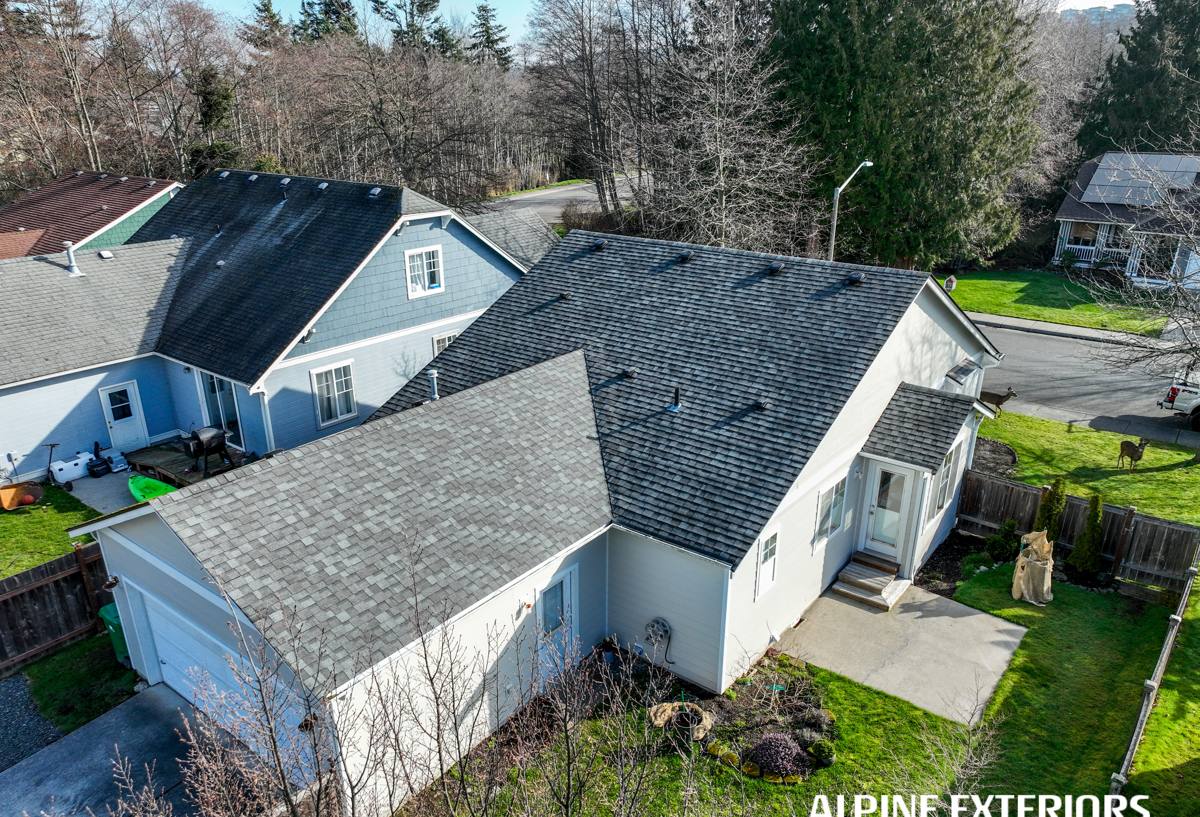
What Blaine's Climate Actually Does to a Roof
Salt Air and Metal Fatigue
Salt spray carried on coastal wind accelerates corrosion on any exposed metal — nails, flashing, drip edge, vent boots with metal collars. On a roof that's under-flashed or using standard-grade fasteners, you'll often see rust bleed and early flashing failure well before the shingles themselves are worn out. This is one of the most common reasons we get called out to homes in Blaine that are only 12-15 years into a 25-30 year shingle's expected life — the roofing field is fine, but the metal details failed first.
Driving Rain and Wind-Driven Wet
Rain that falls straight down is a much easier problem to shed than rain being pushed sideways by wind off the water. Driving rain finds every gap in a roof's water-management layers — laps that aren't sealed correctly, underlayment that isn't rated for wind-driven exposure, valleys that rely on shingle weave instead of proper metal or membrane. A roof that would perform fine in a calmer inland town can leak in Blaine simply because the installation didn't account for rain moving horizontally, not just down.
Moss and Sustained Moisture
Long, mild, wet stretches are ideal moss conditions, and moss does real damage over time — it holds moisture against the shingle surface, lifts shingle edges as it grows, and can work its way under improperly sealed laps. A roof replacement here should include moss-resistant strategy from day one, not just a plan to scrape and treat moss after the fact.
What a Correct Roof Replacement Involves in Blaine
A properly done reroof in this area goes well beyond stripping old shingles and nailing down new ones. Here's what we consider non-negotiable for a coastal Whatcom County home:
- Full tear-off to the deck — never a layover — so we can inspect sheathing for hidden rot or soft spots before new material goes down
- Ice-and-water shield or equivalent self-adhered membrane at eaves, valleys, and any low-slope transitions, since this is where wind-driven rain and ice dams (in cold snaps) cause the most trouble
- Corrosion-resistant fasteners and flashing — stainless or coated hardware rated for coastal exposure, not standard galvanized that will rust prematurely near the water
- Properly lapped, high-wind-rated synthetic underlayment across the full deck, not just the code-minimum felt
- Metal valleys or a valley system designed for heavy water volume, rather than a closed-cut shingle valley alone
- Balanced intake and exhaust ventilation, since trapped moisture under the deck accelerates rot and undercuts the life of the new roof from underneath
- Shingle or material selection with a track record for algae and moss resistance in wet, shaded, coastal conditions
Skip any one of these and you're not really getting a coastal-grade roof — you're getting a roof that happens to be located on the coast.
Material Options for Blaine Homes
Most homes in this area still do well with a quality architectural asphalt shingle, provided it's paired with the flashing and ventilation details above. But the right material depends on the home's exposure, roof pitch, and how much moss and moisture load a given roof plane sees.
| Material | Best Fit For | Coastal Considerations |
|---|---|---|
| Architectural asphalt shingle | Most homes, moderate to steep pitch | Choose an algae-resistant line; flashing quality matters more than the shingle brand |
| Standing seam metal | Homes wanting long-term, low-maintenance performance | Excellent at shedding driving rain and resisting moss; upfront cost is higher |
| Synthetic/composite shingle | Homes wanting a specific look with less maintenance than wood | Good moisture resistance; verify manufacturer wind and coastal warranty terms |
| Cedar shake | Homes prioritizing traditional appearance | Requires more diligence against moss and moisture retention in this climate; higher maintenance |
We'll walk through the honest trade-offs for your specific roof rather than pushing one product line — a north-facing, heavily shaded roof plane has different moss risk than a sun-exposed south side, and the right answer can vary section to section.
How We Approach a Blaine Roof Replacement
1. On-Site Assessment
We inspect the current roof from the deck up — not just the shingles, but flashing condition, ventilation, signs of past leaks, and any moss or moisture staining that points to a deeper issue. We'll tell you plainly if repair is a reasonable option instead of full replacement.
2. Straightforward Scope and Pricing
You get a clear written scope: tear-off, deck repair allowance if needed, underlayment and ice-and-water shield placement, flashing plan, material choice, and ventilation work. No vague line items.
3. Weather-Aware Scheduling
Whatcom County's wet season narrows the safe windows for tear-off work. We schedule and stage materials so your home isn't left exposed to driving rain mid-project, and we watch the forecast closely once your roof is opened up.
4. Installation with Coastal Details Built In
Every item in the checklist above is standard on our installs here — not an upsell. Salt-resistant fasteners, full membrane coverage at vulnerable points, and proper ventilation are part of the base job for a Blaine roof.
5. Final Walkthrough
We review the finished roof with you, confirm ventilation and flashing details, and make sure you understand basic upkeep — including how to manage moss going forward — before we consider the job done.
Why It Matters to Hire a Crew That Already Works This Area
Roofing crews that mostly work drier, more inland parts of Whatcom County can do fine general work but sometimes underestimate how much extra attention Blaine's exposure needs. A crew that already services this stretch of coastline knows which fastener grades hold up, which flashing details actually stop wind-driven rain, and which roof planes in this kind of neighborhood tend to hold moss the longest based on orientation and tree cover. That familiarity shows up in fewer callbacks and a roof that performs the way it's supposed to for its full expected life, not just its first few dry summers.
Signs Your Blaine Home May Need Roof Replacement Soon
- Granule loss showing as bald patches or heavy grit buildup in gutters
- Shingle edges curling, cracking, or lifting, especially on wind-exposed slopes
- Rust staining or visible corrosion at flashing, valleys, or vent boots
- Persistent moss growth that returns quickly after cleaning
- Daylight visible through the attic decking or damp insulation after storms
- A roof approaching or past 20-25 years old, regardless of visible condition
Any one of these on its own might mean a repair is enough. Several together, especially on an older roof, usually mean it's time to plan for replacement before a bigger leak forces the issue.
Cost Factors to Expect
Roof replacement pricing varies with roof size, pitch, number of penetrations and valleys, deck condition once the old roofing is removed, and material choice. Homes with steeper pitches, multiple dormers, or extensive valley work cost more to reroof correctly than a simple rectangular roof of the same square footage. We won't quote a number without seeing the roof, but we're glad to walk through general ranges and what drives them once we've done an assessment, so you're not guessing.
If your roof is showing wear, or you'd just like an honest read on how many years it has left, we're glad to come take a look. The estimate is free, there's no pressure to book on the spot, and you'll get a straight answer about whether replacement makes sense now or can reasonably wait. Use the form below to get started.