 Ferndale Siding
 Windows Built for Life on the Water
Semiahmoo sits right on the water, and that changes what a window has to survive. A window that would last decades on a house a few miles inland can start failing in half that time out here. Salt-laden air off the bay works into metal hardware and fasteners, wind-driven rain gets pushed sideways into gaps that would stay dry elsewhere, and the long, damp Whatcom County season keeps everything wet longer than it dries. Custom windows for a Semiahmoo home aren't just about the view — they're about picking materials, glass, and flashing details that actually hold up to that combination, year after year.
We've installed and replaced windows on homes throughout Ferndale and the surrounding Whatcom County coastline, and Semiahmoo properties get their own approach. What works on a sheltered inland lot isn't automatically the right call for a house catching wind and salt spray off the bay.
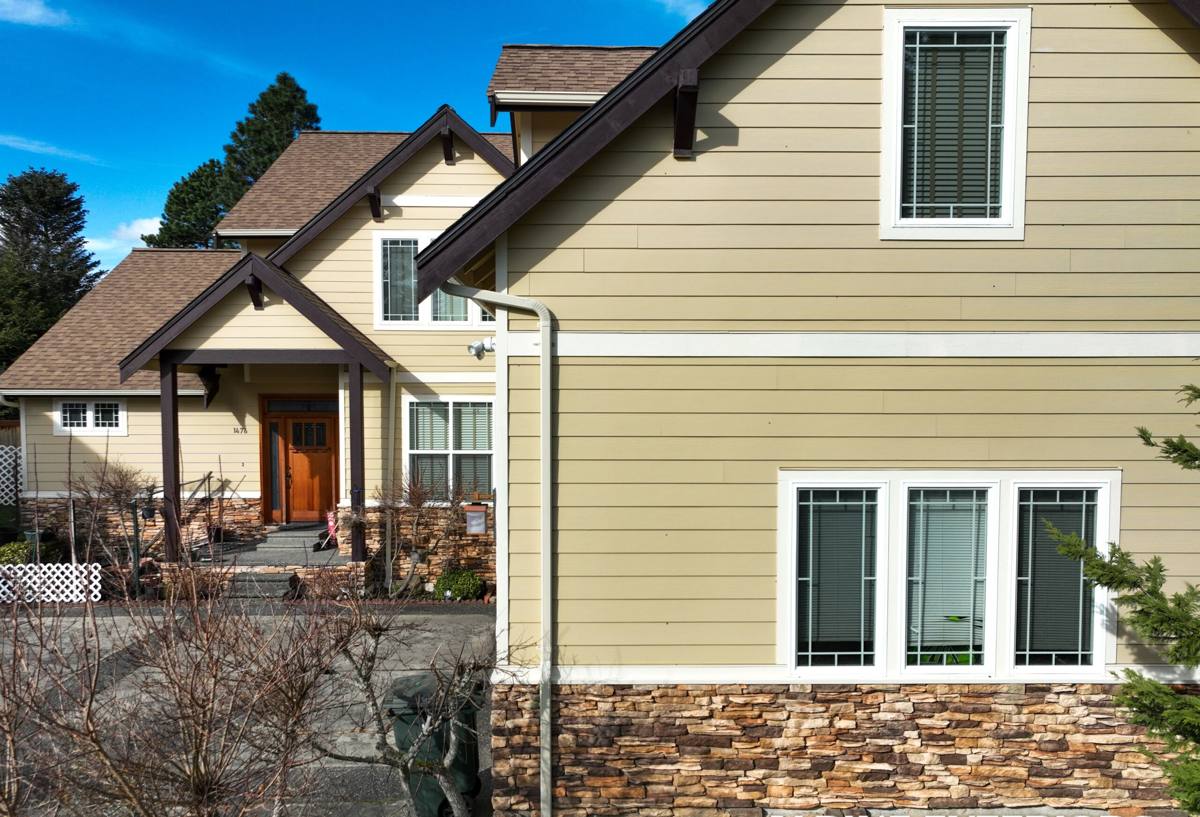
What Salt Air and Driving Rain Actually Do to a Window
It helps to understand the specific damage mechanisms at play, because they drive most of the decisions in a good window project here.
Salt Air and Corrosion
Airborne salt is corrosive to unprotected or poorly coated metal. Over time it attacks window hardware — hinges, locks, balance systems, and screen frames — along with fasteners and any exposed aluminum. Cheaper hardware finishes can start pitting or seizing years before a comparable window a few blocks inland would show wear. This is one of the biggest differences between a "standard" window install and one done right for a waterfront property.
Wind-Driven Rain
Rain that comes in sideways behaves differently than rain falling straight down. It gets pushed into any gap in the flashing, caulking, or window-to-wall transition, and it can work its way in even through openings that would stay dry in a calmer setting. This makes correct flashing and sealant work — not just the window unit itself — one of the most important parts of the job.
The Long Moss Season
Whatcom County's damp stretch runs long, and anywhere moisture sits and doesn't fully dry — window sills, the tops of trim boards, shaded corners of the frame — moss and mildew get a foothold. On windows, this usually shows up first on wood trim and sills that hold water, and it accelerates wood rot if it's not addressed.
Choosing the Right Window Materials for a Semiahmoo Property
Frame material is one of the biggest decisions in a custom window project, and it matters more here than in a drier, more sheltered climate. Here's how the common options actually perform in salt air and driving rain conditions.
| Material | Salt Air Performance | Moisture Handling | Maintenance |
|---|---|---|---|
| Vinyl | Does not corrode; good baseline choice | Handles moisture well if properly installed and drained | Low — occasional cleaning |
| Fiberglass | Excellent — very stable, resists pitting and corrosion | Very good; dimensionally stable in wet-dry cycles | Low |
| Wood or Wood-Clad | Exterior cladding protects wood, but exposed wood elements are vulnerable | Requires careful detailing to keep water off exposed wood | Higher — periodic inspection and refinishing of any exposed wood |
| Aluminum (uncoated or poorly coated) | Prone to corrosion and pitting near the water without a marine-grade finish | Conducts moisture and cold; condensation-prone | Higher — coating maintenance needed |
We don't push one material as the only right answer — the correct choice depends on your home's style, budget, and how exposed the specific elevation is to wind and spray. What we won't do is install hardware or cladding on a bay-front elevation without confirming it's rated to hold up to salt exposure. That's a standard we hold regardless of what a homeowner originally had in mind, because replacing hardware that seizes up in five years costs more than getting it right the first time.
Glass Packages Worth Considering
- Dual-pane, low-E glass: Standard for energy performance and condensation control in our climate.
- Argon or krypton gas fill: Improves insulating performance, which matters on a house catching more wind than average.
- Impact-resistant or laminated options: Worth discussing on exposed, wind-facing elevations that take the brunt of storms off the water.
- Tempered glass: Required by code in certain locations near doors, low sills, and wet areas — we'll flag where it applies.
Installation Details That Matter More on the Water
The window unit itself is only part of the job. On a Semiahmoo property, the installation details around the window are where most long-term failures actually start.
Flashing and Water Management
Proper flashing directs any water that gets past the window — and on a wind-exposed home, some always will — safely down and out rather than into the wall cavity. This means correct sill pan flashing, weather-resistant barrier integration, and head flashing that actually sheds water instead of trapping it. It's not glamorous work, but it's the difference between a window that lasts and one that causes hidden rot behind the siding.
Sealant Selection and Placement
Not all exterior sealants are rated for the same UV and moisture exposure, and sealant alone should never be the only line of defense — it's a backup to good flashing, not a substitute for it. We use products rated for the exposure level of the specific elevation and never rely on caulk to cover a flashing shortcut.
Hardware and Fastener Selection
On or near the water, fastener and hardware choice matters. We use corrosion-resistant fasteners and hardware appropriate for coastal exposure rather than standard-grade parts that are fine inland but start failing early here.
Our Custom Windows Process
Every home and elevation is a little different, so the process starts with an honest look at your specific house before we talk products.
- On-site assessment: We look at each elevation's exposure to wind, rain, and salt spray, plus the condition of existing trim, sills, and framing.
- Material and glass recommendations: Based on that exposure, budget, and the style of the home — not a one-size-fits-all package.
- Detailed measurement and ordering: Custom windows are built to your exact openings, so accurate measurement up front avoids delays later.
- Removal and prep: Careful removal of old units, inspection of the framing and sheathing underneath for hidden moisture damage, and repair of anything found before the new window goes in.
- Installation with proper flashing and sealing: Following the water-management details covered above, not just setting the unit and caulking around it.
- Final walkthrough: We check operation, seal quality, and trim finish with you before calling the job done.
If we find rot or hidden moisture damage during removal — which isn't unusual on older bay-front homes — we'll show you what we found and give you a straight recommendation before proceeding, not a surprise change order.
Keeping Moss and Mildew From Taking Hold
Even a well-installed window needs some homeowner upkeep in a climate this wet. A few habits go a long way toward protecting your investment.
- Clear debris and standing water off sills and horizontal trim regularly, especially after fall storms.
- Rinse salt residue off frames and hardware periodically if your home takes direct spray or heavy sea air.
- Watch shaded, north-facing, or tree-covered windows first — they hold moisture longest and are usually where moss shows up.
- Check exterior caulking annually and have any cracked or shrunken sealant redone before it lets water in.
- Operate hardware periodically through the winter so locks and balances don't seize from disuse combined with salt exposure.
What Affects the Cost of a Custom Window Project Here
Custom window pricing varies by home, and we won't quote a number without seeing the actual openings and exposure — but these are the main factors that move the price up or down.
| Factor | How It Affects Cost |
|---|---|
| Frame material | Vinyl is typically the most economical; fiberglass and wood-clad cost more but bring different performance and appearance trade-offs. |
| Glass package | Upgraded low-E coatings, gas fills, or impact-rated glass add cost but improve performance on exposed elevations. |
| Number and size of openings | Larger or more numerous windows increase both material and labor cost. |
| Hidden repairs | Rot or moisture damage found during removal adds cost, but skipping it just moves the cost — and the damage — down the road. |
| Elevation exposure | Wind- and spray-exposed sides may call for upgraded hardware or flashing details, which adds labor and material cost on those openings. |
| Access and site conditions | Difficult access, upper stories, or tight waterfront lots can affect labor time. |
Why Hire a Crew That Already Works Semiahmoo
A contractor who mostly works inland Whatcom County jobs may not think twice about hardware finish or flashing details that are non-negotiable on a bay-front home. We work this coastline regularly, so we already know which elevations tend to take the worst of the wind and rain, which materials hold up honestly over years of salt exposure rather than just looking good on install day, and where past installs in this area have run into trouble. That local experience shows up in fewer callbacks and fewer surprises — not in a sales pitch.
We're also familiar with the fact that many homes in and around Semiahmoo sit within a resort community or homeowners' association with exterior standards. If yours does, it's worth checking your association's guidelines on window style, color, and materials before finalizing an order — we're glad to work within whatever those requirements are.
Get a Straight Answer for Your Home
Every Semiahmoo property faces a slightly different mix of wind, spray, and shade, so the right window plan for your house depends on actually seeing it. If you're weighing replacement windows, a full custom install, or just want a second opinion on materials before you commit, we're happy to take a look and give you a straightforward, no-pressure estimate — use the form below to get started.