 Ferndale Siding
 Building New in Semiahmoo Means Building for the Coast
Semiahmoo sits right where the Pacific Northwest's weather shows up unfiltered — open water, wind off the strait, salt air, and rain that doesn't just fall straight down, it drives sideways into a wall. If you're building new in this part of Whatcom County, the windows you choose and how they're installed on day one matter more than almost any other exterior decision you'll make. A new build is the one time you get to do this right from the studs out, before drywall, siding, and trim hide the parts that actually keep water where it belongs.
We install new-construction windows for homes in and around Semiahmoo and Ferndale, and the jobs here are not the same as installing windows on a dry-side or inland property. Salt-laden air accelerates corrosion on hardware and fasteners. Driving rain tests flashing details that would never get stressed in a calmer climate. And the long stretch of damp, low-sun months every year — the season locals just call moss season — means any sloppy sealant line or shortcut in the water management plan eventually shows up as a stain, a soft spot, or worse.
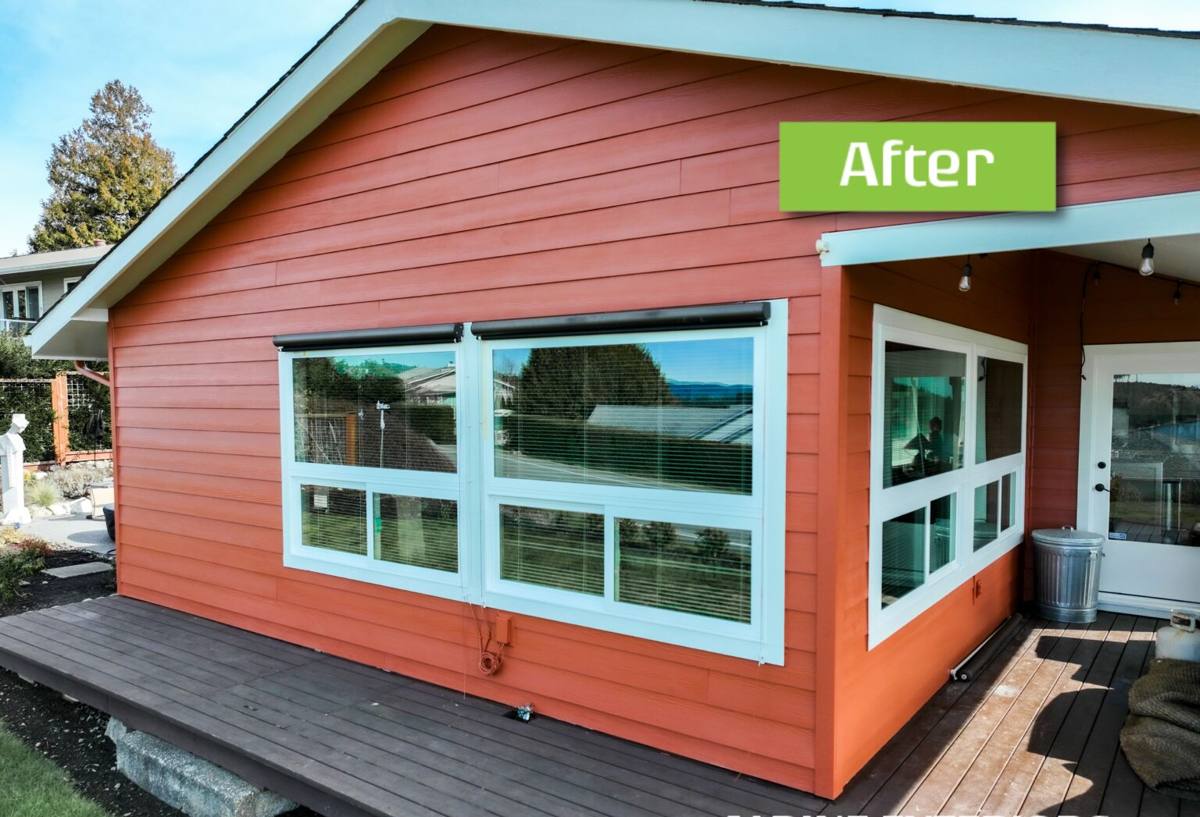
Why New Construction Is the Right Time to Get This Right
Retrofit window replacement has to work around what's already there — existing siding, existing flashing, existing framing tolerances. New construction doesn't have that excuse. The rough openings, the house wrap, the flashing sequence, and the window itself all get built together, in the correct order, with nothing to hide behind later. That's an advantage, but only if the crew doing the work treats it that way instead of rushing to close in the shell.
Get it wrong at this stage and the mistake gets sealed inside the wall assembly for the life of the house. Get it right, and you've built in decades of protection against exactly the conditions Semiahmoo throws at a home — wind-driven rain, salt exposure, and long stretches of damp weather that give water every opportunity to find a way in if you've left one.
What a Correct New-Construction Window Install Actually Involves
"New-construction window" mostly refers to the frame style — typically a nail-fin (flanged) frame designed to be integrated directly into the wall's water management system before siding goes on. But the product is only half the job. The install sequence is where the protection actually comes from.
Flashing and Water Management, in Order
A correct install follows a shingle-style sequence so water always sheds outward and downward, never into the wall cavity:
- Sill pan flashing set first, sloped to drain to the exterior even if water gets past the window itself
- Jamb flashing integrated with the house wrap on both sides, lapped correctly over the sill pan
- Head flashing installed last, lapped over the house wrap above the opening so water is directed out and over the window, never behind it
- Compatible sealants and tapes used at every lap — mismatched flashing tape and house wrap chemistries can fail to bond, which is a common hidden defect
- Weep paths at the sill left clear so any incidental water can actually drain instead of pooling
Skip the sill pan, reverse the lap order, or caulk over gaps instead of flashing them properly, and you've built a pocket that collects water instead of shedding it. In a climate that gets driving rain and long damp stretches, that pocket doesn't stay dry for long.
Fastening and Hardware for Salt Air
Because Semiahmoo sees more airborne salt than inland Whatcom County properties, fastener and hardware selection matters more here than it would a few miles east. We use corrosion-resistant fasteners at the flange and shim points, and we're careful about mixing metals that can set up galvanic corrosion over time. It's a small detail that's invisible on install day and very visible ten years later if it's skipped.
Choosing Window Products for a Coastal, High-Moisture Site
There's no single "best" window frame material for every project — the right choice depends on budget, the home's design, and how exposed the specific building site is. For new construction in a salt-air, high-rain environment like Semiahmoo, the trade-offs below are what we walk homeowners and builders through.
| Frame Material | Coastal Performance | Maintenance | Typical Trade-Off |
|---|---|---|---|
| Vinyl | Good — won't corrode or rot; seams and welds are the weak point in wind-driven rain | Low | Value-priced; quality varies a lot between manufacturers |
| Fiberglass | Very good — dimensionally stable, resists salt exposure well, holds paint/finish long-term | Low to moderate | Higher upfront cost than vinyl |
| Aluminum-clad wood | Attractive but higher-maintenance in salt air — cladding protects the exterior, but any breach exposes wood to moisture | Moderate to high | Best interior look; needs a disciplined install and upkeep |
| Bare wood | Poor fit for direct salt/rain exposure without significant protection and upkeep | High | We generally steer new coastal builds away from this unless heavily protected |
We don't push one brand or product line — our job is to size up the exposure on your specific lot (how much wind-driven rain and salt air it actually sees) and recommend a frame material and glazing package that matches it, rather than defaulting to whatever's cheapest to install.
Glazing Notes for This Climate
Low-E coatings and argon- or krypton-filled sealed units are standard on most new-construction windows today and make sense here regardless of frame material — they cut down on the low winter sun glare off open water and help with the temperature swings between damp mornings and cooler nights. Beyond that, we focus more on the seal quality and the frame's resistance to moisture than on chasing every add-on option.
Our Process for New-Construction Window Installs Near Semiahmoo
- Site and plan review — we look at the home's orientation, exposure to wind and water, and the architectural plans before a single window is ordered.
- Product selection — matching frame material and glazing to the site's actual exposure, not a one-size-fits-all default.
- Rough opening verification — confirming openings are square, correctly sized, and properly sheathed before flashing starts.
- Sill pan and flashing installation — set in the correct shingle-lap order, integrated with the house wrap.
- Window set and shim — leveled, plumbed, and fastened per manufacturer spec, with corrosion-resistant hardware.
- Head flashing and house wrap integration — closing out the water path so everything sheds outward.
- Interior and exterior seal check — verifying sealant lines, insulation at the jamb gap, and drainage at the sill before the opening is closed in behind siding or trim.
We coordinate directly with builders and general contractors on new-construction timelines, since window installation has to land at a specific point in the framing-to-siding sequence — too early and the opening isn't ready; too late and you're racing weather to get the shell closed in.
Common Mistakes We See on New-Construction Sites
Most window failures in this region don't trace back to a bad window — they trace back to installation shortcuts that were invisible on the day the siding went up. The ones we see most often:
- Sill pan flashing skipped or improvised with caulk alone
- Flashing laps installed in the wrong order, directing water inward instead of outward
- Incompatible flashing tape and house wrap materials that don't bond properly
- Standard fasteners used where corrosion-resistant hardware was called for
- Window openings closed in behind siding before flashing was inspected
Every one of these is cheap to avoid during a new build and expensive to fix once the siding, trim, and interior finishes are in place.
What Drives the Cost of a New-Construction Window Job
Every build is different, so we don't quote sight-unseen, but these are the main factors that move the price on a Semiahmoo or Ferndale new-construction window package:
| Factor | Why It Matters |
|---|---|
| Number and size of openings | More and larger windows mean more material and labor |
| Frame material | Vinyl, fiberglass, and clad-wood carry different material costs |
| Glazing package | Impact-rated or upgraded low-E glass adds cost over standard sealed units |
| Exposure and elevation | Higher-exposure walls facing prevailing wind and rain may warrant upgraded flashing details |
| Site access and timeline | Coordinating with a tight framing-to-dry-in schedule can affect labor logistics |
As a rough, honest range, homeowners in this area typically see new-construction window packages fall anywhere from a few thousand dollars for a small number of standard openings to well into five figures for a full custom home with larger or upgraded units — the spread is wide because the variables above genuinely change the number.
Why a Crew That Already Works Semiahmoo Matters
Window installation details that work fine on a sheltered, inland lot can fall short a few miles away on a site that takes direct wind and salt spray off the water. A crew that's already worked properties around Semiahmoo has seen which flashing details actually hold up here, which fastener choices age well, and where builders in this specific part of Whatcom County tend to cut corners that cause problems later. That local track record is worth more than a generic install checklist — it's the difference between windows that are still performing in twenty years and ones that need attention in five.
A Simple Checklist Before Your Windows Go In
- Confirm the frame material matches your site's actual wind and salt exposure, not just the builder's default spec
- Ask to see the flashing sequence, not just the window brand, before installation day
- Verify sill pan flashing is part of the plan — this is the single most common corner cut
- Confirm corrosion-resistant fasteners are being used given the coastal setting
- Make sure the install is scheduled to avoid closing openings in before an inspection or photo record of the flashing
If you're building or framing a home near Semiahmoo or Ferndale and want a straight answer on what your windows and openings actually need for this climate, we're glad to walk the plans with you. Reach out for a free, no-pressure estimate — there's a form just below this page to get started.