 Ferndale Siding
 Lummi Island's Siding Problem Isn't Like Everyone Else's
Lummi Island sits out in the marine air of Whatcom County, and that changes what siding has to survive. Homes here take a steady diet of salt-laden wind off the water, driving rain that comes in sideways during winter storms, and a moss season that can run from fall through spring without much of a break. None of that is dramatic on any single day. It's the accumulation that causes trouble — siding that would hold up fine forty miles inland starts showing wear years earlier out here.
Salt air is corrosive to fasteners and hard on any finish that isn't built to shed it. Driving rain finds every gap in flashing and every hairline crack in a coating. And moss doesn't just look bad — it holds moisture against the siding surface for weeks at a time, which is exactly the condition that causes rot, delamination, and paint failure. When we get called out to Lummi Island for a repair, these three factors are almost always part of the story, even when the homeowner's immediate complaint is something simpler, like a cracked board or a stain that won't wash off.
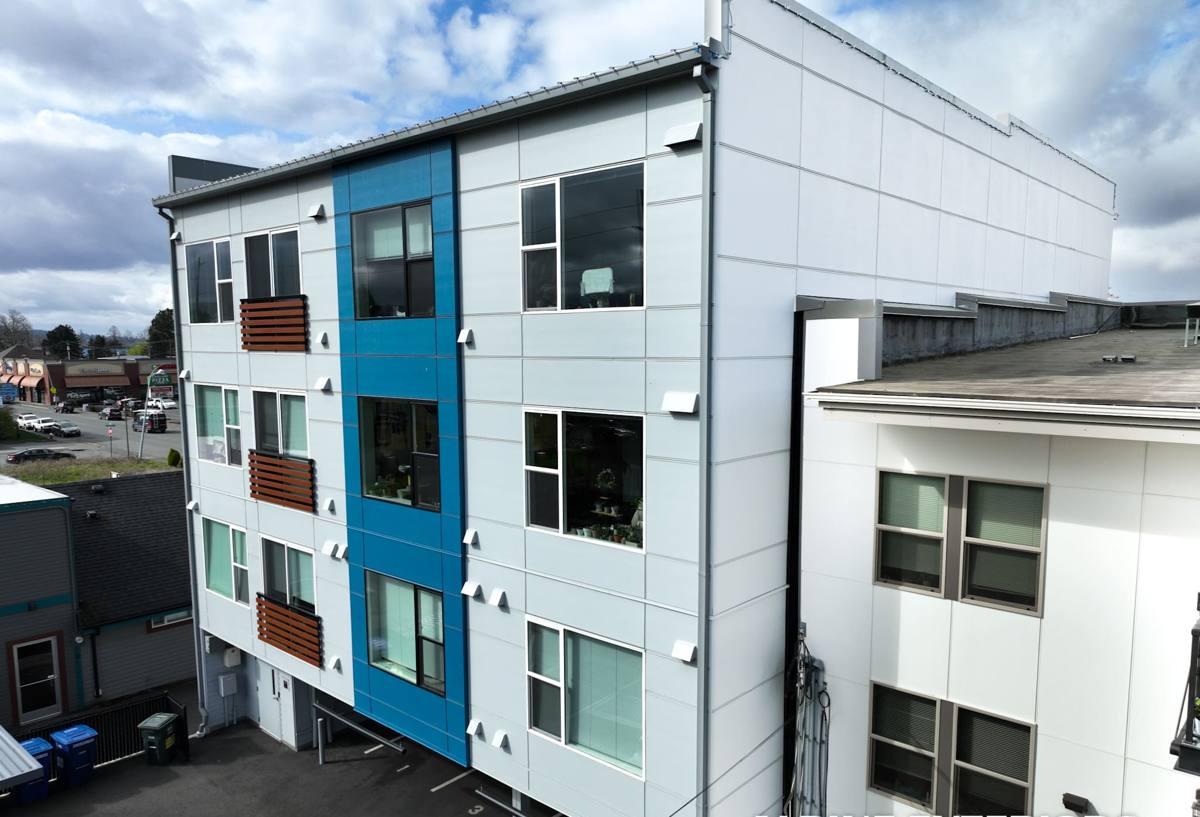
Signs a Lummi Island Home Needs Siding Repair
Because of the exposure out here, problems tend to show up in specific patterns. Knowing what to look for lets you catch damage while it's still a repair job, not a replacement job.
- Soft or spongy spots when you press on the siding, especially near the bottom courses and around window and door trim
- Cracked, chipped, or bubbling paint that keeps coming back in the same spots no matter how many times it's touched up
- Persistent moss or algae growth on north- and west-facing walls that shade doesn't fully explain
- Visible gaps, warping, or separation at butt joints and corners
- Staining or streaking below nail heads, which usually points to fastener corrosion or a coating breakdown
- Interior signs — musty smell, peeling paint, or soft drywall on an exterior wall — that suggest moisture has already gotten behind the siding
Any one of these on its own might be minor. Several showing up together, especially on the weather-facing side of the house, usually means water has been getting behind the siding for a while.
What a Correct Siding Repair Actually Involves
Finding the Water Path, Not Just the Damage
The visible damage — a cracked panel, a soft board — is rarely the whole problem. Water almost always got in somewhere else: a failed sealant joint, a flashing detail that was never installed correctly, a nail that backed out and opened a path. A repair that just swaps the damaged piece without tracing where the water actually came from tends to fail again within a season or two, because the entry point is still open. Any repair worth doing starts with pulling back enough siding to see what's happening at the water-resistive barrier and flashing layer underneath, not just patching the surface.
Matching Material and Profile
Once we know the extent of the damage, the repair needs to match the existing siding in profile, reveal, and finish — otherwise you end up with a visible patch instead of a repair. This is where the age and product line of the original siding matters. Older fiber cement, older vinyl, and older wood siding all have slightly different dimensions than what's on the market now, so matching takes some care, and sometimes a full section or wall needs to be redone to keep the lines consistent rather than trying to blend a mismatched patch.
Flashing and Sealant Detail
Given how much wind-driven rain Lummi Island sees, the flashing detail at every penetration — window heads, hose bibs, light fixtures, vents — has to be right, not just caulked over. Caulk is a backup, not a primary water management strategy. A correct repair re-establishes proper lap and drainage at these points so water sheds down and out rather than getting trapped against the substrate.
Fastener Selection
In a salt-air environment, fastener choice is not a minor detail. Standard fasteners corrode faster out here, and a corroding nail eventually loses its grip and opens a gap right where you don't want one. We use fasteners rated for the exposure and the specific siding material, following the manufacturer's fastening schedule rather than whatever was used originally if that specification has since been improved.
Repair or Replace: How to Think About It
Not every damaged section needs a full re-side, and not every "just patch it" request is the right call either. The honest answer depends on how much of the wall is affected and what's happening behind the surface.
| Factor | Favors Repair | Favors Replacement |
|---|---|---|
| Extent of damage | Isolated to one or two sections | Spread across multiple walls |
| Underlying moisture barrier | Intact where inspected | Compromised or missing in multiple spots |
| Age of existing siding | Within its expected service life | Near or past end of expected life |
| Material match available | Yes, close profile match exists | No — original product discontinued or badly weathered |
| Recurring failure history | First repair in this area | Third or fourth repair to the same wall |
When we're out on an estimate, we'll tell you plainly which side of that table your situation falls on. A patch that's going to fail again in two years isn't a favor to anyone.
Why We Repair With James Hardie — and What That Means If Your Home Has Something Else
We install only James Hardie fiber cement siding, and that shapes how we approach repairs too. Hardie's fiber cement doesn't absorb water the way wood does, doesn't corrode, and isn't combustible — qualities that matter in a coastal, wet climate like this one. When we're repairing a Hardie-sided home, we can match panels and trim from the current HZ5 product line (engineered for the Pacific Northwest's moisture exposure) and the ColorPlus factory finish, so the repaired section holds its color and performance the same as the rest of the wall.
When we're called to repair a home sided in something else — vinyl, LP SmartSide, cedar, or an older fiber cement product — we'll still do an honest, correct repair with compatible materials. But we'll also tell you straight if what we're finding suggests the material itself is working against you: vinyl that's brittle and cracking from age and UV exposure, engineered wood siding with edge swelling at the joints, or cedar that's past the point where refinishing does much good. In those cases, a patch buys time, not a solution, and we'll say so rather than keep billing you for repairs that don't hold.
Our Process for Lummi Island Repair Calls
Working on the island adds a logistics layer that a lot of contractors don't bother planning for, and it shows in how repair jobs get scheduled and run.
- Initial assessment: We look at the whole exterior, not just the spot you called about, since salt air and moss damage rarely stay confined to one wall.
- Diagnosis behind the surface: We pull back siding around the damaged area to check the water-resistive barrier and flashing before quoting the fix.
- Written scope and price: You get a clear explanation of what's damaged, what's causing it, and what the repair includes — no vague line items.
- Material sourcing and match: We confirm the right Hardie profile, reveal, and color match (or compatible material) before scheduling the work.
- Scheduled work, batched trips: Because ferry timing affects how efficiently a crew can work an island job, we plan material delivery and crew time to minimize wasted trips and keep your cost honest.
- Final walk-through: We check the repair against the surrounding siding for line, color, and seal before calling the job done.
Moss, Algae, and Salt Residue: Maintenance Between Repairs
A good repair lasts longer if the siding around it isn't fighting the same conditions unchecked. On Lummi Island, that mostly comes down to keeping moss and algae from establishing on north- and west-facing walls, and rinsing salt residue off the siding periodically rather than letting it sit. A gentle low-pressure rinse a couple of times a year, keeping gutters clear so water doesn't sheet down the wall face, and trimming back vegetation that keeps a wall shaded and damp all do more for siding longevity than any coating touch-up. None of this is a substitute for fixing an actual failure point, but it slows how fast new problems develop.
Why It Matters That We Already Work This Island
A repair contractor who's never worked Lummi Island before is learning the ferry schedule, the wind exposure patterns, and the moss behavior on your dime and your timeline. A crew that already works out here knows to batch material and labor around ferry sailings, knows which sides of a house tend to take the worst of the weather, and has already seen how the local product mix — older cedar, aging vinyl, various fiber cement generations — tends to fail. That familiarity shows up as fewer surprises mid-job and a repair that's sized correctly the first time, instead of a series of return trips chasing a problem that wasn't fully diagnosed at the start.
Get an Honest Look at Your Siding
If you're seeing soft spots, recurring moss, cracked paint, or a repair that didn't hold the first time, it's worth getting eyes on it before another wet season adds to the damage. We'll give you a straightforward, no-pressure estimate on what's actually going on with your siding and what it will take to fix it right — fill out the form below to get started.