 Ferndale Siding
 Storm Damage in an Unusual Place
Point Roberts sits on its own peninsula, cut off from the rest of Washington by water and reachable by land only through Canada. That geography matters more than most homeowners realize when a windstorm tears shingles loose or hard rain finds its way under flashing. A roof out here takes a different kind of beating than one in a sheltered inland neighborhood, and repairing it correctly means understanding both the storm and the location it hit.
We're based in Ferndale, in Whatcom County, and we've done enough storm damage roof repair work on the peninsula to know what actually holds up out there versus what looks fine for a season and fails by the next one.
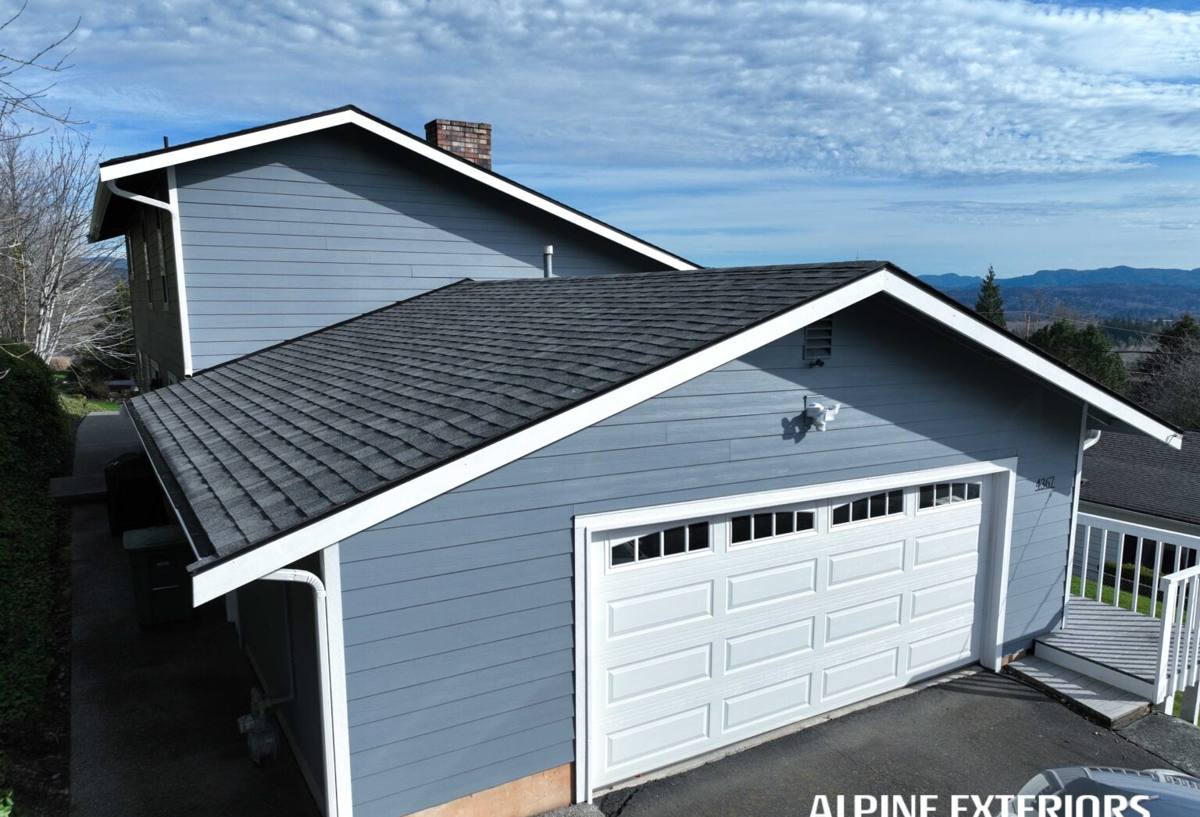
What Salt Air, Wind, and a Long Moss Season Do to a Roof
Salt air
Surrounded by saltwater on three sides, Point Roberts homes deal with salt-laden air that inland Whatcom County properties rarely see. Salt accelerates corrosion on exposed metal — nail heads, flashing seams, gutter fasteners, and vent stacks all corrode faster here than they would twenty miles inland. A repair done with standard-grade fasteners can hold for a couple of years before rust streaks and loosened nail heads start showing up again, undoing the work.
Driving rain and wind
Storms off the Strait of Georgia and Boundary Bay bring rain that rarely falls straight down — it drives sideways under shingle tabs, ridge caps, and anywhere flashing isn't sealed tightly. Wind uplift is the other half of the problem: gusts get under a shingle edge that's already lost its seal and peel back whole rows, especially near ridges, hips, and any slope facing open water.
A long moss season
Western Washington's wet season runs long, and shaded, north-facing roof sections on the peninsula can stay damp for weeks at a stretch. Moss and algae take hold in that dampness, working under shingle edges and holding moisture against the roof deck underneath. A storm-damaged roof that already has moss growth tends to fail faster, because the moss has been prying at the shingles long before the wind ever showed up.
Signs Your Roof Has Storm Damage
Some storm damage is obvious from the driveway. A lot of it isn't — it shows up as a slow leak weeks later, or as rot that's already spread by the time anyone notices a stain on the ceiling. After any significant wind or rain event, it's worth checking for:
- Missing, cracked, or curled shingles, especially near ridges, edges, and around chimneys or vents
- Granules collecting in gutters or piling up at downspout outlets
- Lifted or bent flashing around vent pipes, skylights, or chimneys
- Soft spots or noticeable sagging when the roof is walked
- Water stains on interior ceilings or in the attic, even faint or old-looking ones
- Daylight visible through the roof deck from inside the attic
- Debris strikes — branch impacts, dented metal flashing, or small punctures
- Gutters pulled loose or sagging away from the fascia board
Any one of these by itself might be minor. Several together, or damage concentrated near a valley or chimney where water naturally collects, usually means it's worth a closer look before the next storm turns a small problem into a rotted deck and an interior repair.
What a Correct Storm Damage Repair Actually Involves
A rushed storm repair is a nail gun and a tarp. A correct one starts with figuring out how far the damage actually goes, because wind and water rarely stay confined to the spot that looks broken from the ground.
Assessment before anything gets nailed down
We check the deck itself, not just the shingles sitting on top of it. Wet insulation, soft plywood, and corroded fasteners around the damaged area all need to be identified before new material goes down — covering a wet deck with new shingles just seals the moisture in and hides the problem for a while.
Matching materials, not just covering the hole
Patching in mismatched shingles or the wrong flashing profile creates a weak seam that's likely to fail again in the next storm. Getting a close match in color and profile, and using flashing details suited to a salt-air environment, is part of doing the repair once instead of three times over a few years.
Fasteners and flashing built for the environment
On Point Roberts specifically, we lean toward corrosion-resistant fasteners and flashing rather than standard-grade material, because the salt air will find the weak point in cheaper hardware faster than it would on a roof further from the water.
Common mistakes we see in rushed repairs
The most common shortcuts we run into are surface patches over a deck that was never checked for rot, caulk used in place of proper flashing, and shingles reused after a storm when they'd already lost their seal and granule coating. All three look fine right after the work is done and fail within a season or two, usually in the next storm.
Our Point Roberts Repair Process
- Fast initial contact. We talk through what happened and what you're seeing — an active leak, missing shingles, visible impact damage — so we know what to bring on the first visit.
- On-site inspection. We check the full roof, not just the obvious damage, including the deck, flashing, and any areas where moss or standing water may have already weakened the surface.
- Temporary protection if needed. If there's an active leak or exposed deck, we get it covered and watertight before worrying about the permanent fix.
- A written scope and estimate. You get a clear explanation of what's damaged, what needs repair versus replacement, and why — not a vague number with no explanation behind it.
- The repair. Matched materials, corrosion-resistant fasteners, and flashing details suited to a coastal, salt-exposed roof.
- Final check. We walk the roof, and the attic where it's accessible, to confirm the leak path is actually closed — not just that the visible damage has been patched over.
Because Point Roberts is only reachable by land through Canada, scheduling and material logistics take more planning than a job in Ferndale proper. We build that into how we plan a visit, so a trip out to the peninsula doesn't get wasted because a part or a specific flashing profile got left behind, and so a genuine emergency — an active leak during a storm — gets prioritized accordingly.
Repair or Replace? What Actually Drives the Decision
Not every storm-damaged roof needs a full replacement, but a repair on a roof that's already near the end of its life is often money spent twice. Here's how we think through it:
| Factor | Leans toward repair | Leans toward replacement |
|---|---|---|
| Roof age | Under half its expected service life | Already past or near the end of its expected life |
| Extent of damage | Isolated to one section or slope | Spread across multiple slopes or the whole roof |
| Deck condition | Dry, solid plywood under the damage | Soft, rotted, or repeatedly wet decking |
| Existing moss or algae | Minor, surface-level growth | Established growth that's already lifted shingles |
| Prior repairs | First repair needed on this section | Same area has been patched more than once already |
| Insurance findings | Damage clearly limited and well documented | Adjuster or inspection points to broader failure |
When it's genuinely a borderline call, we'll say so directly rather than defaulting to the more expensive option, or to the cheaper one that just delays the inevitable.
Storm Damage and Insurance Claims
Most storm-related roof damage in this area gets filed through homeowners insurance rather than paid entirely out of pocket. A repair done properly supports that process instead of complicating it later:
- Documentation of the damage before any repair work starts
- A clear, itemized scope that matches what an adjuster will be looking for
- Photos of areas that will be covered up once the repair is finished, like decking or hidden flashing
- A written estimate you can submit alongside your claim
We're not a public adjuster and we don't negotiate a claim on your behalf, but we'll give you documentation that holds up to scrutiny instead of a vague invoice that raises more questions than it answers.
Why a Crew That Already Works Point Roberts Matters
A lot of contractors quote Point Roberts jobs reluctantly, or pad the price to cover the hassle of getting out there. That's understandable — it's not a quick trip from most of Whatcom County — but it also means homeowners sometimes end up with rushed work from a crew that would rather not come back for a callback.
We already build Point Roberts trips into how we schedule and stock a job, so a repair here gets the same attention to material choice and workmanship as one closer to Ferndale. Knowing the peninsula's exposure — which slopes take the worst of the wind, where moss tends to establish first, how quickly salt air chews through standard hardware — means fewer surprises mid-job and a repair that's built for the conditions it actually has to survive, not generic conditions that happen to apply somewhere else in the county.
Get a Straight Answer on Your Roof
If your roof took a hit in the last storm — or you're just not sure whether what you're seeing is storm damage or ordinary wear — we'll take a look and give you a straight answer about what it actually needs. No pressure, no inflated scope. Fill out the form below for a free estimate.