 Ferndale Siding
 Board & Batten in a Salt Air, Heavy Rain Neighborhood
Sudden Valley sits in a stretch of Whatcom County where the siding on a house has to earn its keep. Moist marine air moves in off the water, wind-driven rain hits walls at an angle instead of straight down, and shaded, tree-lined lots hold onto moisture long after a storm passes. That combination is hard on any exterior material, but it is especially unforgiving on vertical board and batten siding, where every seam, joint, and batten strip is a potential path for water to get behind the cladding if the install isn't done right.
Board and batten has become a popular look for homes in this part of Ferndale and the surrounding Whatcom County communities — wide flat boards with narrow battens covering the seams, giving a clean, modern-farmhouse or craftsman look with strong vertical lines. It reads well against the wooded, semi-rural setting many Sudden Valley lots have. But the same design that makes it attractive also means more vertical joints, more fastener penetrations, and more places where a mediocre installer can leave a house exposed to the exact conditions this area throws at it year-round.
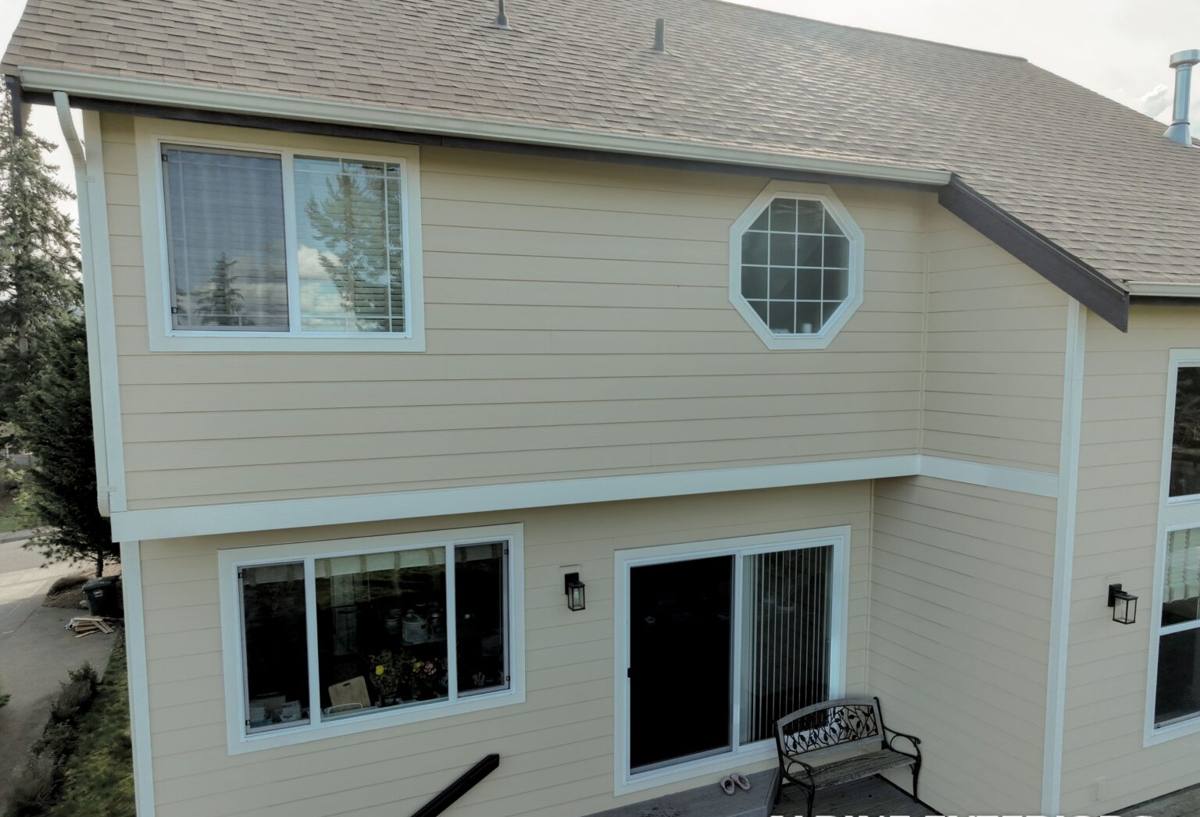
What This Climate Actually Does to Vertical Siding
Driving Rain and Wind-Loaded Walls
Unlike a straight-down rain event, wind-driven rain off the water pushes moisture sideways into wall assemblies, particularly on gable ends and upper stories that catch more exposure. Vertical board and batten has to shed that water down and away rather than let it pool at horizontal laps or collect behind battens.
Long Moss and Algae Season
Shaded lots, tree cover, and persistent damp air mean moss and algae have a long growing window here — often most of the year on north-facing or heavily shaded walls. Any siding product that absorbs moisture gives moss something to root into over time, and a factory finish that resists staining matters more here than it would in a drier inland climate.
Salt Air and Coastal Proximity
Being close enough to the water to catch salt-laden air accelerates corrosion on fasteners, flashing, and any hardware that isn't rated for it, and it degrades paint and coatings faster than a purely inland installation would experience. Material choice and fastener choice both need to account for this, not just the visible siding panel.
Why We Install Only James Hardie for This Look
Board and batten is available in vinyl, engineered wood (LP SmartSide), and various fiber cement brands, but we install James Hardie exclusively — on every home, in every neighborhood we work, including Sudden Valley. That's not a marketing position, it's a standard we hold because of what happens to the alternatives in this specific climate.
Vinyl board and batten can look the part from the street, but it's a thin plastic product that expands and contracts with temperature swings, can warp or fade under UV and salt exposure over years, and doesn't hold paint if a homeowner ever wants to change the color. Engineered wood products use wood fiber with a resin binder — reasonably durable when the factory coating stays intact, but vulnerable at cut edges and fastener penetrations where moisture can wick in, which is a real concern given how much rain this area sees. We made the call years ago to standardize on fiber cement because it simply performs better under wet, coastal-influenced conditions over the long haul.
James Hardie's HZ5 product line is engineered specifically for climates like this one — freeze-thaw cycles, sustained moisture, and coastal exposure. The board is non-combustible, doesn't swell or rot the way wood-based products can, and the ColorPlus factory finish is baked on under controlled conditions, which holds color and resists moss staining far better than a field-applied paint job. Hardie also backs the product with a long transferable warranty, which matters on a house you may not own forever.
Board & Batten Siding Options: A Straight Comparison
| Factor | Vinyl Board & Batten | Engineered Wood (LP SmartSide) | James Hardie Fiber Cement |
|---|---|---|---|
| Moisture resistance | Doesn't rot, but seams/panels can warp | Good if coating stays intact; edges vulnerable | Engineered for wet climates (HZ5) |
| Salt air / coastal durability | Fades and becomes brittle over time | Coating wear accelerated near salt air | Factory finish holds up well long-term |
| Fire rating | Combustible plastic | Combustible, wood-based | Non-combustible |
| Moss/algae resistance | Moderate; can trap grime in texture | Moderate; depends on coating | Strong with ColorPlus finish |
| Repaintable | Poor — paint doesn't adhere well | Yes, with prep | Yes, factory finish or repaint later |
| Warranty | Varies, often prorated | Varies by manufacturer | Long transferable warranty |
What a Correct Board & Batten Install Actually Involves
The visible boards and battens are the easy part to picture. What determines whether the siding lasts on a Sudden Valley home is everything underneath it.
Drainage Plane and Rain Screen Gap
Vertical siding needs a way for any moisture that gets past the surface to drain and dry out rather than sit against the wall sheathing. That means a proper weather-resistive barrier and, ideally, a furring strip system that creates an air gap behind the boards — critical in a climate where walls stay damp for extended periods rather than drying quickly between rain events.
Flashing at Every Transition
Windows, doors, roof-to-wall intersections, and the bottom termination of the siding all need proper flashing and kick-out details. Driving rain finds the weak point, and on a house with this much rain exposure, the weak point is usually a missed or shortcut flashing detail rather than the field of siding itself.
Fastening and Batten Placement
Battens need to land over the joints correctly and be fastened per Hardie's engineering specs — spacing, fastener type, and penetration depth all matter. Using the wrong fastener in a salt-air environment leads to corrosion staining bleeding through the finish years before the siding itself would otherwise need attention.
Caulking and Sealant Discipline
Fiber cement siding requires the right sealants at joints and penetrations, applied correctly — not gapped, not overfilled, and compatible with the ColorPlus finish. This is a detail that's easy to rush and hard to fix after the fact without removing boards.
Our Process for a Sudden Valley Job
- On-site walkthrough to assess existing siding, sheathing condition, drainage, and any moisture damage before quoting.
- Written estimate covering material, tear-off (if applicable), house wrap/drainage plane, flashing, and installation labor as separate line items.
- Removal of old siding and inspection of sheathing — any rot or damage gets addressed before new siding goes up, not covered over.
- Installation of weather-resistive barrier, furring strips for the rain screen gap, then Hardie boards and battens per manufacturer spec.
- Flashing, caulking, and trim detail work at every window, door, and transition.
- Final walkthrough with the homeowner before we consider the job complete.
Because we already work in this part of Whatcom County, we know what a Sudden Valley lot typically deals with — tree cover, shaded north walls, drainage patterns on sloped lots near the water — before we ever step onto the property. That's not a substitute for a proper site walkthrough, but it means fewer surprises and a quote that reflects reality from the start.
Maintenance and What to Expect Over Time
Correctly installed James Hardie board and batten is low-maintenance, not no-maintenance. Here's what actually needs attention in this climate:
- Rinse siding annually to clear pollen, dust, and early moss growth before it takes hold, especially on shaded walls.
- Inspect caulking at joints and penetrations every couple of years — sealant is the first thing to age, well before the siding itself.
- Watch for gutter overflow or splashback near grade level, which can keep the bottom courses of siding wetter than the rest of the wall.
- Trim back vegetation and tree limbs that keep a wall shaded and damp for long stretches, since that's exactly the condition that feeds moss.
- Have flashing and trim checked after major wind or rain events if you notice any staining or discoloration appearing.
Cost Factors on a Board & Batten Project
| Factor | Why It Affects Cost |
|---|---|
| Tear-off vs. new construction | Removing and disposing of existing siding adds labor and dump fees |
| Sheathing condition | Rot or moisture damage found underneath requires repair before re-siding |
| Wall height and access | Multi-story walls or difficult site access increase labor time and equipment needs |
| Trim and detail complexity | More windows, corners, and rooflines mean more flashing and cutting |
| Board size and finish selection | Wider reveal, custom battens, or premium ColorPlus colors affect material cost |
We don't publish flat prices because every Sudden Valley home is different — lot slope, existing wall condition, and access all move the number. What we do give is a clear, itemized written estimate after an actual walkthrough, not a phone-quote guess.
Why the Crew Matters as Much as the Product
James Hardie board and batten only performs the way it's engineered to when it's installed to spec — the drainage plane, the flashing, the fastener schedule, and the batten spacing all have to be right. A crew that's worked houses throughout Ferndale and this side of Whatcom County has already seen how local wall assemblies, moisture patterns, and moss exposure play out over multiple seasons, not just at the moment of installation. That experience shows up in the details a homeowner never sees — until they don't have to deal with a callback five years later.
If your Sudden Valley home needs new siding, a repair, or you're just weighing board and batten against other looks, we're happy to walk the property with you and give you a straight answer, whether that means new siding this year or simple maintenance to get more life out of what's already there. Reach out for a free, no-pressure estimate — the form below gets you started.