 Ferndale Siding
 Roofing in Sandy Point Comes With Its Own Set of Problems
Sandy Point sits close enough to the water that homes here take a different kind of beating than roofs a few miles inland in Ferndale. Salt-laden air corrodes exposed metal faster, wind off the water drives rain sideways under loose or aging shingle edges, and the shade and dampness that come with our stretch of Whatcom County give moss a long season to work into the granule surface. None of that means asphalt shingle roofing is a poor fit for the area — it's still one of the most practical, cost-effective roofing systems available, and the majority of homes here use it. It just means the install has to account for conditions that a generic roofing job in a drier, more sheltered part of the state wouldn't need to worry about as much.
This page is about that one job, done right, for that one area: what a Sandy Point asphalt shingle roof actually needs, what a correct installation includes, and why a crew that already works this stretch of coastline tends to get it right the first time.
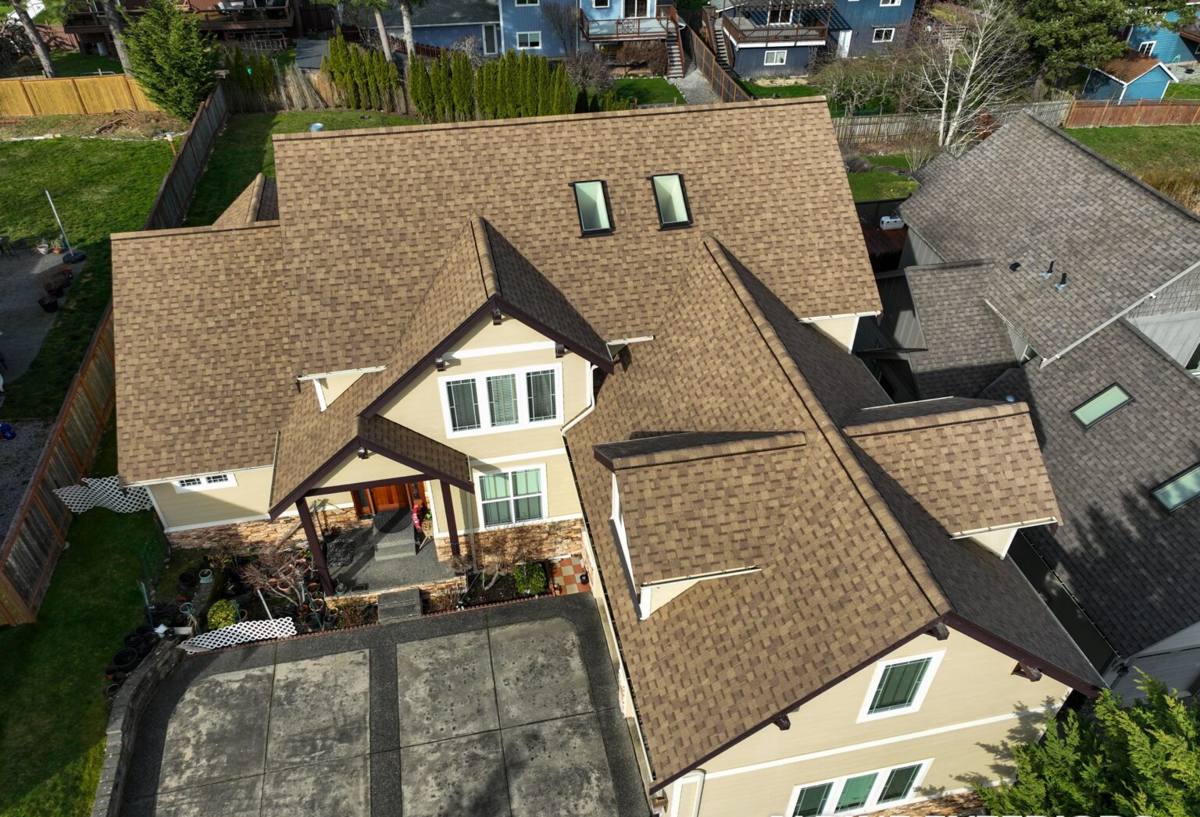
What the Local Climate Actually Does to a Shingle Roof
Salt Air and Corrosion
Airborne salt doesn't damage the shingles themselves much, but it does accelerate corrosion on exposed fasteners, flashing, and any unprotected metal edging. A roof that looks fine from the ground can have fasteners or drip edge quietly corroding underneath, which is one reason we pay close attention to metal component quality on every Sandy Point job, not just the shingles.
Wind-Driven Rain
Water reaching Sandy Point off the Strait and the Bay tends to come in sideways during winter storms, not straight down. That matters because a roof built to shed vertical rain can still let wind-driven rain find its way under shingle tabs, around vents, and along valleys if the underlayment and flashing details weren't installed with that in mind.
A Long Moss Season
Cooler temperatures, shade from mature trees, and consistent moisture give moss and algae a much longer growing window here than in drier inland areas. Left unchecked, moss lifts shingle edges, holds moisture against the roof deck, and shortens the life of an otherwise sound roof.
What a Correct Asphalt Shingle Install Includes Here
A shingle roof is a system, not just a layer of shingles nailed to a deck. For Sandy Point homes, we treat the following as non-negotiable, not upgrades:
- A synthetic or felt underlayment rated for the exposure, installed with proper overlap for wind-driven rain
- Ice-and-water shield membrane at eaves, valleys, and roof penetrations — the spots where wind-driven water and ice dams cause the most damage
- Corrosion-resistant flashing and fasteners suited to a coastal air environment, not standard-grade hardware
- Balanced intake and exhaust ventilation, so moisture doesn't get trapped in the attic and condense against the underside of the deck
- Algae-resistant shingle products where the roof has consistent shade or north-facing exposure
- Fastening patterns and nail placement that meet wind-exposure requirements for the site, not just the manufacturer's minimum
Skip any one of these and the roof may still look fine for a year or two — the problems that show up in coastal, moss-prone conditions are usually slow ones: soft decking, granule loss, lifted tabs, or moisture damage that isn't visible until it's already spread.
Our Process for a Sandy Point Roofing Job
1. Inspection First
We start by actually getting on the roof, not just looking at it from the driveway. We check the deck condition, existing ventilation, flashing at chimneys and walls, and how much moss or algae buildup already exists. This tells us whether a full tear-off is warranted or whether repair is a reasonable option.
2. Tear-Off and Deck Check
For a full replacement, we remove the old roofing down to the deck and inspect for soft spots, water staining, or rot — common where moss has been holding moisture against the sheathing. Any damaged decking gets replaced before anything new goes down; covering over a bad deck is how roofs fail early.
3. Underlayment, Flashing, and Ventilation
This is where the coastal-specific work happens: ice-and-water membrane at the vulnerable areas, correctly lapped underlayment, new flashing where needed, and ventilation adjusted to the home's actual attic conditions.
4. Shingle Installation
Shingles go down with fastening that matches the wind exposure of the site, with attention to valleys, hips, and edges — the places that take the most abuse in a driving rain.
5. Cleanup and Walkthrough
We clean the property of old material and debris, including a magnetic sweep for stray nails, and walk the finished roof with the homeowner so there's no guessing about what was done.
Shingle Options and Cost Factors
Most Sandy Point homes do well with either a standard architectural (laminate) shingle or an algae-resistant version of the same, depending on how much shade and moisture exposure the roof gets. The table below is a general guide, not a quote — actual pricing depends on roof size, pitch, layers to remove, and deck condition.
| Shingle Type | Typical Lifespan | Best Fit For | Relative Cost |
|---|---|---|---|
| 3-tab asphalt | 15–20 years | Budget-conscious, low-slope, less shade | Lowest |
| Standard architectural | 25–30 years | Most homes, better wind performance | Moderate |
| Algae-resistant architectural | 25–30 years | Shaded roofs, heavy tree cover, north-facing slopes | Moderate, slightly higher |
| Impact-rated / premium laminate | 30+ years | Homeowners prioritizing longevity and warranty terms | Highest |
Algae-resistant shingles cost a bit more up front, but for a roof with consistent shade in a moss-prone area, they're usually the better long-term value — less granule loss, less staining, and less moss regrowth between cleanings.
Moss: Prevention Beats Removal
Moss doesn't just sit on top of shingles — given enough time, it works into the granule layer and lifts tab edges, which is exactly where wind-driven rain gets in. Once a roof reaches that stage, moss removal alone won't fix the underlying wear. Our approach on Sandy Point roofs is to combine algae-resistant materials with an installation that sheds water and dries out properly, so moss has less to hold onto in the first place. For existing roofs that aren't ready for replacement, periodic gentle cleaning and keeping gutters and valleys clear go a long way toward buying the roof more useful life.
Why a Local Crew Matters for This Job
Any licensed roofing contractor can install shingles. What's different about working in Sandy Point specifically is knowing, from repeated experience, which details actually matter here: where wind-driven rain tends to find weak points, which roofs need extra attention to ventilation because of tree cover, and how fast standard-grade fasteners corrode this close to the water. That's not something you learn from a manufacturer's install guide — it's something you learn from doing this work on this stretch of Whatcom County, roof after roof, and seeing what holds up over time and what doesn't.
A crew that treats a Sandy Point roof the same as one in a dry inland neighborhood isn't doing anything wrong on paper — they're just leaving out the parts that this specific climate actually calls for.
What to Ask Before Hiring Anyone for This Job
- Do they inspect the roof deck before quoting, or price it sight unseen?
- Do they include ice-and-water shield at eaves and valleys as standard, or as an upsell?
- Can they explain their ventilation plan for your specific attic, not a generic answer?
- Do they use corrosion-resistant fasteners and flashing appropriate for coastal exposure?
- Are they licensed, insured, and willing to put the scope of work in writing?
- Do they have experience specifically with homes in this area, not just "roofing in general"?
A contractor who answers these plainly, without dodging or padding the pitch, is usually one worth trusting with the job.
Maintenance After Installation
A correctly installed asphalt shingle roof in Sandy Point still benefits from basic upkeep: keeping gutters and valleys clear so water has somewhere to go, having moss or algae buildup addressed before it takes hold rather than after, and getting an occasional visual check after major windstorms. None of this is intensive work, but skipping it is how a well-installed roof loses years off its expected lifespan.
If you're weighing a repair versus a full replacement, or just want a straight answer about what your roof actually needs, we're happy to take a look and give you a free, no-pressure estimate — use the form below to get started.