 Ferndale Siding
 Windows Built for the Sumas Climate, Not Just the Sumas Look
Homes out toward Sumas sit at the edge of Whatcom County's marine weather pattern, where the same moisture-heavy systems that roll in off Bellingham Bay push rain and humid air deep into the Nooksack Valley. That means long stretches of the year where window frames, sills, and glazing are dealing with sustained dampness rather than the occasional downpour. Add in the shoulder seasons when moss and mildew get a foothold on anything that stays wet too long, and you have a climate that is genuinely hard on windows that were not built or installed with drainage and sealing as the top priority.
We work on homes throughout the Ferndale area, including the Sumas corridor, and the pattern we see is consistent: window failures out here are rarely about the glass itself. They are almost always about water finding a way past a seal, sitting in a frame cavity, or wicking into trim that was never properly flashed. A custom window project done right addresses all of that, not just the visual upgrade.
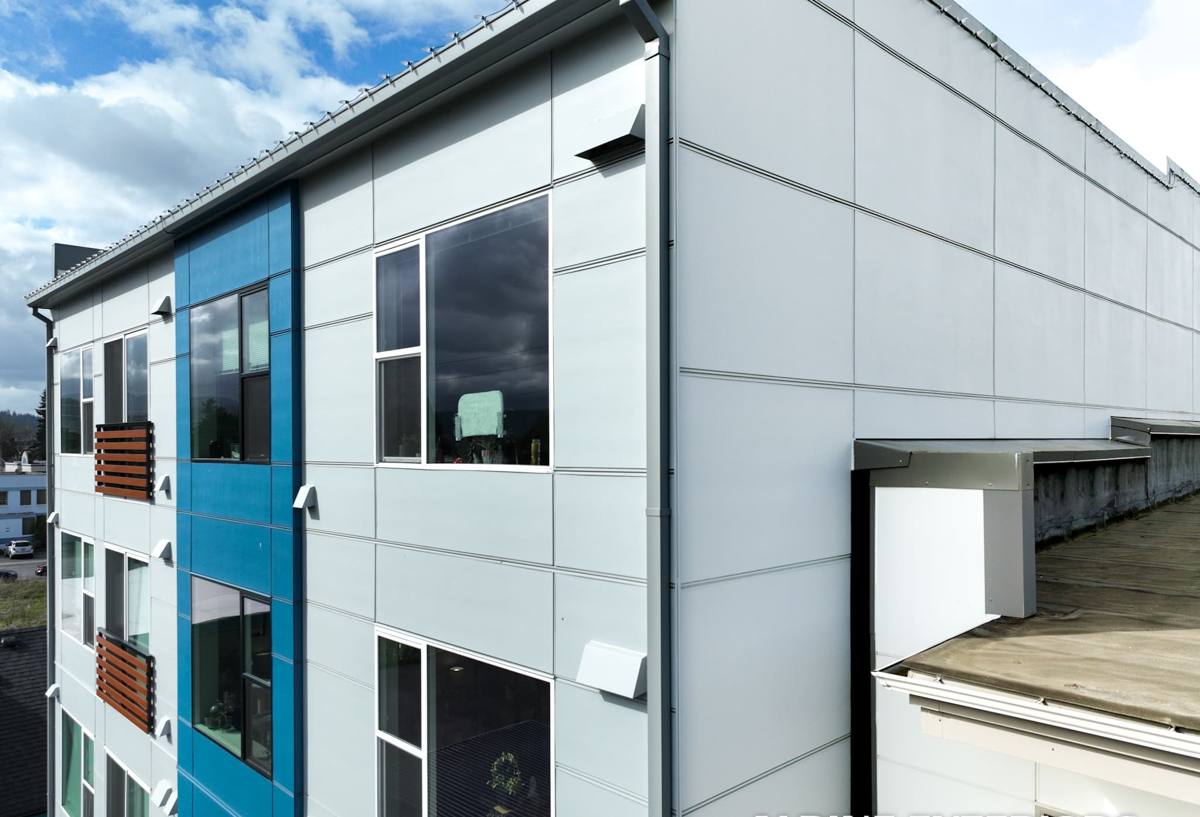
What "Custom" Actually Means for a Sumas Home
Custom does not mean exotic. For most homes in this area it means windows sized and configured to fit openings that are not standard dimensions, often because the house has settled over the years or because the original construction used non-standard framing. It can also mean matching a specific look — grid patterns, casement versus double-hung, a particular sightline — that fits the character of an older farmhouse or a newer build without looking mismatched from one side of the house to the other.
Common reasons homeowners here go custom instead of stock
- Older openings that have shifted slightly out of square over decades
- A desire to match window style across additions built in different eras
- Replacing a single oddly-sized window (bathroom, stairwell, gable) that stock sizes do not cover
- Upgrading from aluminum-frame originals to something with better thermal and moisture performance
- Matching grid pattern and trim profile to keep a consistent look on visible elevations
Why Moisture Management Matters More Than the Window Itself
A high-quality window with a poor installation will fail faster than a modest window installed correctly. That is the honest trade-off homeowners need to understand before they focus purely on brand names or feature lists. In a climate with sustained rain and long damp stretches, the installation details determine whether water sheds away from the wall assembly or gets trapped behind the siding.
The details that actually matter
- Sill pan flashing — creates a sloped, sealed pan under the window so any water that gets past the sash has somewhere to go besides your wall framing
- Proper flashing sequencing — house wrap, flashing tape, and window flange layered so water always drains outward, never inward, following correct shingle-lap order
- Backer rod and sealant, not just caulk — a continuous bead over a backer rod flexes with the building instead of cracking after one or two seasons
- Correct shimming and squaring — a window that is not level and square stresses the seals and hardware from day one, leading to early failure
- Drip cap or head flashing above the unit — directs water around the window rather than letting it run down the face of the frame
Skipping any one of these does not usually cause an immediate problem. It shows up two, five, or ten years later as soft trim, interior staining, or a window that will not close cleanly anymore — by which point the fix is more than a window swap.
Frame Materials: What Holds Up Out Here
There is no single "best" window material for every home — it depends on budget, the look you want, and how much upkeep you are willing to take on. What we can speak to honestly is how each option tends to perform under sustained Whatcom County moisture and the moss-friendly conditions that come with it.
| Frame Material | Moisture Behavior | Upkeep | Typical Fit |
|---|---|---|---|
| Vinyl | Will not rot or corrode; performance depends heavily on weld quality at corners | Low — occasional cleaning | Most straightforward replacements, strong value |
| Fiberglass | Dimensionally stable through wet/dry and temperature swings; very good seal retention over time | Low | Homes wanting long-term stability with a narrower sightline |
| Wood-clad | Good performance if the cladding and cap details are done correctly; the wood interior needs to stay dry | Moderate — depends on cladding integrity | Homes prioritizing a traditional interior wood look |
| Aluminum | Prone to condensation and thermal transfer unless thermally broken; can accelerate moisture issues at the sill | Higher | We generally steer homeowners away from bare aluminum for this climate unless it is thermally broken commercial-grade product |
We do not push one material on every job. We will tell you plainly if a material choice is going to create more maintenance than it is worth for your specific opening, orientation, and exposure.
Glass and Weatherstripping: The Part You Do Not See
Beyond the frame, the glass package and weatherstripping do most of the real work against wind-driven rain. For homes catching weather off open fields or facing prevailing storm direction, we pay particular attention to:
- Dual or triple-pane insulated glass units with a warm-edge spacer, which resists seal failure and fogging between panes longer than older aluminum spacer designs
- Low-E coatings tuned for the Pacific Northwest — helping with both winter heat retention and summer heat gain, without over-tinting the glass
- Compression-style weatherstripping on operable sashes, which holds a tighter seal against driving rain than older sweep-style gaskets
- Multi-point locking hardware on casement styles, which pulls the sash tight into the frame rather than relying on a single latch
Style Considerations for Wind and Rain Exposure
Casement windows, which crank outward and seal by compressing against the frame, generally resist wind-driven rain better than double-hung windows, which rely on two sashes sliding past each other. That does not mean double-hung is wrong for your home — it is often the right look for a farmhouse or traditional facade — but on a wall that takes the brunt of storm exposure, we will walk through that trade-off with you rather than assume.
Our Process on a Sumas-Area Project
The process is the same whether the home is right in Ferndale or out along the Sumas corridor — the difference is in what we check for given the specific exposure and age of the house.
- On-site assessment. We look at each opening individually — square, level, existing flashing condition, siding type, and any visible signs of past moisture intrusion around the trim.
- Measurement and product selection. Because many older homes here have settled slightly, we measure each opening rather than assuming uniform sizing across the house, and we talk through frame material and glass package against your budget and priorities.
- Removal and inspection. Once the old window is out, we inspect the framing and sheathing underneath. This is often the first real look anyone has had at that wall cavity in decades, and it tells us if there is hidden rot or past water damage that needs to be addressed before the new window goes in.
- Correct flashing and sealing. Sill pan, flashing tape sequencing, backer rod and sealant, and drip cap — done in the right order, every time, not as an optional upgrade.
- Install, shim, and square. The window is set plumb, level, and square, then secured and insulated around the frame without over-packing insulation, which can bow the frame.
- Interior and exterior trim finish. Trim is finished to match the surrounding material and sealed at all joints.
- Final walkthrough. We operate every sash and lock with you before we consider the job done, and we point out anything homeowners should watch for during the first heavy rain.
Signs Your Current Windows Are Losing the Fight
Homeowners often wait longer than they should because window failure is gradual. Here is what tends to show up first out in this climate:
- Soft or discolored wood trim around the frame, inside or out
- Moss or dark streaking building up on the sill or lower frame edge faster than on the rest of the siding
- Fogging or a milky look between panes of double-glazed glass, meaning the seal has failed
- Windows that stick, will not latch fully, or need to be forced closed
- A noticeably cold draft near the frame even when the window is latched
- Condensation forming on the interior frame or between panes during cold, damp mornings
Any one of these on its own may just mean a minor repair. Several together on the same window, or repeated across multiple windows on the same wall, usually points to a flashing or sealing problem that a repair caulk job will not solve long-term.
Why Local Installation Experience Matters
Window installation manuals are written for general conditions. What actually holds up in Whatcom County's wet-fall, wet-spring pattern is something you learn by doing this work here year after year — which flashing tapes stay adhered through a cold, damp install season, how much slope a sill pan needs given how hard the rain comes in sideways during a fall storm, and which trim details on older farmhouse-style homes need extra attention because of how they were originally built. A crew that has done this work across the Ferndale and Sumas area brings that judgment to your project instead of installing to a generic standard and hoping the climate cooperates.
Get a Free, No-Pressure Estimate
If your windows in the Sumas area are showing any of the signs above, or you are simply ready to update to something better suited to our climate, we are happy to come take a look. There is no obligation and no pressure — just a straightforward assessment of your current windows, honest options for your budget, and a clear estimate you can take your time with. Use the form below to get started.