 Ferndale Siding
 Why Bellingham Decks Wear Out Faster Than the Brochure Says
A deck in Bellingham lives a harder life than the same deck would in a dry inland climate. You've got salt-laden air rolling in off the water, long stretches of driving rain from fall through spring, and a moss season that can run six months or more depending on the year. None of those things destroy a deck on their own — but stacked together, year after year, they find every weak point in the framing, the fasteners, and the finish. We've been repairing decks around Whatcom County long enough to know the difference between a deck that just needs attention and one that's actually failing structurally, and that distinction matters more than most homeowners realize before we show up.
What the Local Climate Actually Does to a Deck
Salt air accelerates corrosion in fasteners and hardware that would otherwise last decades. Moisture that sits under moss doesn't evaporate the way it would in direct sun, so wood stays damp far longer than it's rated to handle. And Bellingham's rain doesn't come in short bursts — it comes in weeks of steady, low-intensity soaking that finds its way into every joint, screw hole, and end-grain cut that isn't properly sealed or flashed.
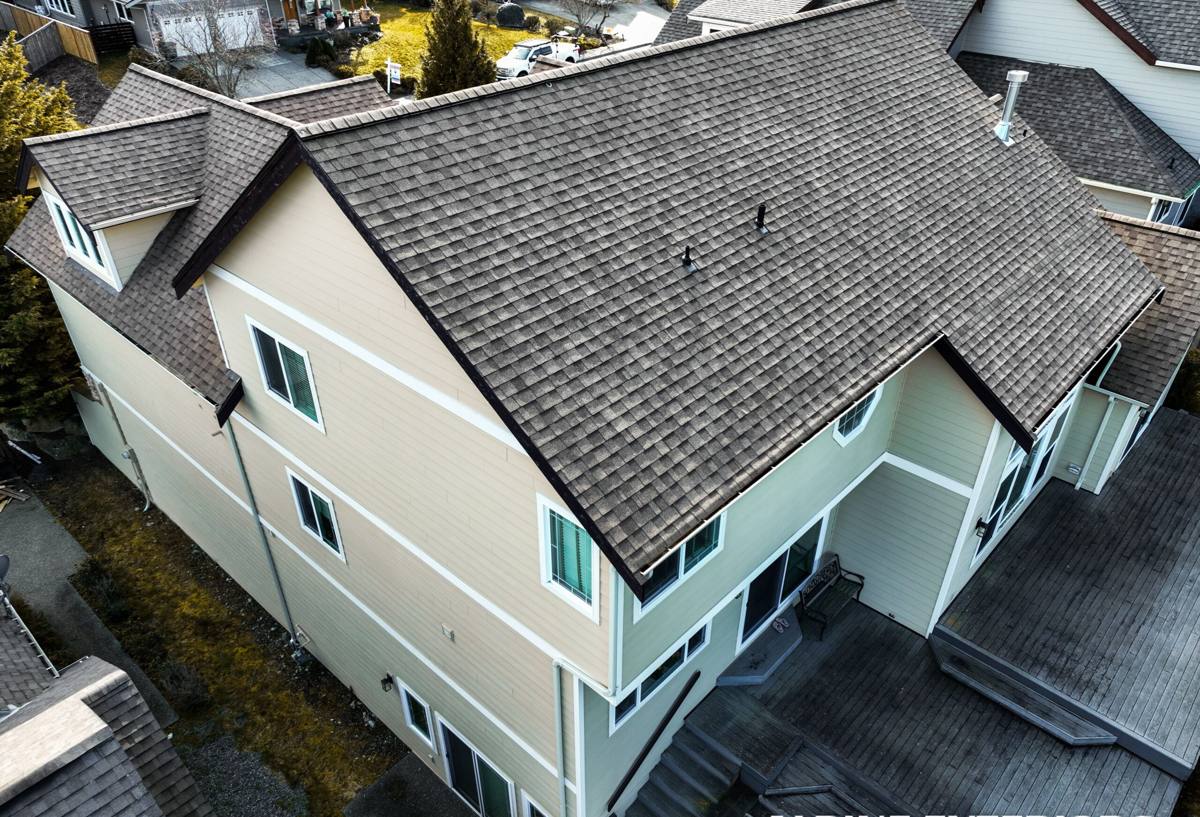
Signs a Deck Needs Repair — Not Just a Wash
A lot of decks in this area get power-washed every spring and called good. That helps with surface moss and grime, but it doesn't tell you what's happening underneath the boards or inside the framing. Here's what actually signals a problem:
- Soft or spongy spots when you walk across the decking
- Boards that stay damp or dark long after the rest of the deck has dried
- Rust streaks running down from screws, nails, or joist hangers
- Visible gaps or movement where the deck ledger meets the house
- Railings or posts that flex more than they used to
- Moss or algae growing in the same spots every year despite cleaning
- Stairs that feel less solid underfoot than they used to
Any one of these can be minor. Several together, especially near the ledger board or support posts, usually means the problem has moved past cosmetic and into structural territory.
Where Bellingham Decks Actually Fail
The Ledger Connection
The ledger board — where the deck attaches to the house — is the single most important structural point on most decks, and it's also the one most prone to hidden rot. If flashing was skipped or installed wrong when the deck was built, water works its way behind the ledger and into the rim joist over years, invisible from the outside until the deck starts to sag or pull away.
Joists and Framing
Underneath the decking boards, joists that don't get enough airflow or that sit low to the ground stay wet longer after every rain. Combined with driving rain patterns common here, this is where we most often find rot that hasn't shown up on the surface yet.
Fasteners and Hardware
Salt air is hard on metal. Standard galvanized fasteners that would be fine 30 miles inland can corrode noticeably faster this close to the water, which weakens connections at joist hangers, post bases, and railing brackets well before the wood itself gives out.
Moss on Walking Surfaces and Stairs
Beyond looking bad, moss holds moisture against the wood and turns stairs and low-traffic areas into a slip hazard through the wet months — a safety issue as much as a maintenance one.
What a Correct Deck Repair Actually Involves
A repair that just replaces the boards you can see and skips everything underneath tends to fail again within a few seasons — and it can mask a bigger problem instead of fixing it. Our approach starts below the surface, not at it.
- Full inspection of framing, ledger, posts, and fasteners — not just the decking surface
- Probe testing of wood in known trouble spots (ledger, joist ends, post bases) to find soft or compromised material
- Flashing check and correction at the ledger, since this is the most common source of hidden long-term damage
- Replace only what's actually failed — sound framing doesn't need to come out
- Upgrade fasteners and hardware where corrosion is a factor, using materials rated for the exposure
- Address drainage and airflow under the deck so replaced material doesn't fail the same way again
- Finish or seal exposed wood appropriately for our rain and moss conditions
Skipping the middle steps is how a deck ends up getting "repaired" every couple of years instead of once, correctly.
Repair or Replace? What Actually Drives That Decision
Homeowners often assume any deck issue means a full rebuild, or the opposite — that a quick board swap will handle it. Neither assumption is reliable without an actual inspection. These are the factors that genuinely determine which direction makes sense:
| Factor | Leans Toward Repair | Leans Toward Replacement |
|---|---|---|
| Ledger board condition | Solid, properly flashed | Rotted or improperly flashed at the house connection |
| Extent of rot | Isolated boards or a few joists | Widespread rot through the main framing |
| Deck age | Under 15-20 years, built to a reasonable standard | Older deck near or past its structural service life |
| Fastener corrosion | Localized, hardware still functional | Widespread failure at multiple connection points |
| Footings/posts | Stable, no settling or heaving | Movement, settling, or undersized for current code |
| Budget goal | Extend life cost-effectively | Want a long-term reset, possibly a new layout or material |
In a lot of cases, a deck can be brought back to solid, safe condition with targeted repair rather than a full teardown — but that's only a good call once someone has actually looked underneath, not from the driveway.
Material Choices for a Damp Climate
When boards do need to come out, what goes back in matters. Pressure-treated lumber is a reasonable, budget-conscious choice as long as it's properly finished and maintained on a regular schedule — left bare, it will weather faster in our rain and moss conditions than in a drier climate. Composite decking costs more upfront but resists moisture and moss growth better over time and needs less annual upkeep, which is worth factoring into the real cost over the life of the deck, not just the repair invoice. We'll walk through the honest trade-offs for your specific deck rather than push one option across the board.
Our Process for Bellingham Deck Repairs
We keep it straightforward:
- On-site inspection — we look at framing, ledger, fasteners, and drainage, not just the walking surface
- Clear written scope — what's failing, what we recommend fixing, and why, before any work starts
- Repair work — done in the right order, structure first, surface last
- Walkthrough — we show you what was done and what to watch going forward
No pressure toward a full rebuild if a targeted repair genuinely solves the problem, and no minimizing a structural issue just to keep the job small.
Keeping a Repaired Deck Solid Through the Next Wet Season
Once a deck is repaired correctly, a little seasonal upkeep goes a long way in this climate:
- Sweep debris off the surface regularly so moisture and moss don't get a foothold
- Clean moss off stairs and shaded areas before it builds up, especially heading into fall
- Check that gaps between boards stay clear so water can drain instead of pooling
- Re-seal or re-stain wood decking on the schedule your finish product recommends
- Do a quick visual check of the ledger and posts once a year for new movement or staining
Why a Crew That Already Works Bellingham Makes a Difference
Deck repair looks straightforward from the outside, but doing it right depends on understanding how this specific climate attacks a deck over time — where moisture actually collects, which connection points corrode first, and what finish and fastener choices hold up through a real Whatcom County winter rather than a mild one somewhere else. We work decks throughout the Bellingham and Ferndale area regularly, so we're not guessing at how salt air and a long moss season affect a repair five years down the road — we've seen it play out.
If you've got soft boards, rust stains, a deck that feels less solid than it used to, or you just want an honest read on whether repair or replacement makes more sense for your situation, we're glad to take a look. Fill out the form below for a free, no-pressure estimate.