 Ferndale Siding
 Windows on Lummi Island Face a Different Set of Problems
A window that performs fine in a sheltered inland yard can fail early on Lummi Island. The combination of salt-laden marine air, wind-driven rain coming off Rosario Strait and the Salish Sea, and the long, wet moss season that Whatcom County sees from fall through spring puts more stress on a window opening than most manufacturers' warranties assume. We're not talking about the glass itself failing — it's almost always what happens around the window: the flashing, the sealant joints, the housewrap integration, and the trim. Get those wrong and you get slow leaks that show up as soft drywall, stained sills, or mold behind the casing a year or two later, long after the installer is gone.
Ferndale Siding Company works Lummi Island regularly as part of our Whatcom County service area, and we approach window installation there the same way we approach siding: assume the weather will find every gap, and build so it can't get through.
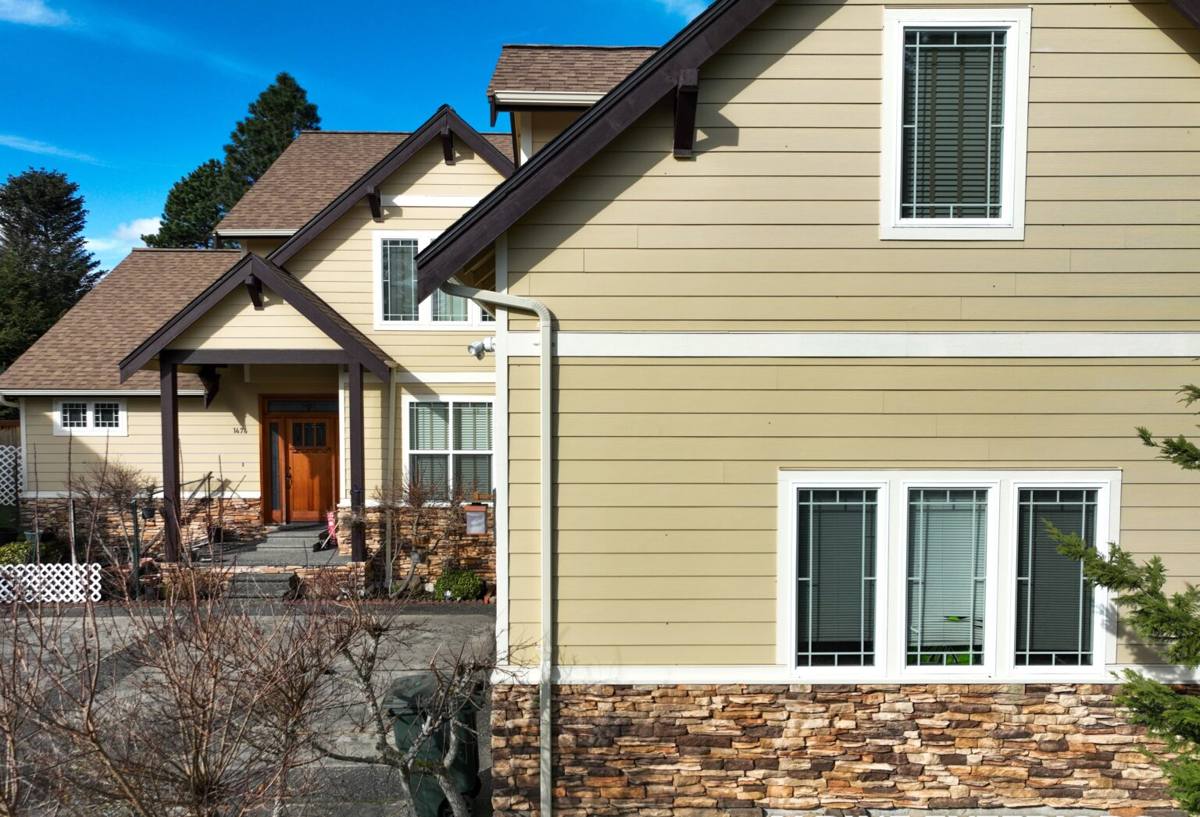
What Salt Air and Driving Rain Actually Do to a Window Opening
Salt Air and Metal Components
Salt air accelerates corrosion on unprotected fasteners, aluminum cladding without a marine-grade finish, and cheap window hardware. Over years, that corrosion can compromise the seal around hardware penetrations and weaken the connection between the window frame and the framing behind it. We favor corrosion-resistant fasteners and hardware for island installs, and we're upfront that a bargain window with mill-finish aluminum or unprotected steel components is a poor match for this environment.
Wind-Driven Rain
On exposed parts of the island, rain doesn't just fall — it's pushed sideways and upward under eaves and around trim. That means a window installation has to be built to shed water that's moving against gravity, not just water running straight down. That's a flashing and sequencing issue more than a product issue, which we'll get into below.
Moss, Mildew, and Prolonged Moisture
Whatcom County's long wet season keeps siding and trim surfaces damp for extended stretches, which is exactly the environment moss and mildew need. Around windows, prolonged dampness at sill areas and trim joints softens wood, degrades caulk, and gives moisture a path inward if the underlying flashing isn't doing its job. A correct install reduces how long water sits at these vulnerable points in the first place.
What a Correct Window Installation Actually Involves
The window itself is maybe a third of the job. The other two-thirds is what most homeowners never see once the trim goes back on.
- Opening prep: checking the rough opening for square, level, and sound framing before anything goes in — a window installed into a bad opening will never perform right, regardless of quality.
- Weather-resistive barrier integration: the housewrap or building paper has to be cut, lapped, and taped so water sheds over each layer in the correct shingle-style order, not trapped behind it.
- Sill pan flashing: a sloped, sealed pan at the bottom of the rough opening so any water that does get past the window has a way out instead of sitting on bare framing.
- Head and side flashing: integrated with the weather-resistive barrier above and beside the window so water is directed out and down, never into the wall cavity.
- Proper shimming and fastening: the window has to be plumb, level, and square, fastened per the manufacturer's schedule — not just caulked into place and called done.
- Insulation and air sealing at the gap: the space between the window frame and rough opening gets sealed correctly, which also affects energy performance and condensation risk.
- Exterior trim and sealant: the final sealant joints matter, but they're the last line of defense, not the primary one — a job that relies on caulk to keep water out is a job we don't consider finished.
Our Process for a Lummi Island Window Job
1. On-Site Assessment
We look at each opening individually — sun and wind exposure, existing water staining or soft trim, siding condition around the window, and how exposed that side of the house is to prevailing weather. Openings facing open water or unobstructed wind get extra attention to flashing detail.
2. Product Selection for the Site
We talk through window options based on the home's exposure, not just budget. That includes frame material, cladding finish, and glazing package suited to a marine climate, along with realistic expectations about maintenance for each option.
3. Removal Without Collateral Damage
Old windows come out carefully, with attention to what condition the rough opening and surrounding sheathing are in. This is often where we catch existing rot or past water damage that needs to be addressed before a new window goes in — putting a new window into a compromised opening just delays the same problem.
4. Flashing and Installation
Sill pan, side flashing, head flashing, and weather-resistive barrier integration happen in the correct order, every time, regardless of whether it's a single replacement window or a whole-house project. This is the step that determines whether the window is dry in five years, not just on install day.
5. Trim, Sealant, and Final Check
Exterior trim is fitted and sealed, interior finish work is completed, and every window gets a final function and seal check before we consider the job done.
Choosing Windows for a Marine Environment
There's no single "best" window for every home on Lummi Island — it depends on exposure, budget, and how the home is built. Here's how the common options generally compare for a salt-air, high-rain setting.
| Frame Material | Salt Air / Corrosion Behavior | Maintenance | Notes for Island Use |
|---|---|---|---|
| Vinyl | Doesn't corrode; UV and salt exposure can affect finish over long-term | Low | Cost-effective, solid choice for most exposures; quality varies significantly by manufacturer |
| Fiberglass | Very stable in salt air and moisture; dimensionally stable | Low | Strong option for higher-exposure sides of a home; higher upfront cost |
| Aluminum-clad wood | Cladding protects wood but seams and hardware need a marine-rated finish | Moderate | We're selective about this on exposed elevations — poor-quality cladding finish is a real weak point here |
| Bare wood | Most vulnerable to prolonged moisture and salt exposure | High | Requires diligent upkeep on this island; we discuss this trade-off honestly with homeowners who want the look |
We're not pushing homeowners toward one brand — we're pushing toward whatever combination of frame material and installation detailing actually holds up on Lummi Island's specific exposure, which can vary a lot from one side of a home to another.
Why It Matters That We Already Work Lummi Island
Getting to and from Lummi Island isn't the same as driving to a job in downtown Ferndale — it takes ferry scheduling and planning around sailing times, which affects how a crew structures a work day. A contractor who already builds that into their routine shows up on time and gets the job done in the fewest necessary trips. More importantly, a crew that regularly works island and near-shore properties in Whatcom County has already seen how salt air and wind-driven rain behave on real homes here, not just in a training manual. That experience shows up in the small decisions — where to add extra flashing, which fastener to use, which sealant actually holds up — that separate a window that lasts from one that doesn't.
Signs Your Current Windows May Already Be Compromised
- Soft or discolored trim or sill wood around the window frame
- Visible gaps, cracked, or missing exterior caulk joints
- Drafts or noticeably higher energy bills in windy weather
- Condensation or fogging between panes on double- or triple-glazed units
- Difficulty opening, closing, or locking the window
- Musty smell or visible mildew near the window on the interior side
- Peeling paint or bubbling finish on interior trim near the window
Any one of these is worth a look before it turns into a larger repair. Windows that are failing at the seal are often failing quietly for a while before the damage becomes obvious.
What Affects the Cost of a Window Installation Here
Every home and opening is different, but the main cost factors on a Lummi Island project are generally the same ones that matter anywhere in our service area, with a couple of local additions:
- Number and size of windows being replaced
- Frame material and glazing package selected
- Condition of the existing rough opening and surrounding framing (hidden rot adds cost)
- Whether existing siding or trim needs to be removed and replaced around the opening
- Access and site logistics, including ferry scheduling for island properties
- Exposure level of each opening — high-exposure elevations sometimes warrant additional flashing detail
We give straightforward, itemized estimates so homeowners can see exactly what they're paying for and why, rather than a single lump number.
Get a Straightforward Estimate
If your Lummi Island home has windows that are original, aging, or already showing signs of water intrusion, it's worth having them looked at before another wet Whatcom County winter. We'll walk the exterior with you, point out anything we see, and give you a clear, no-pressure estimate for what a correct installation would involve — fill out the form below to get started.