 Ferndale Siding
 Why Birch Bay Homes Wear Out Windows Faster
Birch Bay sits right on the water, and that changes what a window has to survive compared to a house even a few miles inland. Salt-laden air off the bay works on aluminum hardware, exposed fasteners, and unprotected wood trim year-round, not just during storms. Add Whatcom County's long wet season — months of driving rain pushed sideways by wind off the water — and you get windows that are tested constantly, not occasionally. Moss and algae get a foothold anywhere moisture sits too long: sills, bottom corners, and the joint where the window meets the siding.
None of this means Birch Bay needs exotic windows. It means the details that get skipped in easier climates — flashing, sealant choice, drainage paths, frame material — can't be skipped here. A window that's rated fine for a dry-summer climate can still fail early on this coastline if it's installed without those details handled correctly.
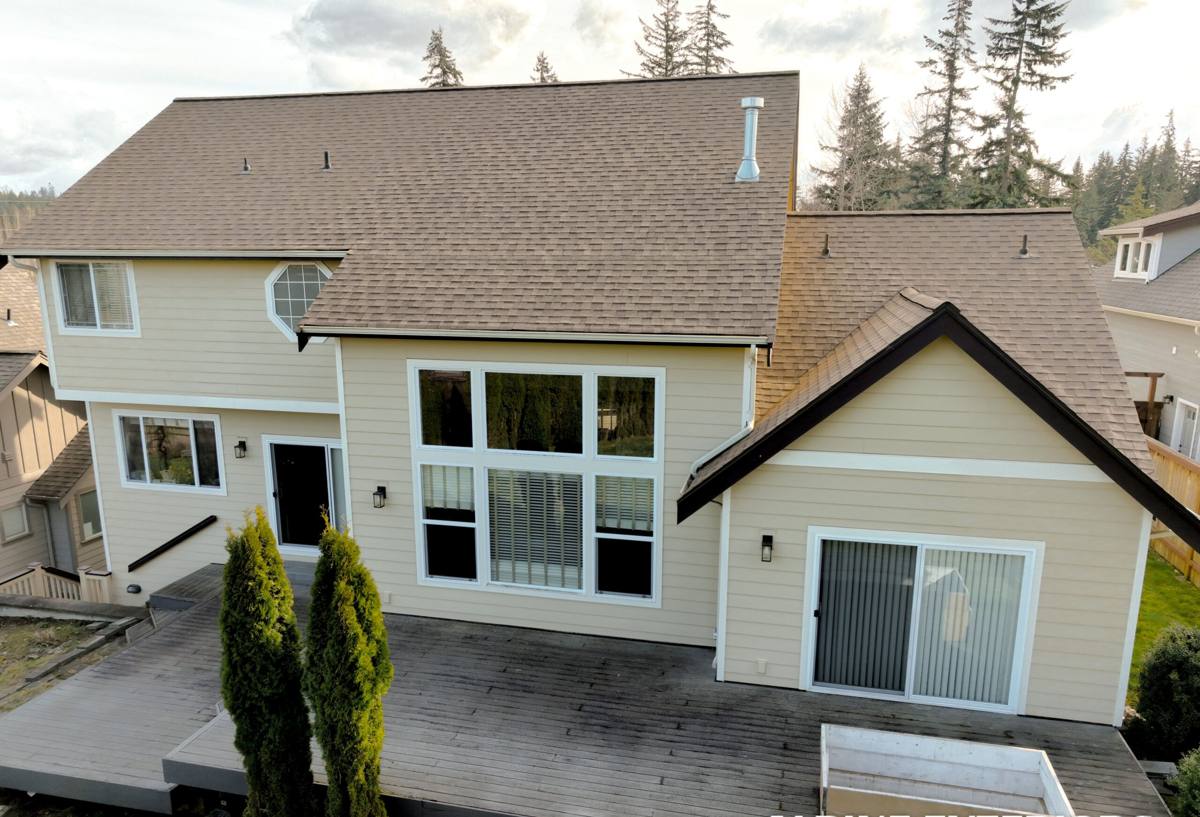
What "Energy-Efficient" Actually Means for This Climate
Energy efficiency isn't just a U-factor number on a sticker. In a marine climate like Birch Bay's, an efficient window has to do three jobs at once: keep conditioned air in, keep wind-driven rain out, and resist the slow damage that salt air and constant moisture cause to seals and hardware over time. A window can score well on paper and still underperform here if the installation lets water get behind it.
The Numbers Worth Knowing
For this area, we generally look for:
- U-factor around 0.27–0.30 or lower — controls heat loss through the glass and frame, which matters through our long heating season.
- Low-E coated, argon-filled double or triple pane glass — cuts heat loss without darkening the view, which matters on a bay where the light is part of why people live there.
- A solid air infiltration rating — less relevant to heating bills alone, more relevant to how much wind-driven rain gets forced against the seals during a winter blow.
None of these numbers matter if the window isn't sealed and flashed correctly. We'd rather install a mid-grade window done right than a premium window done fast.
The Window-to-Siding Connection Is Where Problems Start
Most window failures we get called out for in this area aren't glass failures — they're water getting in around the frame. As a siding crew that also handles window installation, we pay particular attention to the transition between the window and the wall cladding, because that's the joint most likely to leak if it's rushed.
What a Correct Job Involves
- Removing enough surrounding siding and trim to properly flash the rough opening, not just caulking around the outside of the old frame.
- Sill pan flashing that sheds water forward, out of the wall, rather than letting it pool at the bottom corners where rot and moss both start.
- Head flashing integrated under the water-resistive barrier above the window, so water runs over the opening instead of behind it.
- Housewrap and siding lapped back over the flashing in the correct shingle-style order — water always moving down and out, never trapped.
- Sealant used only where it belongs — as a backup, not as the primary water barrier. Caulk alone doesn't hold up to a full Whatcom County winter.
This is also why we're cautious about "insert" replacements — popping a new sash into an old frame without addressing the flashing — on homes this close to the water. It's faster and cheaper, but it leaves the original moisture path in place, which is a bigger risk here than it would be somewhere drier.
Frame Materials: What Holds Up on the Bay
Frame choice matters more on a coastline than it does a few miles inland. Salt air and constant humidity are harder on some materials than others.
| Frame Material | How It Handles Salt Air & Moisture | Maintenance | General Notes |
|---|---|---|---|
| Vinyl | Doesn't corrode or rust; handles humidity well | Low — occasional cleaning | Most common choice for this area; good value, wide color range now available |
| Fiberglass | Very stable in temperature swings and moisture; expands/contracts close to glass itself | Low | Higher upfront cost, strong long-term performance, good for larger openings |
| Wood (clad or unclad) | Needs protective cladding or diligent upkeep; unclad wood is a poor fit this close to the water | High if unclad; moderate if clad | Best reserved for homes where the look is a priority and upkeep is expected |
| Aluminum | Prone to corrosion and condensation in this climate unless thermally broken | Moderate to high | We steer most Birch Bay homeowners away from bare aluminum for this reason |
We don't push one brand or material on every job — the right pick depends on the home's exposure, budget, and how much upkeep the owner wants to take on. But we'll tell you plainly if a material is a poor match for a bayfront or near-bayfront wall, rather than sell what's easiest to install.
Glass Packages Worth the Upgrade Here
Standard double-pane Low-E glass is a reasonable baseline. For homes with direct bay exposure or west/south-facing walls that take the brunt of wind-driven rain, a few upgrades tend to pay for themselves in comfort even where the energy payback is slower:
- Triple-pane glass — better sound dampening from wind and traffic, and a warmer interior glass surface in winter, which cuts down on condensation at the sill.
- Impact-resistant or laminated glass — more relevant on homes exposed to wind-blown debris in winter storms.
- Warm-edge spacers — reduce cold spots at the edge of the glass, which is often where condensation and eventual seal failure start.
These aren't necessary on every window in every room. We'll walk the house with you and point out which openings actually see enough weather exposure to justify the upgrade.
Our Installation Process
- On-site assessment. We look at exposure, existing flashing condition, and how the current windows have held up — that tells us more than the window's age alone.
- Product selection. We walk through frame material, glass package, and budget honestly, including trade-offs, not just upsells.
- Removal and opening prep. Old units come out carefully so we can inspect the sheathing and framing underneath for hidden moisture damage before anything new goes in.
- Flashing and sealing. This is the step that determines whether the window lasts. We flash every opening to shed water outward, every time, regardless of what the old installation did.
- Window set and insulation. Proper shimming so the window operates correctly, low-expansion foam or backer rod and sealant around the frame — no gaps, no over-packed foam that bows the frame.
- Siding and trim tie-in. Since we install siding as well, we re-integrate the surrounding cladding correctly instead of just caulking a seam and moving on.
- Final check. Operation, seal, and weatherproofing checked before we consider the job done.
Signs a Birch Bay Home Needs New Windows
Not every drafty window needs full replacement, but a few signs point to real trouble rather than simple age:
- Condensation or fogging between the panes — the seal has failed and the insulating gas is gone.
- Soft or discolored trim or siding around the window frame — a sign water is getting behind the cladding.
- Visible moss or algae growth at the sill or bottom corners that keeps coming back after cleaning.
- Windows that feel drafty even when fully latched, especially during winter storms off the bay.
- Difficulty opening, closing, or locking — frames can warp slightly from years of moisture cycling.
- Noticeably colder rooms on the bay-facing side of the house compared to the rest of the home.
Cost Factors to Expect
Every home is different, but the main variables that move the price on a Birch Bay window project are consistent:
| Factor | Why It Matters |
|---|---|
| Frame material | Vinyl is generally the most budget-friendly; fiberglass and clad wood cost more up front |
| Glass package | Triple-pane, laminated, or impact-rated glass adds cost but may be worth it on exposed elevations |
| Condition of the existing opening | Hidden rot or old, incorrect flashing found during removal adds repair time before the new window goes in |
| Number of exposed elevations | Bay-facing and west-facing walls generally warrant the more robust flashing and glass details |
| Full-frame vs. insert replacement | Full-frame replacement costs more but lets us correct flashing issues; inserts are cheaper but leave the old moisture path in place |
We'll always give you a straightforward number broken down by these factors rather than a single lump figure, so you know what you're actually paying for.
Why a Crew That Already Works Birch Bay Matters
A window installer who mostly works drier, inland areas can still do competent work, but they may not default to the flashing and material choices this coastline actually needs — because most of their jobs don't demand it. Working regularly in Ferndale and around Birch Bay means we're used to bay-facing exposure, salt air on hardware, and the specific way Whatcom County's winter storms drive rain sideways into a wall. We treat those as the baseline, not the exception.
Because we handle siding and windows together, we're also looking at the whole wall assembly, not just the window unit in isolation. A window installed well but tied into siding installed poorly around it will still leak eventually — and the reverse is just as true.
If you're weighing new windows for a Birch Bay home — whether it's one problem window or a full-house replacement — we're happy to come take a look and give you a straight, no-pressure estimate using the form below.