 Ferndale Siding
 Bellingham's Weather Doesn't Go Easy on a Roof
If you own a home in Bellingham, you already know the weather here isn't dramatic so much as relentless. Winter storms roll in off the water with sustained wind and driving rain that can last for days, not hours. Between storms, a long stretch of gray, damp months keeps roofs wet, shaded, and slow to dry. That combination — hard wind events followed by months of moisture — is exactly the kind of climate that turns small roof problems into bigger ones if they're not caught and repaired correctly the first time.
A storm damage repair in Bellingham isn't the same job as a storm repair in a dry inland climate. The materials, the sequencing, and the details around flashing and ventilation all need to account for salt-laden air, near-constant moisture, and a moss season that runs longer here than in most of the state. This page covers what storm damage actually looks like on a Bellingham roof, what a correct repair involves, and how our process works when you call us after a storm.
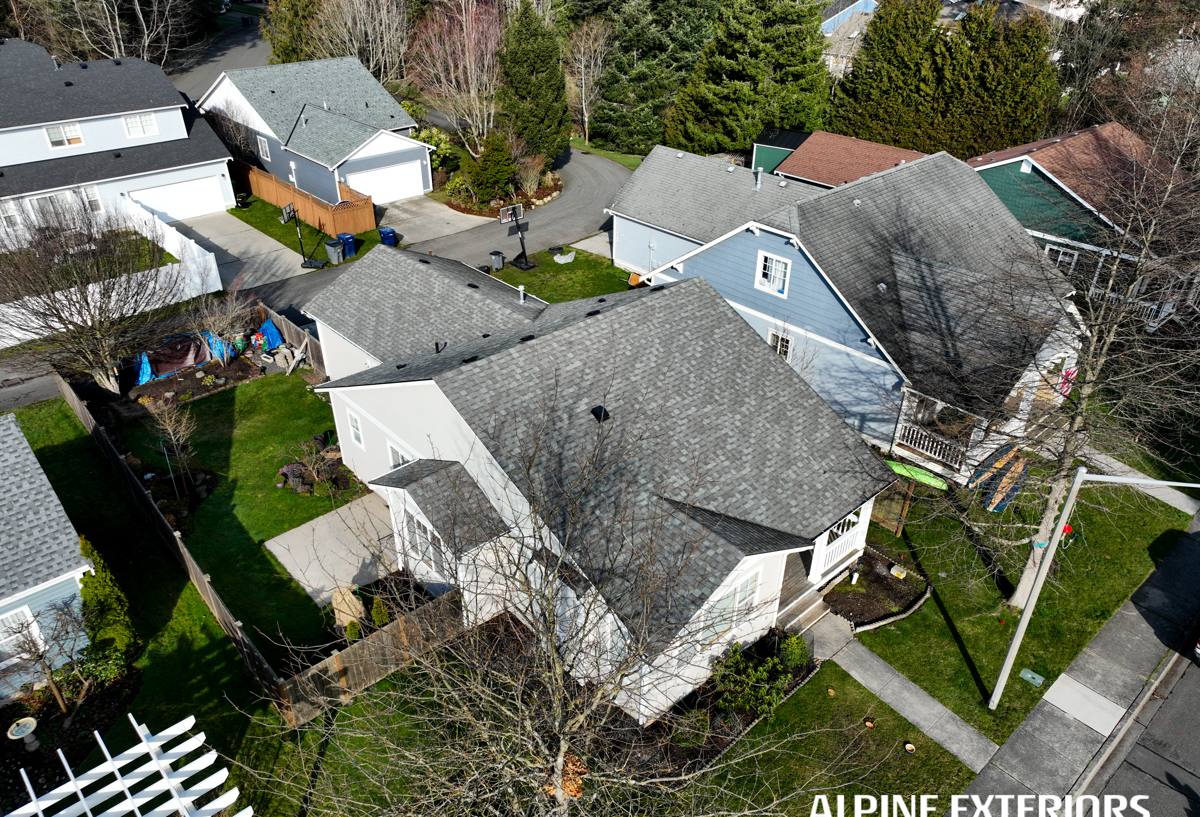
What Storm Damage Actually Looks Like Here
Wind and Gusts Off the Bay
Wind is the most common cause of storm damage we see on roofs in this area. Gusts don't have to reach headline-making speeds to do damage — sustained wind from the water, especially when it hits a roof at an angle, can lift shingle tabs, work sealant strips loose, and peel back the edges of a roof where wind pressure is highest. Once a tab is lifted even slightly, the next rain event gets underneath it, and the damage compounds from there.
Wind-Driven Rain and Water Intrusion
Straight-down rain is rarely the problem. It's rain being driven sideways, under eaves, up against flashing, and into any gap that's opened up from age or wind stress. This is why so many "storm damage" calls in this area turn out to be water stains on a ceiling weeks after the actual storm — the damage happened during the wind event, but the leak didn't show up until the next heavy rain pushed water through the opening.
Falling Limbs and Impact Damage
With as many mature trees as this region has, falling limbs and debris are a regular cause of storm damage, ranging from a few cracked or torn shingles to punctures through the decking. Even a glancing hit from a branch can crack shingles in a way that's not obvious from the ground but that fails completely the next time it rains.
Salt Air, Moss, and Why This Climate Changes the Repair
We mentioned it above, but it's worth being specific: being close to the water changes what a roof deals with over its lifetime, and it changes what a correct repair looks like after a storm.
Corrosion on Fasteners and Flashing
Salt-laden air accelerates corrosion on exposed metal — nail heads, flashing edges, and any fasteners that aren't fully protected. A repair that reuses corroded fasteners or doesn't upgrade compromised flashing is a repair that fails again within a season or two. We check flashing and fastener condition anytime we're already up on a roof for storm damage, because it's a lot cheaper to address at the same time than as a separate callback.
Moss, Trapped Moisture, and Underlayment
Moss season here runs long, and moss doesn't just look bad — it holds moisture against the roof surface and works its way under shingle edges over time, which weakens the seal and makes storm damage worse when wind hits. If we're repairing storm damage on a roof that already has moss buildup nearby, we address that as part of the job, not as an afterthought, because leaving it in place undermines the repair.
What a Correct Storm Damage Repair Involves
A Real Inspection, Not a Drive-By
An honest storm damage assessment means getting on the roof, not just looking at it from the driveway. Wind and impact damage is often only visible up close — a lifted tab, a hairline crack in a shingle, sealant that's separated but not yet failed. We also check the attic side when there's any sign of water intrusion, because staining, damp insulation, or discoloration on the underside of the decking tells us how far water has already traveled.
Matching Materials the Right Way
When only a section of roof needs repair, matching the existing shingle style, profile, and color as closely as possible matters — both for appearance and for making sure the repaired section performs the same as the rest of the roof. Exact matches aren't always available if the original roof has weathered or the product's been discontinued, and we'll tell you plainly when that's the case rather than promising a seamless match we can't deliver.
Flashing and Underlayment Come First
Shingles get the attention, but flashing and underlayment are what actually stop water. A storm repair that replaces damaged shingles without addressing compromised flashing or underlayment underneath is a repair that looks finished but isn't. Any repair we do in a damaged area includes checking what's underneath, not just what's on top.
- Confirm the full extent of damage, including areas not visible from the ground
- Check the attic or interior for signs of water intrusion, even without a visible leak
- Inspect and replace compromised flashing, not just damaged shingles
- Verify underlayment condition in the repair area before closing it back up
- Match materials as closely as available and set honest expectations where they can't be exact
- Clear moss or debris near the repair so it doesn't undermine the new work
- Document damage with photos for your records and any insurance claim
Repair, Partial Re-Roof, or Full Replacement
Not every storm-damaged roof needs the same scope of work. Part of an honest assessment is telling you which of these three categories your situation actually falls into, rather than defaulting to the most expensive option.
| Option | Typically makes sense when | What drives the decision |
|---|---|---|
| Targeted repair | Damage is isolated to one area and the rest of the roof is in decent shape | Age and condition of the surrounding roof, availability of matching material |
| Partial re-roof | One slope or section took the brunt of the damage, or that section is significantly older than the rest | Whether the damaged section can be isolated without leaving mismatched seams elsewhere |
| Full replacement | The roof was already near the end of its service life, or storm damage is spread across multiple areas | Overall roof age, extent of damage, and whether repeated repairs would cost more long-term than replacement |
We'll walk you through which category applies to your roof and why, including the honest trade-offs of a targeted repair versus paying more now for a section or full replacement.
How We Handle a Storm Damage Call in Bellingham
- Initial contact and scheduling. Tell us what you noticed — a leak, missing shingles, visible damage — and we'll get out to look at it, prioritizing active leaks.
- On-roof and interior inspection. We check the roof surface, flashing, and any interior areas showing signs of water intrusion.
- Written assessment. You get a clear explanation of what's damaged, what caused it, and what repair option fits — in plain language, not a sales pitch.
- Temporary protection if needed. If there's an active leak or exposed decking, we address that first so the interior of your home isn't at further risk while a full repair is scheduled.
- The repair itself. We do the work in the sequence that actually stops water — flashing and underlayment before final shingle work — not just what's fastest to close up.
- Final walkthrough. We show you what was done and answer questions before we consider the job finished.
Working With Insurance
Many storm damage repairs in this area go through a homeowner's insurance claim. We're not an insurance adjuster and won't pretend to be one, but we do provide the kind of documentation — photos, a written description of damage, and a clear scope of repair — that makes a claim easier to process. If your insurer's adjuster wants to talk through the scope of work with the contractor doing the repair, we're glad to be part of that conversation. What we won't do is inflate a scope of work or write up damage that isn't there to help a claim along; our documentation reflects what we actually find on your roof.
Why Hiring a Crew That Already Works Bellingham Matters
A roofing crew that works this area regularly already understands how local weather patterns affect roofs — which slopes tend to take the worst of the wind, how quickly moss reestablishes after a cleaning, and what flashing details tend to fail first in a marine climate. That's not something a contractor passing through the region for a single job is going to know from a first look. It also means we're not disappearing after the invoice is paid — if a repair needs a follow-up check after the next storm season, we're still here, working in Whatcom County, not three counties away.
We also know that storm damage repair is often an urgent, stressful situation — nobody wants water coming into their home. Our goal is to give you a straight assessment, a fair scope of work, and a repair that's built to hold up through the next storm, not just to look finished for the photos.
If you've got storm damage — or you're not sure whether what you're seeing is storm damage or normal wear — we're happy to take a look and give you a straightforward, no-pressure estimate. Use the form below to get started.