 Ferndale Siding
 Lynden's Climate Is Harder on a Roof Than It Looks
Lynden sits inland from Bellingham Bay, but it still lives inside Whatcom County's marine-influenced weather pattern. Moist, salt-tinged air moves in off the Sound and the Strait of Georgia, mixes with the fog and standing damp common to this part of the valley, and settles onto roofs that rarely get a long enough dry stretch to fully shed it. Add driving winter rain that comes in sideways during a good windstorm, and a moss season that can run from October through April on any roof with shade or a north-facing slope, and you have conditions that age a roof faster than the shingle's warranty label suggests.
None of that means asphalt shingles are the wrong choice for Lynden — they're still the most practical, cost-effective roofing material for the vast majority of homes here. It means the installation details matter more in this climate than they would somewhere dry. A shingle roof put on correctly, with the right underlayment, ventilation, and edge detailing, holds up well through Whatcom County winters. One installed with shortcuts shows it within a few seasons, usually as moss, granule loss, or a leak at a valley or flashing point.
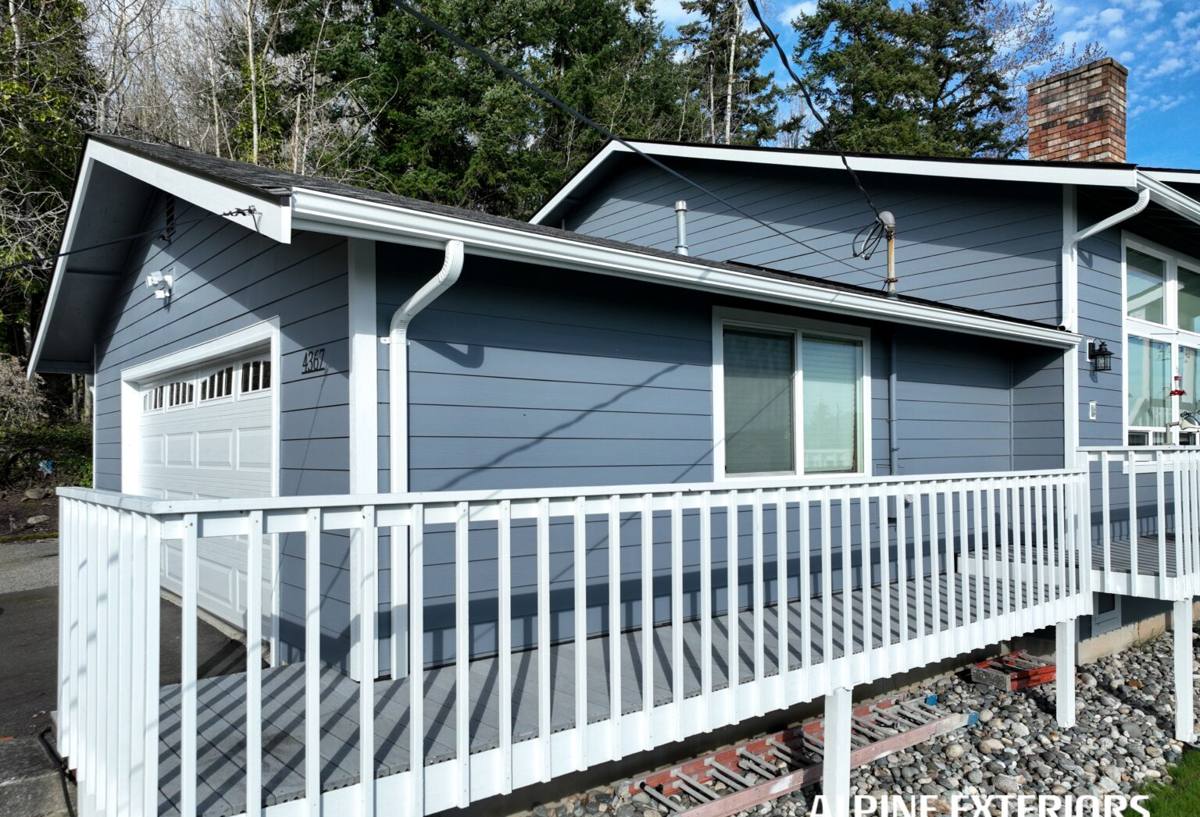
What a Correct Asphalt Shingle Roof Includes Here
Underlayment That Actually Handles Wind-Driven Rain
In a climate where rain doesn't always fall straight down, the underlayment beneath the shingles is doing more work than people assume. We install synthetic underlayment rated for this region, with self-adhering ice-and-water membrane at the eaves, valleys, and any roof-to-wall transitions — the spots where wind-driven rain and ice dams are most likely to force water backward under the shingle edge. Skipping or skimping on this layer is one of the most common shortcuts we see on older Lynden roofs, and it's usually invisible until a leak shows up on the ceiling below.
Flashing at Every Penetration
Every chimney, vent pipe, skylight curb, and wall intersection needs its own properly formed flashing, not a bead of roofing cement papering over a gap. Cement and sealant break down under UV and freeze-thaw cycling; metal flashing, installed correctly and integrated with the underlayment and shingle courses, doesn't rely on a caulk joint to keep water out.
Ventilation Balanced Intake to Exhaust
A roof deck that can't breathe traps moisture underneath the shingles, which is exactly the kind of damp, dark environment moss and roof algae thrive in. Correct ventilation means enough intake at the soffits to match the exhaust at the ridge or gable vents — not just a ridge vent added without checking whether air can actually get in from below.
Choosing a Shingle for This Climate
Not every asphalt shingle line is built the same way, and in a climate this wet, the difference shows up over time. The table below is a general guide to the tiers we most often discuss with Lynden homeowners — actual product availability and pricing should always be confirmed for your specific project.
| Shingle Tier | Typical Lifespan | Moss/Algae Resistance | Best Fit |
|---|---|---|---|
| 3-tab, economy | 15–20 years | Standard, no built-in resistance | Budget-driven projects, secondary structures |
| Architectural / laminate | 25–30 years | Often available with algae-resistant granules | Most Lynden homes; the common mid-range choice |
| Premium / designer laminate | 30–50 years (varies by product) | Algae-resistant granules standard on most lines | Homes prioritizing curb appeal and longer intervals between re-roofs |
For a shaded, moss-prone lot or a north-facing roof plane, we generally steer homeowners toward a shingle line with algae-resistant granules built in, since that resistance fades over decades and matters most in the first half of the roof's life — exactly when a shaded roof needs the help.
Signs a Lynden Roof Needs Attention
Because moss and granule wear happen gradually, a lot of homeowners don't notice roof aging until it's further along than they'd like. Worth checking for, especially after a wet winter:
- Moss growth along ridge lines, in valleys, or on shaded north-facing slopes
- Granules collecting in gutters or at downspout outlets
- Shingles that look cupped, curled at the edges, or noticeably darker in patches
- Daylight or staining visible at the underside of the roof deck in the attic
- Soft or spongy spots when walking the roof for inspection
- Flashing around chimneys or vents that looks lifted, rusted, or gapped
- Interior ceiling stains, especially near valleys, chimneys, or exterior walls
- Visible sagging along the ridge or eave line
Any one of these on its own isn't necessarily an emergency, but a roof showing several of them at once is usually past the point where a repair alone solves the problem.
Our Asphalt Shingle Roofing Process
We keep the process straightforward and try not to leave homeowners guessing about what's happening or why.
- On-site inspection. We walk the roof and the attic where accessible, checking deck condition, ventilation, flashing, and the extent of moss or granule loss, and take note of anything specific to that property — slope, shade pattern, tree cover.
- Honest scope discussion. We talk through whether the roof needs a full replacement, a partial section, or targeted repair, and what's driving that recommendation, in plain terms.
- Material selection. We go over shingle tiers and options suited to the home's exposure, budget, and how long the homeowner wants to go before the next re-roof.
- Tear-off and deck inspection. Old roofing comes off down to the deck, and any damaged or rotted sheathing is identified and addressed before anything new goes down — installing over a compromised deck just hides the problem.
- Underlayment and flashing installation. Ice-and-water membrane at vulnerable areas, synthetic underlayment across the field, and new flashing at every penetration and transition.
- Shingle installation. Installed to manufacturer specification for nailing pattern and exposure, which matters both for wind resistance and for keeping any product warranty valid.
- Ventilation check and correction. Intake and exhaust venting is confirmed or corrected as part of the job, not treated as a separate add-on.
- Final walkthrough and cleanup. We review the finished roof with the homeowner and make sure the property, including gutters and the ground around the house, is cleared of debris and nails.
Cost Factors Worth Understanding Before You Get Quotes
Roofing quotes vary for real reasons, and understanding what drives the number helps homeowners compare estimates that are actually apples-to-apples.
| Factor | Why It Affects Cost |
|---|---|
| Roof pitch and access | Steeper roofs and difficult access require more safety equipment and slow down the work |
| Number of layers to remove | Tear-off of multiple existing layers takes more labor and disposal than a single-layer strip |
| Deck condition | Rotted or damaged sheathing found during tear-off adds repair cost that can't be quoted sight unseen |
| Shingle tier chosen | Economy, architectural, and premium lines carry different material costs and labor time |
| Roof complexity | Valleys, dormers, chimneys, and skylights each add flashing work and time |
| Ventilation corrections | Adding or reworking soffit and ridge venting is additional labor beyond the shingle install itself |
Because deck condition often can't be fully confirmed until tear-off begins, we treat that as a distinct conversation rather than folding a guess into the original number — homeowners deserve to know what they're paying for and why, before and after tear-off.
Why Ventilation and Moss Control Deserve Their Own Attention
It's tempting to treat moss as a cosmetic issue — something a pressure wash or a bag of moss killer handles. In practice, moss holds moisture directly against the shingle surface, which accelerates granule loss and, over years, can work its way under shingle edges and tabs. Left long enough, that trapped moisture reaches the underlayment and eventually the deck itself. Prevention is far cheaper than the repair that follows.
The most effective long-term moss control isn't a chemical treatment applied once a year — it's a roof system that doesn't hold moisture in the first place. That means adequate slope drainage, clear gutters, correct ventilation so the underside of the deck stays dry, and, where tree cover allows it, some sunlight reaching the roof surface. Zinc or copper strips near the ridge can help suppress regrowth on an existing roof, but they work best as one piece of a broader approach, not a substitute for proper ventilation and drainage.
Why Hiring a Crew That Already Works in Lynden Matters
Roofing crews that only occasionally work in Whatcom County tend to default to installation standards built for drier climates — lighter underlayment, less attention to valley and eave detailing, ventilation calculated without accounting for how much moisture this region actually holds in the air. A crew that regularly works Lynden and the surrounding Ferndale area already knows which roof orientations collect moss fastest, which slopes take the worst of the winter wind, and where the shortcuts tend to fail first, because we've seen the callbacks on other people's shortcuts.
That local familiarity also means faster, more accurate estimates. We're not guessing at how this climate treats a roof over a ten- or twenty-year span — we're describing what we've actually observed on homes like yours in this same area.
Getting the Most Life Out of Your New Roof
A correctly installed shingle roof still benefits from basic upkeep, and a little attention twice a year goes a long way in this climate:
- Clear gutters and downspouts before the fall rains arrive, so water isn't backing up under the eave edge
- Trim back tree branches that shade the roof or drop debris onto it
- Have moss addressed at the first sign of growth rather than waiting for a full covering
- Check attic ventilation isn't blocked by insulation, stored items, or debris
- Schedule a visual inspection after any major windstorm
If you're weighing a repair against a full replacement, or just want a straight answer on where your current roof stands, we're happy to take a look. Reach out for a free, no-pressure estimate — the form below gets you started.