 Ferndale Siding
 Decks in Birch Bay Take a Different Kind of Beating
Birch Bay sits close enough to the water that homes here deal with a combination most inland Whatcom County properties don't: salt-laden air, wind-driven rain that gets pushed sideways under railings and into ledger boards, and a moss season that runs long and wet for much of the year. A deck built to a generic spec sheet often looks fine for the first couple of seasons, then starts showing problems in exactly the spots that generic spec sheet didn't account for.
We've replaced enough decks in this area to know where the failures start. It's rarely the decking boards themselves that go first. It's the framing underneath, the fasteners holding it together, and the connection points where water sits instead of shedding off.
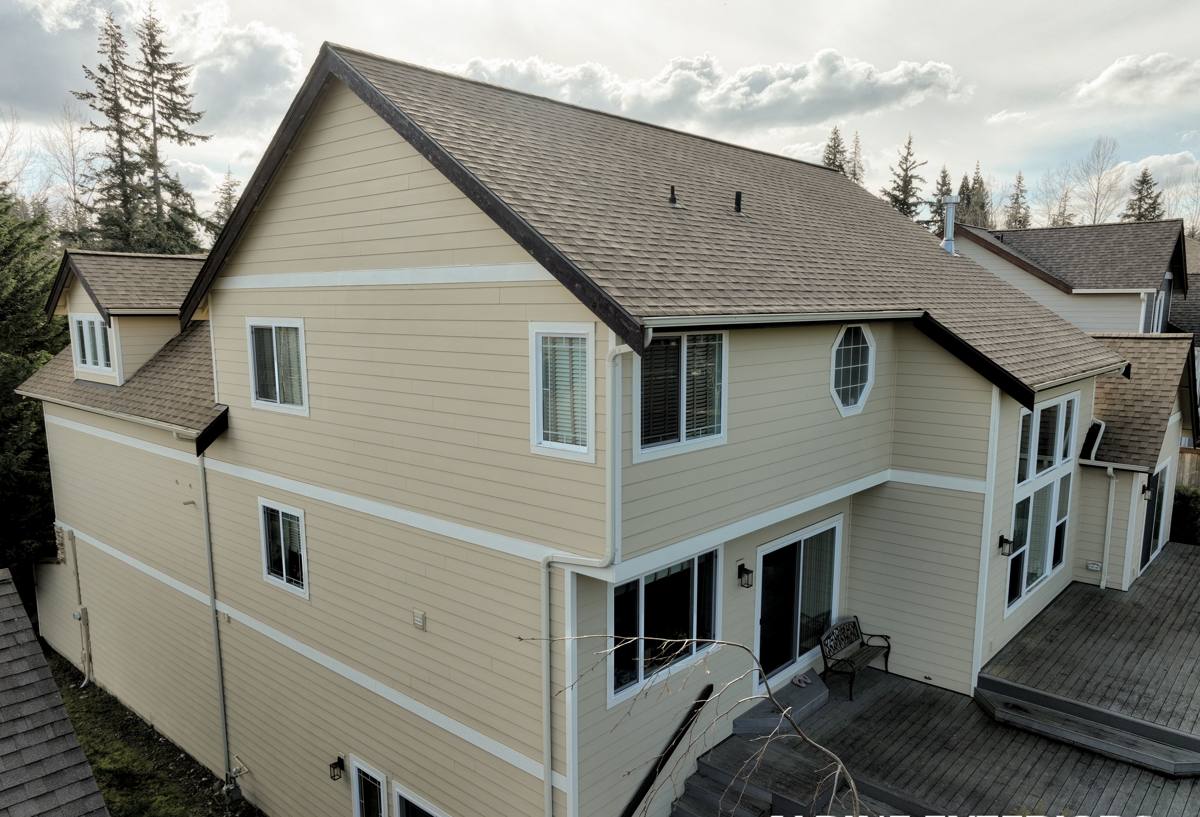
Why Salt Air and Moss Shorten a Deck's Life Here
Salt Air and Corrosion
Airborne salt accelerates corrosion on metal hardware — joist hangers, screws, bolts, and structural connectors. Standard galvanized fasteners that hold up fine 20 miles inland can start rusting years earlier this close to the water. Once a fastener corrodes, it loses holding strength long before it looks obviously bad, which is part of why deck failures near the coast can seem to come out of nowhere.
Driving Rain and Water Intrusion
Wind off the bay pushes rain at angles that flat, calm-weather flashing details weren't designed for. Ledger boards (where the deck attaches to the house), stair stringers, and post bases are the parts most exposed to this kind of intrusion, and they're also the parts hardest to inspect once a deck is fully built.
Moss and Trapped Moisture
A long moss season means organic growth builds up on decking surfaces, in the gaps between boards, and on north-facing or shaded framing members. Moss holds moisture against wood far longer than open air would, which is exactly the condition that leads to rot in framing that's supposed to be structural, not decorative.
Signs a Birch Bay Deck Needs Replacement, Not Just Repair
Not every aging deck needs a full teardown. But there's a point where patching individual boards is just delaying an inevitable, more expensive job. Watch for:
- Soft or spongy spots underfoot, especially near the house or stairs
- Visible gaps, rust streaks, or corrosion around metal connectors and fasteners
- A ledger board that looks separated, stained, or swollen where it meets the house
- Railings or posts that wiggle more than they used to
- Persistent moss or dark staining that comes back within weeks of cleaning
- A deck that was built without visible flashing at the ledger connection
If more than one or two of these apply, especially the ledger and framing issues, replacement is usually the more honest recommendation than another round of surface repairs.
What a Correct Deck Replacement Actually Involves
A deck replacement isn't just swapping old boards for new ones on the same frame. Done right, it starts from the ground up:
Structure First
Footings, posts, beams, and joists get evaluated and, where needed, rebuilt to current structural spans — not whatever spacing the original builder used decades ago. In a wind and rain-exposed area like Birch Bay, we also pay close attention to joist protection (tape or coating over the top edge of framing) so water doesn't sit directly on bare wood under the decking.
The Ledger Connection
This is the single most important detail on any deck attached to a house, and the most common place we find water damage on decks we're asked to replace. Proper flashing here — installed so it actually sheds water away from the house rather than trapping it — matters more in a driving-rain climate than almost any other part of the build.
Fasteners and Hardware
Given the salt air, we default to corrosion-resistant hardware rated for the exposure rather than the cheapest code-minimum option. It costs more up front and it's the difference between hardware that lasts as long as the deck and hardware that becomes the weak link in five to seven years.
Railings and Code
Railing height, baluster spacing, and guard requirements follow current building code, which has tightened over the years. If your old deck predates current code, replacement is the natural point to bring it up to standard.
Choosing Materials for a Near-Water, High-Moisture Climate
There's no single "best" decking material for every homeowner — budget, maintenance tolerance, and how the deck will be used all factor in. Here's how the common options actually perform in Birch Bay's conditions:
| Material | Salt Air / Corrosion | Moss & Moisture | Maintenance |
|---|---|---|---|
| Pressure-treated wood | Wood itself holds up fine; fasteners are the concern | Needs regular cleaning and re-sealing to resist moss and rot | Highest — annual cleaning, periodic staining/sealing |
| Cedar | Naturally decay-resistant; fasteners still need to be corrosion-rated | Better natural resistance, still needs cleaning in shaded areas | Moderate to high — periodic oiling/sealing for appearance |
| Composite decking | Not affected by salt air; use corrosion-rated hidden fasteners | Resists rot, but surface can still grow moss/algae if shaded and damp | Low — occasional washing, no sealing or staining |
All three can work well in Birch Bay if built and detailed correctly. The bigger factor in long-term performance is usually the framing, flashing, and hardware underneath — not just the decking surface on top.
What Drives the Cost of a Deck Replacement
Every deck is different, but the main cost drivers are consistent. We give straight ranges during the estimate once we've actually seen the site — not a number pulled from a national average.
| Factor | Why It Matters |
|---|---|
| Deck size and shape | More square footage and more corners/angles mean more material and labor |
| Height off the ground | Taller decks need more substantial framing, footings, and often stairs |
| Decking material choice | Composite costs more upfront than wood but less in long-term upkeep |
| Condition of existing framing | Rot or corrosion found once we open things up can add scope |
| Railings and stairs | Linear footage of railing and number of stair treads add to labor and material |
| Site access | Waterfront or sloped lots can make material staging and equipment access harder |
Our Process, Start to Finish
We keep the process straightforward because homeowners deserve to know what's happening at each stage:
- On-site estimate — we walk the existing deck, check the framing and ledger where we can access it, and talk through what you actually want out of the space
- Written scope and pricing — clear on what's included, what materials are being used, and what happens if we find hidden damage once demo starts
- Permitting — handled through the appropriate local building department based on your deck's size, height, and scope
- Demo and structural rebuild — old decking and, where needed, old framing removed; new footings, posts, joists, and ledger flashing installed to current code
- Decking, railing, and stairs installed — using the material and fastener spec agreed on upfront
- Final walkthrough — we go over the finished deck with you before calling the job done
Permits and Local Considerations
Deck replacements in Whatcom County typically require a building permit once you're rebuilding structure rather than just replacing surface boards, and requirements can vary depending on deck height, size, and proximity to property lines. We handle this as part of the job rather than leaving it on the homeowner's plate. If your property is close enough to the water that shoreline or setback considerations apply, that's something we flag and account for during the estimate rather than after the fact.
Keeping a New Deck Performing in This Climate
A correctly built deck still benefits from some seasonal attention, especially this close to the bay:
- Sweep debris and standing moss off the surface regularly, especially in shaded areas
- Keep gutters and downspouts clear so runoff isn't dumping extra water onto or near the deck
- Rinse salt residue off railings and hardware periodically, especially after storms
- Check fastener heads and connectors visually once a year for early rust or corrosion
- Reseal or re-stain wood decking on the manufacturer's recommended schedule, not just when it looks faded
Why a Local Crew Makes a Real Difference
A contractor who works Birch Bay regularly already knows which details actually matter here — the flashing that has to work harder against driving rain, the hardware grade that's worth the upcharge in salt air, and how moss behaves on shaded framing through a wet Whatcom County winter. That's not something you get from a crew that mostly builds decks inland and treats this job the same as any other. It shows up in fewer callbacks and a deck that's still solid well past the point a poorly detailed one starts failing.
If your deck is showing its age or you're planning ahead before it becomes a safety issue, we're happy to take a look and give you a straightforward, no-pressure estimate. Fill out the form below and we'll get you scheduled.