 Ferndale Siding
 Roof Repair Built for Birch Bay's Coastline
Birch Bay sits right on the water, and that changes what a roof has to deal with compared to a home a few miles inland. Salt-laden air, wind-driven rain off the Salish Sea, and a moss season that seems to start earlier and last longer every year all put extra stress on shingles, flashing, and fasteners. A roof repair here isn't just patching a leak — it's understanding why that leak happened in this specific environment and fixing it so it doesn't come back with the next storm.
We work on homes throughout Whatcom County, and Birch Bay roofs consistently show a different wear pattern than roofs we see further inland. That's not a coincidence, and it's why a generic repair approach — the kind that treats every leak the same — tends to fall short here.
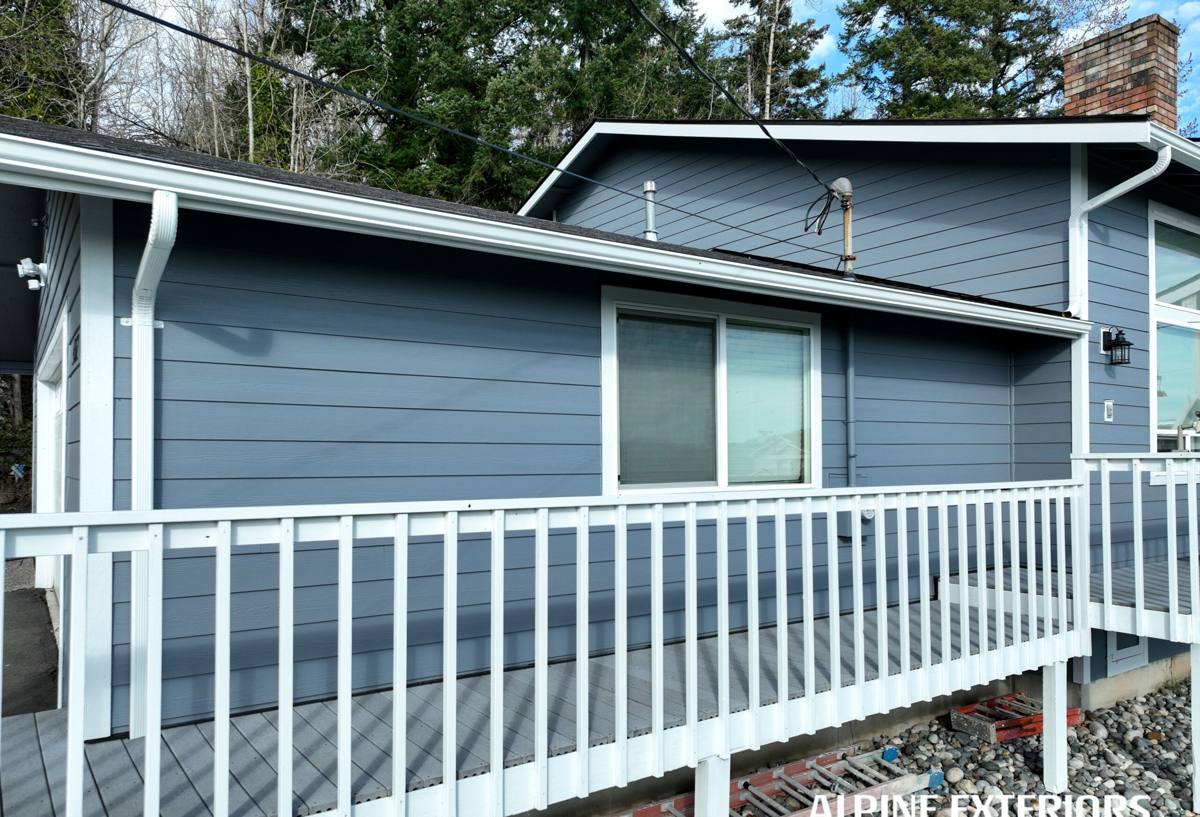
What Birch Bay's Climate Does to a Roof
Salt Air and Metal Fasteners
Homes close to the water are exposed to a steady drift of salt air, even on days that feel calm. Over time, that salt exposure accelerates corrosion on exposed metal — nail heads, flashing seams, gutter fasteners, and any exposed screws on vents or roof-mounted equipment. Corroded fasteners lose their grip and their seal at the same time, which is exactly how small leaks start at flashing joints and penetrations.
Driving Rain and Wind-Driven Moisture
Rain that comes in sideways behaves differently than rain that falls straight down. Wind off the water can drive moisture up under shingle edges, into open laps at flashing, and through gaps that would never leak in calmer conditions. A repair that only addresses the surface — resealing a visible crack, for example — often misses how water is actually traveling once wind gets involved.
A Long Moss Season
Shade, moisture, and mild temperatures are exactly what moss needs, and Birch Bay gets a healthy dose of all three for a good part of the year. Moss holds moisture against the roof surface long after the rest of the roof has dried out, and as it grows it lifts shingle edges and works its way under tabs and flashing. Left alone, it doesn't just look bad — it actively creates the conditions for leaks.
Common Roof Repair Needs We See in Birch Bay
Every roof is different, but certain issues show up again and again on homes in this area:
- Flashing that has lifted, corroded, or separated at chimneys, skylights, and roof-to-wall transitions
- Shingle edges lifted or cracked from wind exposure, especially on roof faces that catch the prevailing weather
- Moss colonies at ridge lines and shaded slopes that have started lifting shingle tabs
- Corroded or loosened nails and fasteners around vents, pipe boots, and metal trim
- Granule loss on older asphalt shingles, leaving the underlying mat exposed to UV and moisture
- Gutter and downspout issues that back water up under the roof edge instead of carrying it away
- Soft or discolored decking under a leak point, found once shingles are pulled back for a proper look
What a Correct Roof Repair Actually Involves
Diagnosis Before Patching
A leak inside the house often shows up several feet away from where water is actually entering the roof — it travels along decking or framing before it drips somewhere visible. A correct repair starts by tracing the water back to its actual entry point, not just treating the spot on the ceiling. That usually means getting on the roof, pulling back shingles or flashing around the suspected area, and checking the decking underneath for soft spots or staining.
Fixing the Cause, Not Just the Symptom
Caulk and roofing cement have their place, but they're a short-term fix when used to cover a flashing or fastener problem rather than correct it. A proper repair replaces failed flashing, reseats or replaces corroded fasteners, and reinstalls shingles or underlayment correctly so water sheds the way it's supposed to — not just patched over so it stops dripping for a season.
Materials That Hold Up Near the Water
Given the salt air, we pay attention to fastener and flashing material on every repair, not just the shingle itself. Matching corrosion-resistant fasteners and appropriate flashing metal to what's already on the roof — or upgrading it where the original material clearly hasn't held up — makes a real difference in how long the repair lasts.
Our Roof Repair Process
- Inspection and diagnosis. We get on the roof (weather permitting) and inspect the affected area and surrounding sections, including decking condition where accessible, rather than just looking at the visible symptom.
- Clear explanation of findings. Before any work starts, we walk you through what we found, what's causing it, and what the repair will involve — in plain language, not sales pressure.
- Written estimate. You get a clear scope of work and price before we do anything, so there are no surprises once the job starts.
- The repair itself. This may include replacing damaged shingles, reflashing a penetration or wall transition, replacing deteriorated decking, or addressing moss and debris that's contributing to the problem.
- Cleanup and check. We clear debris from the roof and gutters and do a final check of the repaired area before we consider the job done.
Repair vs. Replacement: How We Help You Decide
Not every roof problem calls for a full replacement, but not every leak should just be patched, either. Here's how we generally think through it:
| Factor | Leans Toward Repair | Leans Toward Replacement |
|---|---|---|
| Roof age | Roof is within its expected service life | Roof is near or past its expected lifespan |
| Extent of damage | Damage is localized to one area or penetration | Multiple areas show wear, granule loss, or moss damage |
| Decking condition | Decking underneath is solid | Decking is soft, stained, or rotted in several spots |
| Shingle condition overall | Remaining shingles are still flexible and intact | Shingles are brittle, curling, or widely granule-bare |
| Repair history | First repair needed in this area | Same area or roof has needed repeat repairs |
We'll always tell you honestly which side of that line your roof falls on. If a repair is the right call, we're not going to talk you into a replacement you don't need — and if a roof has reached the point where repairs are just delaying the inevitable, we'll tell you that too, so you can plan for it on your terms.
Why a Crew That Already Works Birch Bay Matters
Roofing crews that mostly work inland don't always account for how differently a coastal roof ages. A contractor who regularly works in Birch Bay and along the rest of the Whatcom County coastline already knows to check corrosion at flashing and fasteners first, expects moss to be part of the problem rather than a footnote, and understands how wind-driven rain off the water finds its way under shingle edges that would hold up fine somewhere more sheltered. That local pattern recognition is what separates a repair that lasts from one that resurfaces in a year.
It also means faster, more accurate estimates. We're not guessing at how the local climate affects your roof — we've seen the same wear patterns on other homes nearby and know what to look for before we even get on the ladder.
Roof Repair Checklist: What to Confirm Before You Hire Anyone
- Did they actually get on the roof, or estimate from the ground or photos alone?
- Did they explain what's causing the leak, not just where it's showing up inside?
- Do they carry proper licensing and insurance for roofing work in Washington?
- Is the estimate written, itemized, and clear about what materials will be used?
- Did they check the decking condition, not just the surface shingles or flashing?
- Do they have experience with coastal or near-water roofs specifically?
- Is there a clear plan for cleanup and debris removal when the work is done?
Maintenance Between Repairs
A repair lasts longer when the rest of the roof isn't working against it. Keeping gutters clear so water doesn't back up under the roof edge, addressing moss before it spreads rather than after it's lifted shingles, and having a roof looked at after any major windstorm are simple habits that catch small problems while they're still small. None of this replaces a proper inspection, but it reduces how often you need one.
If you're dealing with a leak, storm damage, or moss buildup on a Birch Bay roof, we're happy to take a look and give you a straight answer about what it needs. Reach out for a free, no-pressure estimate using the form below.