 Ferndale Siding
 Deck Repair for Blaine Homes
Blaine sits right on the water at the northern edge of Whatcom County, close enough to the Strait of Georgia and Semiahmoo Bay that salt air is a constant factor in how exterior wood ages here. Add in driving rain off the water and a moss season that runs longer than almost anywhere else in the county, and a Blaine deck takes on a different kind of wear than a deck twenty miles inland. We repair decks in Blaine regularly, and the approach we bring is built around what this specific combination of salt, rain, and shade actually does to a deck's structure over time — not a generic repair checklist written for a drier climate.
A deck repair here isn't just about replacing a few boards that look tired. It's about finding where water and salt-laden air have actually gotten into the structure, how far that damage has spread, and whether the framing underneath is still sound enough to build on. We look at the whole system — decking, framing, ledger, fasteners — before we tell a homeowner what actually needs to happen.
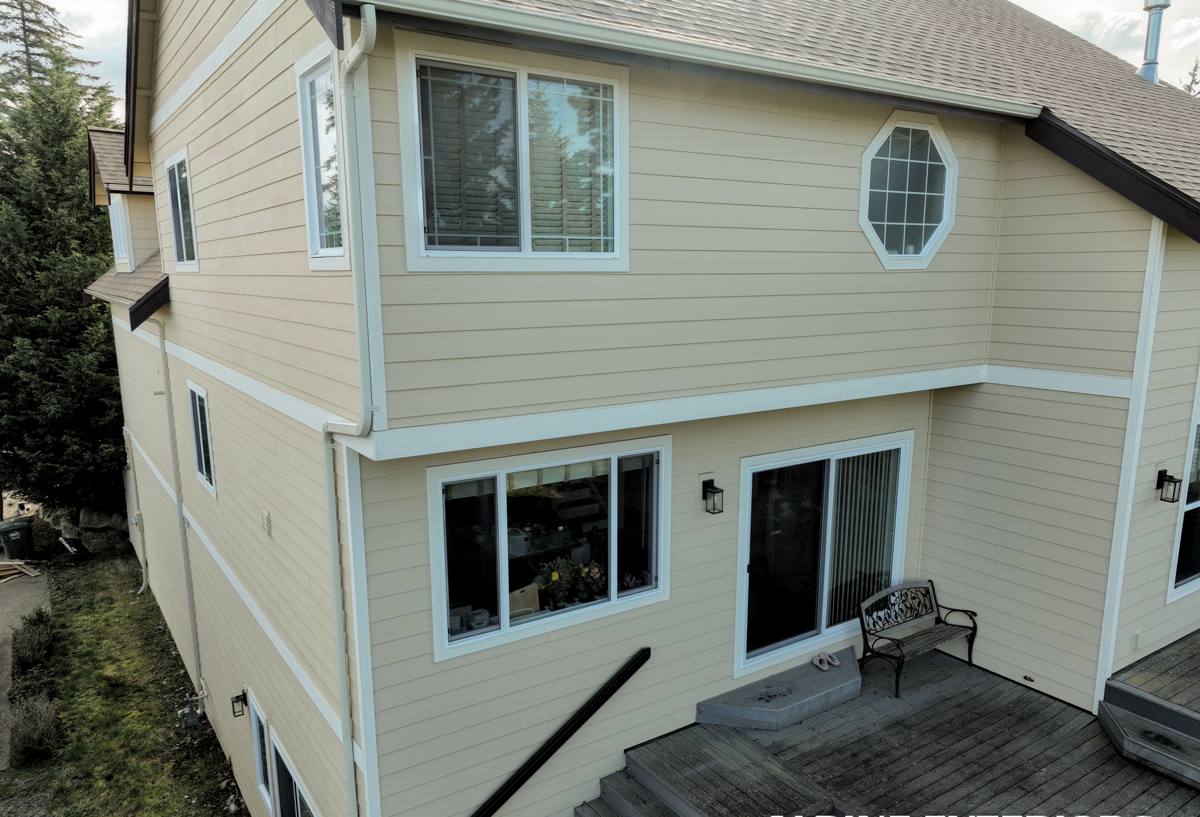
What the Blaine Climate Does to a Deck
Salt Air and Fastener Corrosion
Proximity to the water means airborne salt settles on every exterior surface, including deck fasteners, connectors, and any exposed metal hardware. Standard fasteners that would last for decades inland can corrode noticeably faster in a coastal environment like Blaine's, and a corroding fastener doesn't just look bad — it loses holding strength right where a deck depends on it most, at ledger connections and structural framing joints.
Driving Rain Off the Water
Storms coming off the Strait push rain sideways into a deck's structure rather than letting it simply run off the surface, and that wind-driven moisture finds its way into board gaps, fastener holes, and anywhere flashing at the house connection isn't doing its job. On a deck that wasn't detailed to shed rain from multiple directions, that's exactly where rot tends to start first.
A Long Moss and Mildew Season
Persistent regional dampness and plenty of shaded decks under trees or on the north side of a house add up to a moss and mildew season that stretches across most of the year in this part of the county. On a deck surface, that shows up as a slick, greenish film that's more than just an eyesore — it holds moisture directly against the decking material, which accelerates rot in wood and can degrade the surface of composite products over time as well.
Freeze-Thaw Cycling
Blaine still gets hard frosts through the colder months, and water that's already worked its way into a crack, a fastener hole, or a poorly sealed board end will expand when it freezes. That cycle widens existing cracks and accelerates material failure in wood that's already taken on moisture, which is why a deck that looked fine in the fall can show real damage by spring.
Common Deck Problems We See in Blaine
Not every deck issue looks the same, and the right fix depends on what's actually failing. Here's what shows up most often on the decks we're called out to inspect in this area:
- Soft or spongy decking boards, especially near the house connection or in shaded areas
- Corroded or failing fasteners and joist hangers, sometimes visible as rust staining on the framing
- A ledger board pulling away from the house or showing water staining behind it
- Cracked, cupped, or splintering boards from repeated wet-dry and freeze-thaw cycling
- Loose or wobbly railings and posts, often tied to post base corrosion or rot at the base
- Persistent moss or algae buildup on the deck surface and stair treads
- Gaps or separation at stair stringers and support posts
Repair vs. Full Rebuild
A lot of Blaine homeowners call us assuming a deck problem means starting over, and that's often not the case. Isolated board rot, a corroded run of fasteners, or a single weak stair stringer can usually be repaired and matched into the existing structure without touching the whole deck. But there are situations where a partial fix just delays a bigger problem:
| Situation | Usual Fix | When It's Not Enough |
|---|---|---|
| A few soft or damaged boards | Spot replacement of decking | If the framing underneath is also soft or the rot has spread past the visible boards |
| Rusted or failing fasteners | Re-fastening with corrosion-resistant hardware | If the wood around the fastener holes has already split or softened |
| Ledger board showing water staining | Re-flashing and re-securing the ledger | If the rim joist or house framing behind it has taken on rot |
| Wobbly railings or posts | Reinforcing or replacing hardware and post bases | If post rot extends below the visible base into the footing area |
| Aging deck nearing 15-20+ years old | Targeted repairs | If most of the structure is original and multiple systems are failing at once |
We'll tell you honestly which category your deck actually falls into after we've had eyes on the framing, not just the surface boards. A deck that looks rough on top can have perfectly sound framing underneath, and a deck that looks fine on top can be hiding a serious problem at the ledger or posts.
What a Correct Deck Repair Involves
Fixing a deck the right way in a coastal climate like Blaine's means more than swapping out damaged boards for new ones. It means addressing the conditions that caused the damage in the first place, so the repair actually lasts.
Fasteners and Hardware
Given the salt air here, we use corrosion-resistant fasteners and structural connectors rated for coastal exposure, not standard hardware that's fine in a drier inland setting. This matters most at structural connections — joist hangers, ledger bolts, and post bases — where a failed fastener isn't cosmetic, it's a safety issue.
Ledger Flashing
The ledger board, where the deck attaches to the house, is one of the most common places we find hidden water damage. Correct flashing at this connection directs water away from the house framing instead of letting it track behind the ledger, and it's one of the details most often installed incorrectly or skipped on older or lower-budget deck builds.
Framing and Structural Inspection
Before any new decking goes down, we check the joists, beams, posts, and footings underneath. Replacing the surface without addressing compromised framing is a cosmetic fix that hides a structural problem rather than solving it.
Drainage and Airflow
Proper board spacing and clearance underneath the deck let air move and water drain instead of pooling against the structure. On a shaded or low-clearance deck in a wet climate like this one, poor airflow is often what turns ordinary moisture exposure into sustained rot.
Our Process
We keep the process straightforward because a deck repair shouldn't feel like a mystery to the homeowner paying for it.
- A hands-on inspection of the decking, framing, ledger connection, railings, and posts — not just a visual walk-around from the top
- An honest explanation of what's actually failing and why, including anything we find that isn't visible from the surface
- A clear recommendation: spot repair, partial rebuild, or full replacement, with the reasoning behind it
- A written estimate before any work starts, with no pressure to sign on the spot
- Repair work using corrosion-resistant hardware and correct flashing details suited to Blaine's coastal exposure
Deck Inspection Checklist
- Decking boards checked for soft spots, cracking, or cupping
- Ledger board and house connection inspected for water staining or separation
- Fasteners and joist hangers checked for rust or corrosion
- Posts and footings checked for rot or movement at the base
- Railings tested for looseness or flex
- Stair stringers and treads checked for cracking or separation
- Underside airflow and drainage checked, especially on low-clearance decks
Cost Factors for Deck Repair in Blaine
| Factor | What It Affects | Why It Matters Here |
|---|---|---|
| Extent of framing damage | Whether it's a surface repair or a structural rebuild | Salt air and driving rain often cause hidden framing damage before surface boards show it |
| Decking material | Board replacement cost and long-term maintenance | Wood, composite, and PVC decking each respond differently to sustained coastal moisture |
| Ledger and flashing condition | Labor scope at the house connection | A failed ledger flashing detail is one of the most common sources of hidden water damage in this area |
| Hardware upgrades | Materials cost | Corrosion-resistant fasteners cost more upfront but hold up far longer this close to the water |
| Deck age and size | Overall scope | Older decks built before current flashing and fastening standards often need more than a cosmetic fix |
Exact pricing depends on what we find once we're actually on the deck and underneath it, which is why we give a real number after an in-person inspection rather than a quote off a generic price list.
Why a Local Crew Matters in Blaine
A crew that works this stretch of the Whatcom County coastline regularly knows what salt air, wind-driven rain, and a long moss season do to a deck over time, not just how a material performs on a spec sheet. That experience shapes real decisions on repair day — which fasteners are worth the extra cost this close to the water, where a ledger connection needs extra attention, and which boards are actually salvageable versus which ones are quietly rotting from underneath. Blaine's waterfront exposure is different from inland parts of the county, and we treat that difference seriously instead of applying a one-size-fits-all repair built for a drier, more sheltered property.
If your deck in Blaine has soft boards, a shaky railing, or you just want an honest opinion on what's going on underneath it, we're glad to take a look. Reach out using the form below to schedule a free, no-pressure estimate.