 Ferndale Siding
 Why Blaine's Coastal Climate Is Hard on a Roof
Blaine sits right on the water at the top of Whatcom County, and that location shapes what a roof has to deal with year-round. Salt-laden air blows in off the bay, driving rain comes in sideways during winter storms, and the shaded, damp conditions that stick around from fall through spring create one of the longest moss seasons in the state. A roofing material that performs fine forty miles inland in a drier microclimate doesn't always hold up the same way this close to the water.
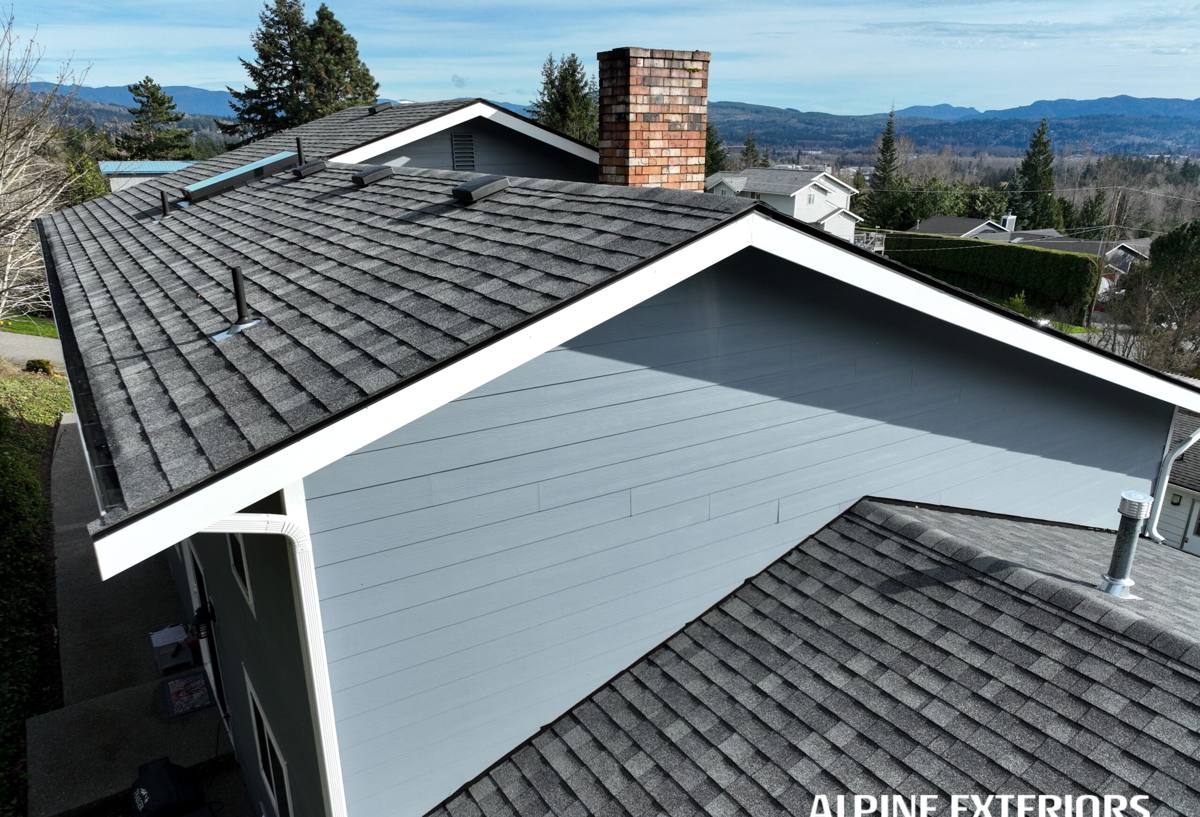
Asphalt shingles in particular take a beating here. Salt air accelerates the breakdown of the granules that protect the asphalt underneath, and constant moisture gives moss and algae a foothold that's tough to keep ahead of without regular attention. Metal roofing handles these conditions differently, which is a big part of why we get asked about it so often for homes in and around Blaine.
What Metal Roofing Actually Solves for Blaine Homeowners
Metal roofing isn't a fad or an upsell — it's a legitimate answer to specific problems that coastal Whatcom County homes run into. Here's what it addresses directly:
Shedding Driving Rain
Blaine's storms don't always come straight down. Wind-driven rain pushes water sideways and up under roof edges, which is exactly the kind of exposure that finds weak points in a roofing system. A properly installed metal roof, with correctly lapped panels and sealed seams, sheds water fast and doesn't give it anywhere to sit or wick in.
Resisting Moss and Algae
Moss needs organic material and a rough surface to grab onto. Metal doesn't give it much to hold, and the smooth, hard surface makes it far harder for spores to establish compared to the granular texture of shingles. That doesn't mean a metal roof never sees moss in shaded, north-facing sections — it can, especially where debris collects — but it grows slower and is easier to remove without damaging the roofing material underneath.
Standing Up to Salt Air
Not all metal is created equal near the coast, which is why material choice matters more in Blaine than it would twenty miles inland. The right coatings and metal types resist the corrosive effect of salt air; the wrong ones can corrode faster than they would elsewhere in the county. We'll get into those choices below.
Metal Roofing Options: What Fits a Coastal Property
There isn't one "correct" metal roof — the right system depends on the home, the budget, and how close to the water it sits. Here's how the common options compare for a property like yours in Blaine.
| Panel Type | Coastal Performance | Appearance | Typical Fit |
|---|---|---|---|
| Standing seam (concealed fasteners) | Excellent — no exposed screws to work loose or corrode over time | Clean, modern vertical lines | Full water-close-to-shore exposure, long-term low-maintenance goals |
| Exposed-fastener panel | Good, but fasteners need periodic inspection and eventual re-torquing or replacement | Ribbed, traditional metal-roof look | Budget-conscious projects, outbuildings, less direct salt exposure |
| Steel with quality coating | Strong when properly coated; coating quality matters more here than inland | Wide range of colors and profiles | Most residential applications |
| Aluminum | Naturally corrosion-resistant, a strong choice for direct salt exposure | Similar profile options to steel | Homes closest to the water or with a history of corrosion issues |
For homes closest to the water in Blaine, we lean toward standing seam systems in a coating or metal type built for marine exposure. Further back from the shoreline, a well-coated exposed-fastener panel can be a perfectly reasonable, more budget-friendly choice. We'll walk the specifics of your property before recommending one over the other — a roof that's protected by trees and set back from the bay doesn't need the same spec as one facing open water.
What a Correct Metal Roof Installation Involves
Metal roofing fails prematurely almost exclusively because of installation shortcuts, not because the material itself was wrong. In a climate like Blaine's, the details underneath the visible panel matter as much as the panel itself.
Underlayment and Moisture Barrier
A high-quality synthetic or self-adhered underlayment is non-negotiable this close to the water. It's the backup layer that protects the roof deck if wind-driven rain ever gets past the panel seams, and it's cheap insurance against a much more expensive problem later.
Fastening and Sealant
Whether the system uses concealed clips or exposed fasteners, corrosion-resistant hardware matched to the panel material is essential — mixing incompatible metals invites galvanic corrosion, which shows up as pitting and staining well before the roof's expected lifespan is up.
Flashing at Every Transition
Valleys, chimneys, vent penetrations, and roof-to-wall junctions are where most roof leaks actually start, metal or otherwise. Properly formed and lapped flashing at each of these points is what keeps driving rain from working its way in during a real Whatcom County storm.
Ventilation
Metal roofs need proper attic and roof-deck ventilation to manage condensation, especially given how much moisture is in the air here for much of the year. Skipping this step can trap humidity against the underside of the deck, which causes problems that have nothing to do with the metal itself but get blamed on it anyway.
How We Approach a Blaine Metal Roofing Project
Our process is the same whether the home is a block from the water or set back among the trees — we just adjust the specification to match the exposure.
- On-site assessment. We look at the existing roof, the home's orientation, proximity to the water, tree cover, and any existing moss or moisture issues before recommending a system.
- Material and system recommendation. Based on that assessment, we recommend a panel type, gauge, and coating suited to the actual exposure your property gets — not a one-size-fits-all package.
- Tear-off and deck inspection. We remove the old roofing and check the deck underneath for rot or damage before anything new goes down. Problems found here get addressed before the new roof goes on, not covered up.
- Underlayment, flashing, and panel installation. Each layer goes down in the order and manner it's designed for, with attention to the transition points that cause most leaks.
- Final walkthrough. We go over the completed roof with you, explain what maintenance (if any) it needs, and make sure you know what was done and why.
Living With a Metal Roof Through Whatcom County's Moss Season
A metal roof cuts down on moss problems significantly, but "resistant" isn't the same as "immune." Debris that collects in valleys or against a chimney can still hold moisture and give moss something to grow on over time, particularly on shaded sides of the roof. The good news is that maintenance is simple: occasional debris clearing and a rinse are usually all it takes, since moss doesn't get the same grip on metal that it does on shingles. There's no need for the harsh chemical treatments or aggressive pressure washing that shingle roofs sometimes require, which is itself a maintenance win over the life of the roof.
What Affects the Cost of a Metal Roof in Blaine
Pricing depends on several factors specific to your home and its exposure, not just square footage. Here's what tends to move the number up or down:
| Factor | Why It Matters |
|---|---|
| Panel type and coating | Standing seam and marine-grade coatings cost more up front but need less long-term maintenance in salt air |
| Roof complexity | Valleys, dormers, and multiple roof planes require more flashing work and labor time |
| Deck condition | Rot or damage found during tear-off adds repair work before installation can continue |
| Existing roofing removal | Tear-off and disposal of old shingles or roofing adds cost versus a bare deck |
| Ventilation upgrades | Older homes sometimes need additional venting brought up to standard for the new system |
We give a straightforward, itemized estimate after seeing the roof in person — we don't believe in quoting a metal roof over the phone, since the details above can swing the price meaningfully.
What to Ask Before Hiring a Metal Roofing Contractor
Metal roofing is less forgiving of installation mistakes than shingles — a poorly formed seam or a missed flashing detail shows up as a real problem, not just a cosmetic issue. Before hiring anyone for a metal roof in Blaine, it's worth checking:
- Do they carry current Washington contractor licensing and liability insurance?
- Have they installed metal roofing specifically, not just asphalt shingles?
- Can they explain why they're recommending a particular panel type and coating for your property's exposure?
- Do they inspect and address deck condition before installing, rather than roofing over problems?
- Is the estimate itemized, or a single vague number?
- Do they understand the manufacturer's warranty terms and what voids them?
Why Local Experience in Blaine Matters
A contractor who works this stretch of Whatcom County regularly knows how exposure varies block by block near the water — which homes catch the worst of the wind off the bay, where moss tends to build up fastest, and which details tend to get missed by crews unfamiliar with coastal installation. That experience shows up in fewer callbacks and a roof that's actually specified for the conditions it faces, not a generic package used the same way statewide.
If you're weighing metal roofing for a home in Blaine, we're happy to take a look and give you a straight assessment — no pressure, no inflated urgency, just an honest read on what your roof needs and what it would take to do it right. Reach out for a free estimate and we'll go from there.