 Ferndale Siding
 Blaine's Weather Doesn't Go Easy on Roofs
Blaine sits at the far northwest corner of Whatcom County, right where the open water of the Strait of Georgia meets Semiahmoo Bay and Drayton Harbor. That location is a big part of what makes the town what it is, but it's also why roofs here take a harder beating than roofs twenty miles inland. Homes get a steady mix of salt-laden air off the water, wind that has nothing to slow it down before it reaches the coastline, and long stretches of driving rain that can turn a small weak spot into a real leak in a single season.
None of that means every Blaine roof is in trouble. It means storm damage here shows up differently than it does in a dry climate, and it needs to be checked and repaired by someone who understands the pattern — not just patched and hoped for the best.
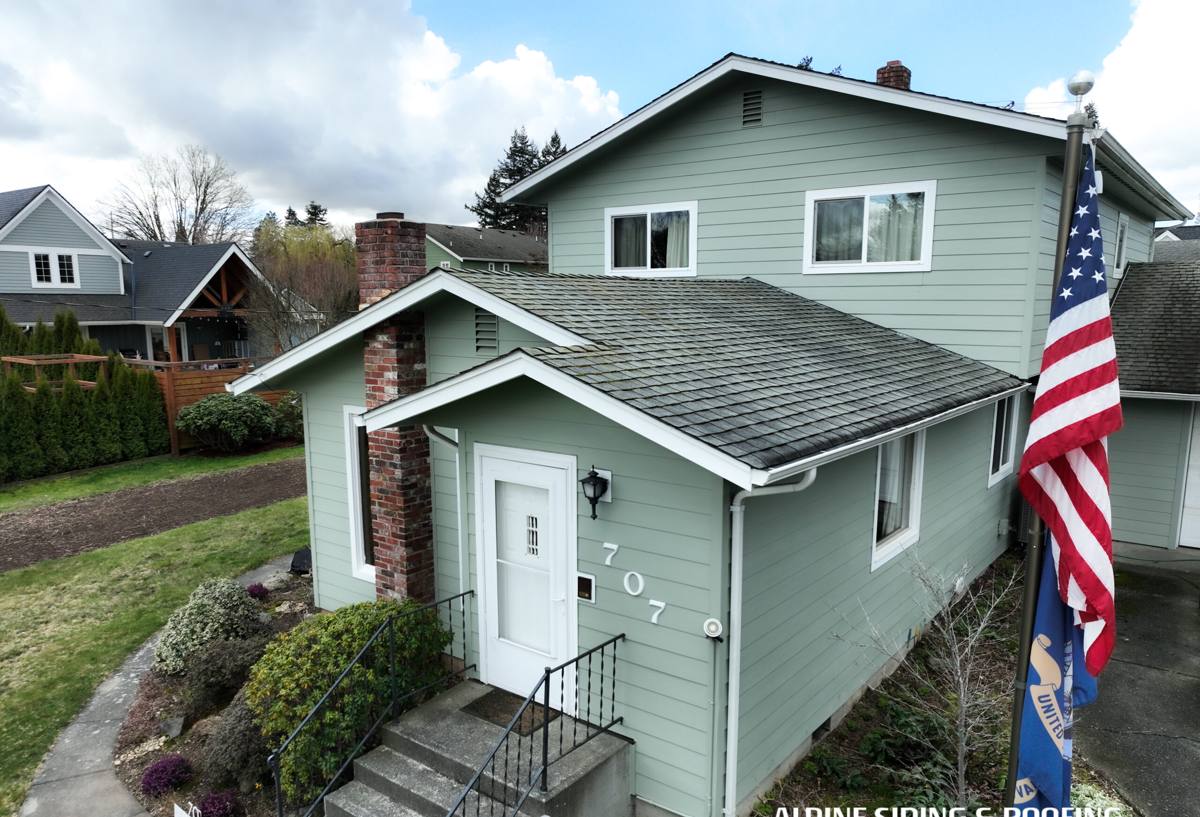
What Actually Counts as Storm Damage
Homeowners often assume storm damage means a hole punched through the roof or shingles ripped off in a pile in the yard. Sometimes it does. More often, storm damage is quieter and easier to miss:
- Wind-lifted shingle tabs that reseal crooked or don't reseal at all, leaving a gap for wind-driven rain
- Cracked or displaced flashing around chimneys, vents, and skylights after repeated flexing in high wind
- Granule loss from hail or heavy debris impact, which thins a shingle's protective layer without an obvious visible break
- Fastener backing-out where wind uplift has worked nails loose over several storm cycles
- Fascia and gutter damage from branches or wind-loaded debris that redirects water into places it shouldn't go
This is why we don't just look at the roof from the ground after a storm. A lot of the damage that leads to a leak six months later isn't visible from the driveway.
Reading the Damage: A Practical Breakdown
Different storm events leave different fingerprints. Knowing what to look for — and what it usually means for the repair — helps set realistic expectations before we're even on the roof.
| Damage Type | Typical Cause Locally | What You Might Notice |
|---|---|---|
| Wind lift / creased shingles | Sustained gusts off the Strait, especially on exposed or elevated roof planes | Shingle edges that look slightly raised, curled, or out of line with the row around them |
| Flashing failure | Repeated expansion/contraction plus wind flex around penetrations | Rust streaking, gaps at chimney or vent bases, staining on the ceiling below |
| Granule loss | Hail, wind-driven debris, or heavy branch contact | Bald-looking patches on shingles, granules collecting in gutters |
| Moss and organic buildup | Extended damp season combined with shaded or north-facing slopes | Green or dark streaking, lifted shingle edges where moss has grown underneath |
| Corroded fasteners | Salt air exposure near the shoreline | Rust bleed streaks below nail heads, especially on older or lower-grade fasteners |
Why Salt Air Changes the Math
Roofs closer to Blaine's shoreline see accelerated corrosion on exposed metal — nail heads, flashing, gutter hardware, and vent housings all age faster than they would further inland. A repair that would hold up fine in a dry, inland climate can fail early here if it's done with standard-grade fasteners or flashing instead of materials rated for coastal exposure. This is one of the most common corners cut in storm repairs, and it's usually invisible until the corrosion has already caused a leak.
How We Approach a Storm Damage Repair
A storm repair done right isn't just "find the hole, cover the hole." It's a sequence, and skipping steps is how small storm damage turns into a bigger problem the following winter.
- Full roof inspection, not a spot check. We look at the whole roof plane, not just the area you're worried about — storm damage rarely stays contained to one spot.
- Document what we find. Clear notes and photos of the actual damage, so you know exactly what's being repaired and why.
- Identify the cause, not just the symptom. A leak might show up at one spot on the ceiling but originate somewhere else entirely, especially with wind-driven rain.
- Repair with materials suited to this coastline. Corrosion-resistant fasteners and flashing where salt exposure warrants it, matched underlayment and shingle materials where a full section needs replacing.
- Check the surrounding area, not just the damaged section. Adjacent shingles and flashing that are close to failing get flagged, so you can decide whether to address them now or plan for it later — not get surprised by a second leak next season.
Repair or Replace? How We Help You Decide
Not every storm-damaged roof needs a full replacement, and not every roof is worth patching indefinitely either. The honest answer depends on a handful of factors, and we'll walk through them with you directly rather than pushing toward the bigger job by default.
| Factor | Leans Toward Repair | Leans Toward Full Replacement |
|---|---|---|
| Roof age | Roof is under roughly two-thirds of its expected lifespan | Roof is near or past its expected service life |
| Damage extent | Isolated to one or two areas or planes | Spread across multiple sections or both slopes |
| Underlying condition | Decking and structure are sound beneath the damage | Soft decking, rot, or widespread moss undermining multiple areas |
| Storm history | First significant damage event in several years | Repeated storm damage claims or repairs on the same roof |
| Material availability | Matching shingles/materials are still available | Original material is discontinued or badly mismatched |
Cost for storm damage repair work varies a lot depending on scope — a straightforward flashing or shingle repair is a modest job, while damage that's spread across the roof or has led to decking issues costs more because more has to come apart before it goes back together correctly. We'll give you a clear number after the inspection, not a guess over the phone.
Moss and the Long Damp Season
Storm damage and moss problems often show up together in this part of Whatcom County, because the same wet, mild climate that fuels a long moss season is also what turns a small storm-lifted shingle edge into a spot where moisture and organic growth take hold. Moss under a lifted shingle edge holds water against the roofing material far longer than open air would, which speeds up exactly the kind of granule loss and shingle deterioration that makes future storm damage worse. Part of a proper storm repair includes checking for moss intrusion near the damaged area and clearing it, not just patching around it.
Insurance and Storm Damage: What Homeowners Should Know
Many storm damage repairs are covered under homeowners insurance, but coverage depends on your specific policy, the cause of damage, and how promptly it's documented. We're not your insurance adjuster and won't promise a claim outcome, but we can provide clear photo documentation and a written scope of the damage and repair, which is generally what an adjuster needs to evaluate a claim. If you're planning to file, it's worth getting that documentation before any temporary tarping or cleanup changes what's visible.
Why Local Experience on This Coastline Matters
A roofing crew that mostly works dry, inland neighborhoods and occasionally gets called out to Blaine will treat every job the same way. A crew that regularly works this stretch of coastline already knows which fastener grades hold up near the water, which roof orientations take the worst of the wind off the Strait, and which older homes in the area are more prone to moss buildup on north-facing slopes. That local pattern recognition is the difference between a repair that's cosmetically fine today and one that's actually built to handle next winter's storms.
What to Do in the First 48 Hours After a Storm
- Do a ground-level visual check of your roofline and gutters — don't get on the roof yourself, especially on wet or debris-covered surfaces
- Check attic spaces or top-floor ceilings for new staining, damp spots, or musty smells
- Photograph any visible damage, downed branches on or near the roof, and displaced materials in the yard
- Note the date and general weather conditions of the storm for your own records
- Avoid DIY tarping on a steep or wet roof — a poorly secured tarp can cause more damage in the next round of wind
- Call for a professional inspection before deciding whether it's a minor fix or something more involved
If a recent storm has you wondering whether your roof took damage — visible or not — we're glad to take a look. We offer free, no-pressure estimates for Blaine homeowners, with a straight answer about what we find and what it would take to fix it right. Use the form below to get started.